蓝阿里 · Electric Blue Hap
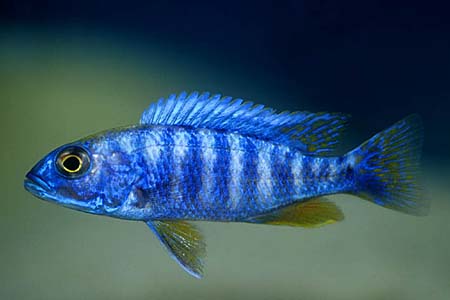
概要
| 字段 | 值 |
|---|---|
| 类别 | 鱼 |
| 学名 | Sciaenochromis fryeri |
| 分类 | 慈鲷目 Cichliformes › 慈鲷科 Cichlidae › Sciaenochromis |
| 水体 | 淡水 |
| 成体体长 | 20 cm |
| 饲养难度 | 中等 |
| 最小水体 | 304 L |
| 最小缸长 | 150 cm |
| 外部数据 | seriouslyfish sciaenochromis-fryeri;fishbase 60051 |
| 原产地 | 马拉维湖特有,沿湖广布 |
| 食性 | 肉食 |
| 特征 | 吃小鱼: 是 |
| 繁殖方式 | 口孵 |
| 领地性 | 是 |
| 别名 | Sciaenochromis fryeri |
水质参数
| 参数 | 耐受范围 | 最适范围 | 单位 |
|---|---|---|---|
| 水温 | 24–28 | — | °C |
| pH | 7.6–8.8 | — | — |
| 总硬度 | 10–25 | — | dGH |
概述
蓝阿里是马拉维湖的捕食性慈鲷,成熟雄鱼呈亮蓝色,雌鱼则朴素得多。它不是岩栖藻食类慈鲷,天然会捕食其他鱼的幼体;选择伙伴时既要避开可被吞食的小鱼,也要考虑雄鱼追逐和杂交风险。
分布与栖息地
马拉维湖特有,湖内分布广但并非特别常见。生活在岩石岸段及邻近岩区外侧的过渡沙地。
饲养环境
用砂底,并以石堆构成连通洞穴,同时留出开阔游泳区。单雄与数雌更容易管理,多雄需要很大的额外空间;藏处和视觉遮挡应帮助雌鱼避开持续追逐。
食性与喂食
天然以鱼类为重要猎物,缸中通常接受活饵、冷冻饵和干饲料。以适当水生动物饵料和优质制成饲料搭配,不必刻意把植物性食物作为主食,也不要投喂陆生动物肉。
习性与混养
体格强健但并非特别凶,不宜混入强势岩栖慈鲷群。可考虑体型相称的非岩栖马拉维湖鱼,避免相似蓝色伙伴。每雄配数雌可分散追逐,但并不消除风险。不同产地色型会杂交,与某些其他属雌鱼也有杂交经历,繁殖群应分开。
雌雄区分
成年雄鱼亮蓝,颜色强弱随状态变化;雌鱼较素。幼鱼颜色相似,不易分性。
繁殖
母系口孵,可一雄配至少三雌专缸繁殖。提供迎向水流的倾斜平石和开放砂面;野外雄鱼会筑大型锥状结构,缸中却更常直接选择斜石,不一定堆砂。雄鱼围绕产卵处展色并追逐雌鱼,因此要保留退避空间。
雌鱼在石面上端逐枚产卵,卵向下滚,雄鱼以臀鳍承接并受精,随后雌鱼收入口中,通常约五十至七十枚。母鱼约三周后放出起游幼鱼,期间停食。移动和追逐可能导致提前吐卵或吞卵,长时间隔离后回群也可能重新受压。幼鱼可吃丰年虾无节幼体、筛过的小水蚤、微虫和细粉。
图片
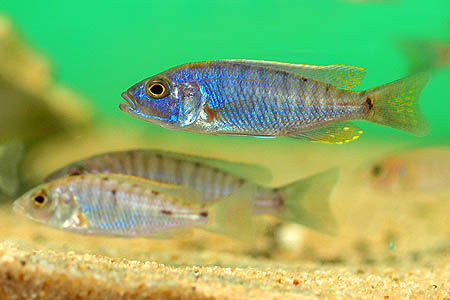
图片来自 SeriouslyFish,版权归各摄影者所有。
English
Overview
A predatory Lake Malawi cichlid, Sciaenochromis fryeri develops brilliant blue adult males and much plainer females. Its natural diet includes other fishes’ young. Companion selection must account for predation, male harassment, and hybridization as well as temperament.
Distribution & habitat
Endemic to Lake Malawi, it is widespread around the lake without being especially common. Rocky shoreline habitat extends into neighboring intermediate sandy zones.
Aquarium setup
Use sand and networks of rock caves while retaining open swimming areas. One male with several females is easier to manage; multiple males require a much larger aquarium. Shelters and visual barriers help females escape persistent pursuit.
Diet & feeding
Fish are important natural prey. Captive individuals generally accept live, frozen, and prepared foods. Vary suitable aquatic animal foods with quality prepared products; a vegetable-dominated menu is unnecessary. Avoid terrestrial animal meat.
Behaviour & compatibility
Robust without being exceptionally aggressive, it is unsuitable for a boisterous mbuna community. Appropriately sized non-mbuna Malawi companions may work, but avoid similarly colored fishes. Several females per male spread courtship pressure. Different geographic forms hybridize, and crosses with females of other genera are also known, so breeding groups require separation.
Sexual dimorphism
Adult males are vivid blue, with intensity changing according to condition or mood. Females are plainer, while similarly colored juveniles are difficult to sex.
Breeding
Maternal mouthbrooding can be managed in a dedicated aquarium with one male and at least three females. Provide sloping rocks facing into flow and open sand. Wild males build large conical structures, but aquarium males more often choose a slope without necessarily banking substrate around it. Display and pursuit make female escape space essential.
The female lays single eggs near the top of the rock. As each rolls down, the male catches it with his anal fin and fertilizes it before she collects it. Broods commonly number about fifty to seventy. Females fast through roughly three weeks of incubation. Disturbance can cause premature release or loss, while extended isolation can complicate return to the group. Released fry accept Artemia nauplii, sifted Daphnia, microworms, and powdered foods.
来源
- https://www.seriouslyfish.com/species/sciaenochromis-fryeri(抓取于 2026-10-10)
sciaenochromis-fryeri · 文件: data/species/sciaenochromis-fryeri.md · 状态: 草稿