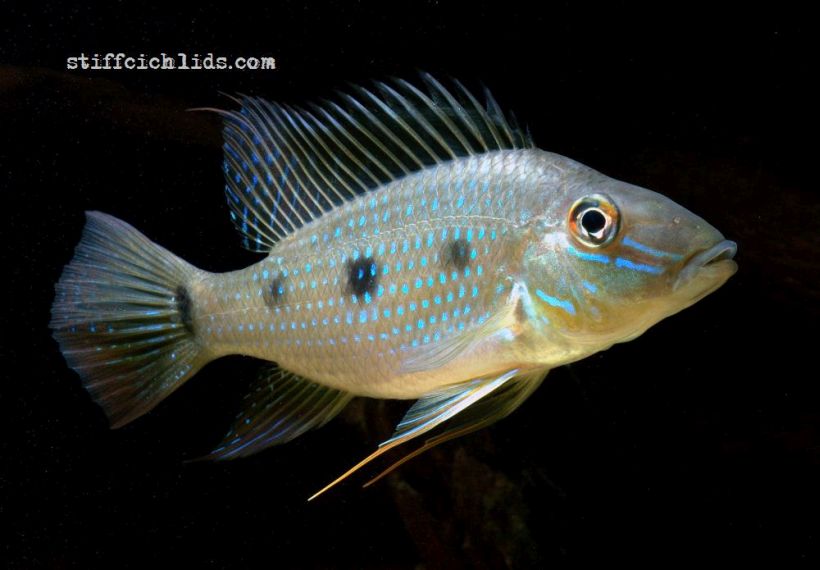
尖头珠母丽鱼 · Sharphead Eartheater
概要
| 字段 | 值 |
|---|---|
| 类别 | 鱼 |
| 学名 | Satanoperca acuticeps |
| 别名 | 尖頭珠母麗魚、Geophagus acuticeps |
| 分类 | 慈鲷目 Cichliformes › 慈鲷科 Cichlidae › Satanoperca |
| 水体 | 淡水 |
| 原产地 | 巴西亚马孙中部流域 |
| 成体体长 | 17 cm |
| 饲养难度 | 中等 |
| 最小水体 | 648 L |
| 最小缸长 | 180 cm |
| 群居方式 | 群游 |
| 性情 | 温和 |
| 外部数据 | seriouslyfish satanoperca-acuticeps;fishbase 12313 |
| 食性 | 杂食 |
| 特征 | 翻底砂: 是 |
| 领地性 | 是 |
| 繁殖方式 | 附着产卵 |
水质参数
| 参数 | 耐受范围 | 最适范围 | 单位 |
|---|---|---|---|
| 水温 | 20–28 | — | °C |
| pH | 5.5–7.5 | — | — |
| 总硬度 | 2–12 | — | dGH |
概述
尖头珠母丽鱼(Satanoperca acuticeps)虽然也被归为“食土鲷”,却不像许多同属鱼那样主要专门筛底觅食,似乎更适应部分开阔水域生活。非繁殖期通常很温和,但对水质恶化及化学条件波动非常敏感。
分布与栖息地
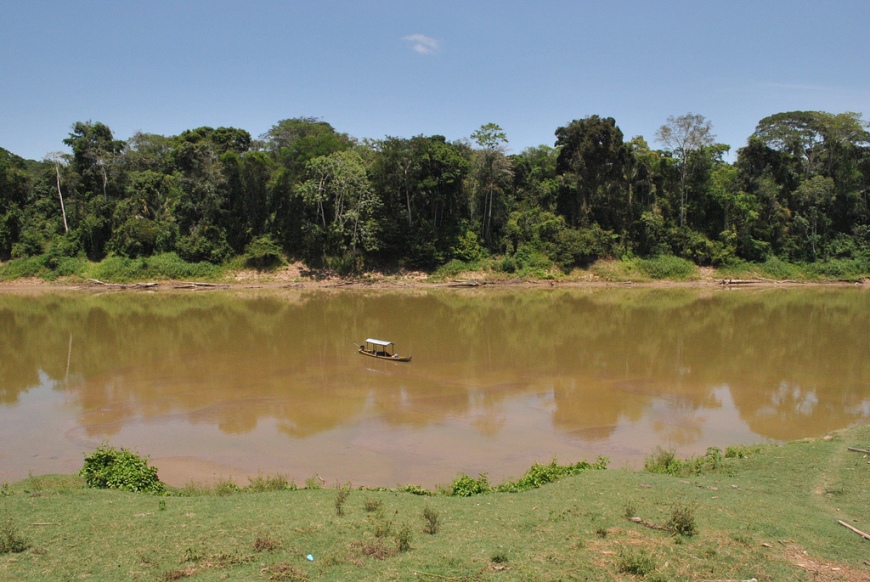
原生于巴西亚马孙中部,涉及塔帕若斯河至 Tefé 河之间的主河道及支流下段,也包括内格罗河下游、布朗库河等水系。多见于清水或较浑浊的水,而不是贫营养、茶褐色的典型黑水。利用主河道、小支流和洪泛湖,常有沙泥底、落叶及沉木枝条。
饲养环境
至少提供约 180 × 60 厘米底面积。即使筛底程度较低,仍应使用细软沙底;粗砾可能妨碍取食、损伤鳃,误吞后还可能造成内部问题。弱光、沉木及根枝较适合。
天然环境虽有落叶,缸中大量腐叶却容易被翻成悬浮碎屑,堵塞过滤和水泵,因此不宜照搬厚叶层。只用成熟系统,以足量外滤或底滤保持稳定,每周至少换水约 50%~70%。维护不足可能伴随头部及侧线侵蚀、发育受阻等问题。
食性与喂食
本种杂食,野外摄取水生和陆生无脊椎动物,也吃大量浮游动植物、植物材料及有机碎屑。即便大个体也不善吞下大块饵料,应以细小优质干粮、水蚤、丰年虾、蚊幼虫等为主,部分干粮含螺旋藻等植物成分。凝胶混合饵也可使用,每天分约 3~4 次少量投喂。
习性与混养
非繁殖期对大多数适配的温和鱼较友善,不会捕食长度超过几毫米的鱼。应避开强领地性底栖鱼,以及需要更硬、更少酸性水的同伴。与淡水魟混养有成功和夜间被捕食的不同经历,不能作为稳定安全的固定组合。
建议至少 5~8 条,群体会形成等级,幼鱼尤其有结群倾向。数量过少可能使弱势个体遭持续欺压,或让整群紧张不安。
雌雄区分
饲养观察提示雄鱼可能稍大,背鳍后部丝状延长更长;雌鱼怀卵时体高更明显。辨别并不容易,不能把这些趋势当作绝对标准。
繁殖
双亲照顾的基质产卵鱼,但人工繁殖并不常见。可从幼鱼群体中自然配对,通常至少需一年达到成熟。充足空间、良好食谱和规律维护比某一种固定刺激更重要。
双方挖出大坑,雌鱼分批产卵、雄鱼受精,再用薄沙覆盖卵。雌鱼主要照料卵,雄鱼更多防守周边,约 2~3 天孵化。之后通常双方共同护幼,有时由雌鱼独自继续;自由游动后可吃丰年虾无节幼体及微虫。
补充说明
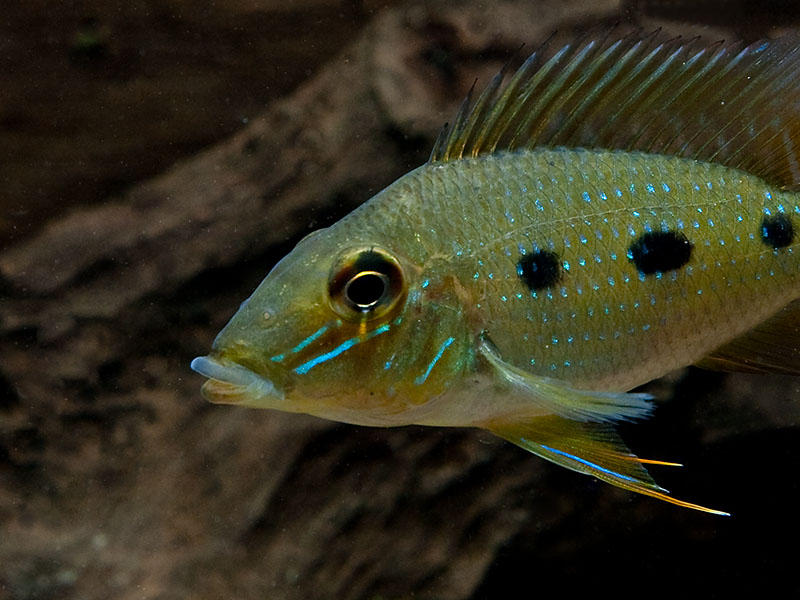
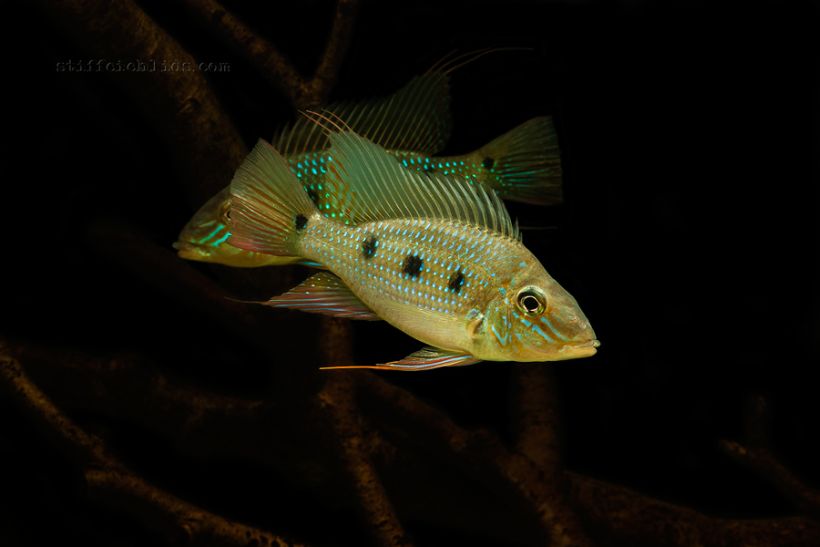
本种体侧有三枚暗斑,可区别于圣珠母丽鱼(Satanoperca daemon)的两枚及部分近缘种的一枚。它是基质产卵鱼,不能因为同属某些种口孵便将其归为口孵。
图片
图片来自 SeriouslyFish,版权归各摄影者所有。
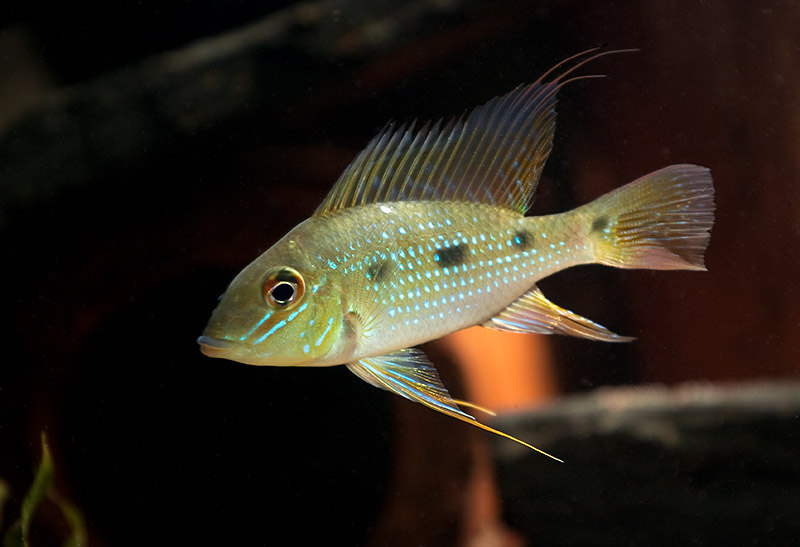
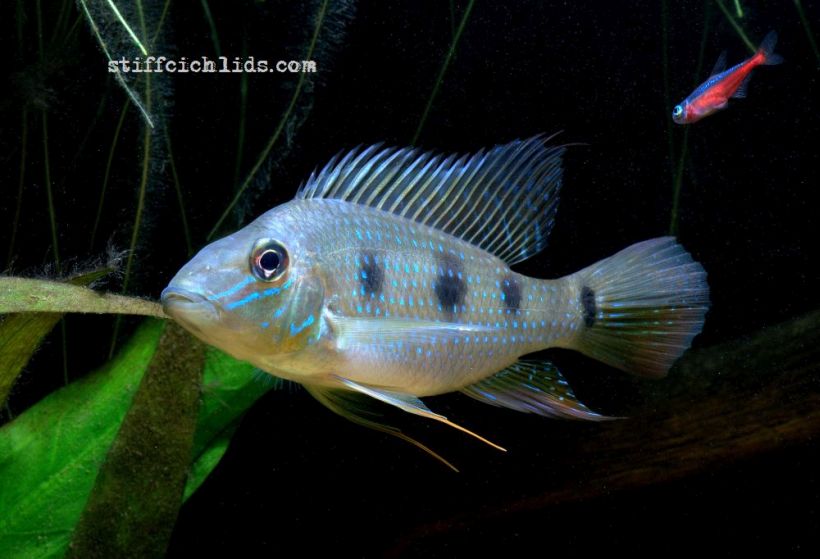
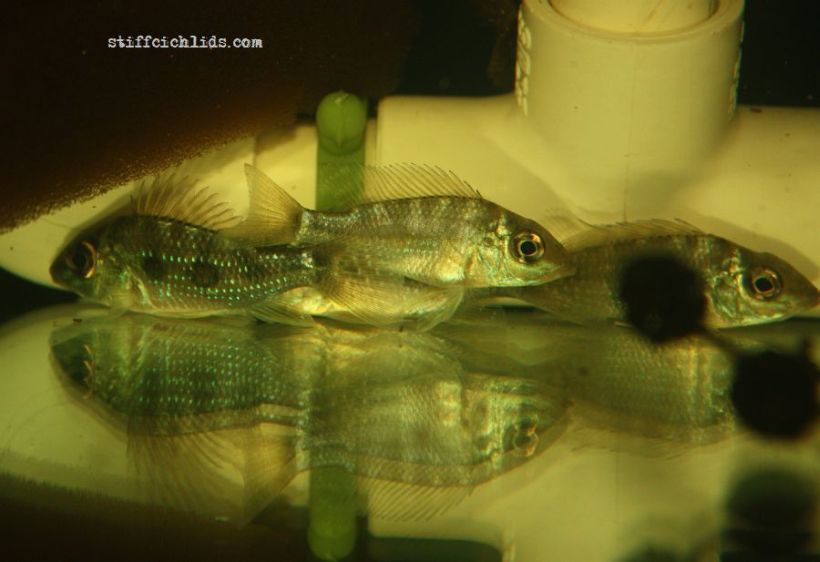
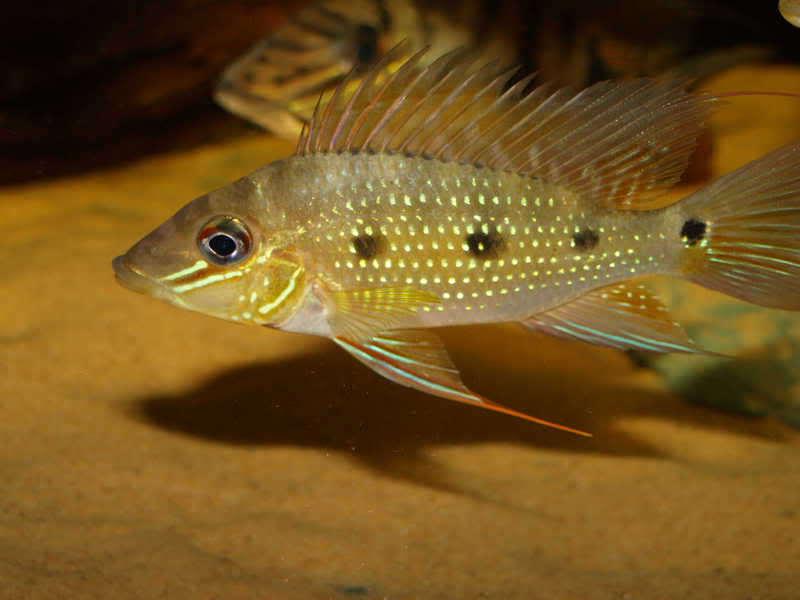
English
Overview
Satanoperca acuticeps differs from many eartheaters in being less exclusively tied to bottom feeding and apparently somewhat adapted to open-water life. It is usually very peaceful outside reproduction but highly sensitive to deteriorating water quality and chemical instability.
Distribution & habitat
Native to the central Brazilian Amazon, it occurs in the main channel and lower tributaries between the Tapajós and Tefé, including the lower Negro and Branco systems. Clear or turbid water is more typical than nutrient-poor, tannin-dark blackwater. Main rivers, smaller tributaries and floodplain lakes provide sandy or muddy bottoms with leaves and submerged branches.
Aquarium setup
Allow at least approximately 180 × 60 cm of floor space. Although less bottom-focused than its relatives, it still needs soft sand. Coarse particles can impede feeding, damage gills or cause internal problems if swallowed. Subdued light, wood and branches make useful furnishings.
Heavy leaf litter is not advisable despite its natural occurrence: feeding fish can suspend decomposing fragments and clog filters or pumps. Use a mature system with ample canister or sump filtration and replace at least roughly 50–70% of the water weekly. Poor maintenance can accompany head and lateral-line erosion or impaired growth.
Diet & feeding
This is an omnivore. Wild foods include aquatic and terrestrial invertebrates, substantial zooplankton and phytoplankton, vegetation and detritus. Even large individuals struggle with large food pieces. Offer fine prepared foods with water fleas, brine shrimp, mosquito larvae and similar items, including plant-rich dry food. Gel mixtures are also useful. Three to four small daily meals suit its browsing pattern.
Behaviour & compatibility
Outside spawning it is tolerant of many appropriate peaceful fishes and does not prey on fish longer than a few millimeters. Avoid strongly territorial bottom dwellers and companions needing much harder or less acidic water. Stingray combinations have produced both successes and nighttime losses and should not be assumed reliably safe.
Keep at least five to eight. A hierarchy develops, and too few fish may result in persistent targeting of weaker individuals or an unsettled group. Juveniles show particularly strong grouping behavior.
Sexual dimorphism
Aquarium observations suggest slightly larger males with longer extensions to the rear dorsal fin, while gravid females become deeper-bodied. These are tendencies rather than reliable absolute differences.
Breeding
Both parents care for a substrate-laid brood, but aquarium reproduction is uncommon. Let juveniles pair naturally and expect at least a year before maturity. Space, nutrition and consistent maintenance matter more than any established single trigger.
The pair digs a large pit. The female deposits batches for the male to fertilize, then a thin layer of sand covers the eggs. She performs most egg care while he defends the surrounding area. Hatching takes two to three days. Both usually continue care afterward, though sometimes the female does so alone. Free-swimming fry accept brine-shrimp nauplii and microworms.
Notes
Three dark flank blotches distinguish this fish from the two of Satanoperca daemon and the single blotch of some related fish. It spawns on a substrate; mouthbrooding in other members of the genus should not be generalized to it.
来源
- https://www.seriouslyfish.com/species/satanoperca-acuticeps(抓取于 2026-10-10)
satanoperca-acuticeps · 文件: data/species/satanoperca-acuticeps.md · 状态: 草稿