小甲鲶 · Whiptail Catfish
概要
| 字段 | 值 |
|---|---|
| 类别 | 鱼 |
| 学名 | Rineloricaria parva |
| 别名 | 小锉甲鲶、小甲鯰、小銼甲鯰 |
| 分类 | 鲶形目 Siluriformes › 骨甲鲶科 Loricariidae › Rineloricaria |
| 水体 | 淡水 |
| 成体体长 | 11 cm |
| 饲养难度 | 入门 |
| 最小水体 | 68 L |
| 最小缸长 | 75 cm |
| 性情 | 温和 |
| 外部数据 | seriouslyfish rineloricaria-parva;fishbase 50597 |
| 原产地 | 巴西、巴拉圭、阿根廷 |
| 食性 | 杂食 |
| 繁殖方式 | 附着产卵 |
水质参数
| 参数 | 耐受范围 | 最适范围 | 单位 |
|---|---|---|---|
| 水温 | 20–25 | — | °C |
| pH | 6–7.5 | — | — |
| 总硬度 | 2–15 | — | dGH |
概述
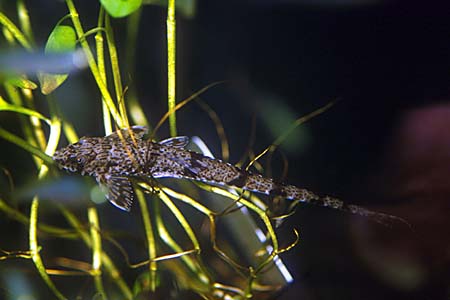
小甲鲶(Rineloricaria parva)的商品身份并不总可靠,真种应同时有只跨体背的暗带,以及尾鳍上下端丝状延长。部分同名贸易鱼可能是杂交鱼,繁殖前应先认真核对亲鱼身份。
分布与栖息地
原生巴西、巴拉圭和阿根廷,常生活在清水或富泥沙白水中的沙底落叶层。
饲养环境
小群可参考约 75 × 30 × 30 厘米,沙底加落叶、枝木、圆石,并提供洞穴或小管。密植缸也可,光线不要过强;它不适应高温,混养时须匹配这一点。
食性与喂食
天然食物包括附着生物和小甲壳类,缸内杂食,可用下沉干粮、菠菜、西葫芦等蔬菜,搭配红虫或水蚤。
习性与混养
性情温和,宜小群,与安静、不会强抢食的鱼共处。除繁殖时一般不占地盘,活跃或凶猛伙伴容易令它长期躲藏。
雌雄区分
成熟雄鱼头部与胸鳍长有齿状棘,雌鱼没有。
繁殖
可六尾以上幼鱼自然配对,水偏软、略酸,提供直径小于约 5 厘米的管洞。雄鱼选洞清理,雌鱼产卵后由雄鱼受精并单独护卵,约四至五天孵化,再二至三天自由游动。为减少其他鱼捕食,可移开伙伴或转移整个管洞,幼鱼游动后可移开雄鱼。柔软蔬菜、藻膜、微虫与初孵丰年虾应持续供应,并每天少量换水。迟迟不产时可尝试偏凉水换约 50%~70%。
图片
图片来自 SeriouslyFish,版权归各摄影者所有。
English
Overview
True Rineloricaria parva combines dark bands confined to the upper body with filaments at both tail tips. Some fishes sold under the name may be hybrids, so identification deserves attention before establishing a breeding group.
Distribution & habitat
It comes from Brazil, Paraguay, and Argentina, living among leaves over sandy beds in clear or sediment-rich waters.
Aquarium setup
A small group can use roughly 75 by 30 by 30 cm, with leaves over sand, wood, stones, and small cavities. Planted arrangements are also suitable under subdued light. Avoid pairing it with fishes whose temperature needs force it into overly warm conditions.
Diet & feeding
Its natural diet includes surface communities and small crustaceans. Offer sinking prepared foods and vegetables with suitable live or frozen invertebrates for a varied omnivorous menu.
Behaviour & compatibility
Keep a small group with quiet fishes that do not dominate feeding. It is generally nonterritorial outside breeding, while forceful companions can make it withdrawn and poorly fed.
Sexual dimorphism
Mature males have head and pectoral odontodes that females lack.
Breeding
Raise six or more juveniles to obtain a pair, using soft, slightly acidic water and narrow breeding tubes. The male prepares a cavity, fertilizes the female’s eggs, and provides all subsequent care. Eggs hatch after four to five days, with free swimming two to three days later. Remove other fish or transfer the occupied tube if predation is a concern, and remove the male once young swim freely. Keep soft vegetables, algae, and tiny live prey available continuously, with small daily water changes. A 50–70% cooler-water change can be tried if spawning does not start.
来源
- https://www.seriouslyfish.com/species/rineloricaria-parva(抓取于 2026-10-10)
rineloricaria-parva · 文件: data/species/rineloricaria-parva.md · 状态: 草稿