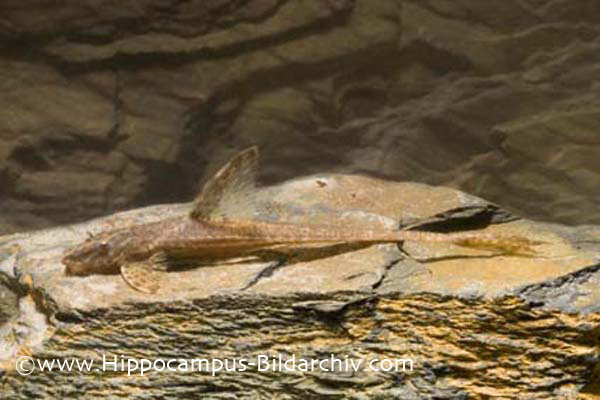
矛状锉甲鲶 · Whiptail Catfish
概要
| 字段 | 值 |
|---|---|
| 类别 | 鱼 |
| 学名 | Rineloricaria lanceolata |
| 别名 | 矛狀銼甲鯰 |
| 分类 | 鲶形目 Siluriformes › 骨甲鲶科 Loricariidae › Rineloricaria |
| 水体 | 淡水 |
| 成体体长 | 9.5 cm |
| 饲养难度 | 入门 |
| 性情 | 温和 |
| 外部数据 | seriouslyfish rineloricaria-lanceolata;fishbase 50585 |
| 原产地 | 秘鲁、巴西 |
| 食性 | 杂食 |
| 繁殖方式 | 附着产卵 |
水质参数
| 参数 | 耐受范围 | 最适范围 | 单位 |
|---|---|---|---|
| 水温 | 25–28 | — | °C |
| pH | 6–8 | — | — |
| 总硬度 | 5–20 | — | dGH |
概述
矛状锉甲鲶(Rineloricaria lanceolata)体形较小、性情安静,常作为鞭尾型异型出售。配对和产卵相对容易,但幼鱼需要连续摄食,不能因亲鱼好养而省略育苗准备。
分布与栖息地
分布于秘鲁和巴西,通常在沙底落叶间生活,清水和富含悬浮泥沙的白水均有记录。
饲养环境
一对可参考约 45 × 37.5 × 30 厘米,群体需更大空间。以沙、落叶、枝木和圆石搭景,提供石洞、木洞或小管,并保持柔和光照;密植缸亦适合。
食性与喂食
天然刮食附着生物和小甲壳类,缸内可喂下沉干粮、菠菜、西葫芦等蔬菜,以及红虫、水蚤等活冷冻食物。
习性与混养
宜小群饲养,平时不争领地,繁殖时例外。伙伴以温和、不强抢食的小鱼与鲶鱼为主,避免好斗或过分活跃者令它退缩。
雌雄区分
雄鱼成熟后头部和胸鳍棘上有齿状突起,雌鱼没有。
繁殖
六尾以上幼鱼便于自然配对,软而略酸的水、直径小于约 5 厘米的管洞与多样植物动物饵有助调理。雄鱼清理产卵处,雌鱼产后不护卵,雄鱼受精并守洞扇水。约四至五天孵化,再二至三天自由游动,此时可移走雄鱼;为减少捕食,也可提前移开其他鱼或将管洞转入育苗缸。幼鱼应持续吃到浸软植物、藻膜、微虫和初孵丰年虾,每天少量换水。若不产卵,可尝试偏凉水换约 50%~70%。
图片
图片来自 SeriouslyFish,版权归各摄影者所有。
English
Overview
A small, quiet whiptail, Rineloricaria lanceolata can be a rewarding breeding subject. Spawning is relatively straightforward when fish are well conditioned, while fry require much closer attention to continuous feeding and clean water.
Distribution & habitat
It occurs in Peru and Brazil, usually among leaves over sand in clear or sediment-rich white waters.
Aquarium setup
A pair can use roughly 45 by 37.5 by 30 cm, with more room for a group. Leaves over sand, branches, rounded stones, and small cavities create suitable shelter. A planted arrangement works too, provided light is not harsh.
Diet & feeding
Grazed surface growth and small crustaceans contribute to its natural diet. In aquaria, combine sinking prepared foods and vegetables with small live or frozen invertebrates.
Behaviour & compatibility
A small group is suitable. Territoriality is mainly a breeding behavior; otherwise it is very peaceful. Avoid aggressive or forceful feeders that may intimidate it and deprive it of food.
Sexual dimorphism
Mature males show odontodes on the head and pectoral spines, which females lack.
Breeding
Raise six or more juveniles to obtain a pair, using soft, slightly acidic water and small tubes below about 5 cm in diameter. Condition with varied plant and animal foods. The male cleans the site, fertilizes deposited eggs, and guards and fans them after the female departs. Hatching takes four to five days, followed by free swimming two to three days later. Remove the male then; other fishes or the occupied tube can be moved earlier to limit predation. Keep softened greens, algae, and tiny live foods available continuously, and make small daily changes. A 50–70% cooler-water change can help initiate spawning if needed.
来源
- https://www.seriouslyfish.com/species/rineloricaria-lanceolata(抓取于 2026-10-10)
rineloricaria-lanceolata · 文件: data/species/rineloricaria-lanceolata.md · 状态: 草稿