Rhinogobius zhoui
概要
| 字段 | 值 |
|---|---|
| 类别 | 鱼 |
| 学名 | Rhinogobius zhoui |
| 分类 | 虾虎鱼目 Gobiiformes › 虾虎鱼科 Gobiidae › Rhinogobius |
| 水体 | 淡水 |
| 原产地 | 中国 |
| 成体体长 | 3.6 cm |
| 饲养难度 | 中等 |
| 最小水体 | 54 L |
| 最小缸长 | 60 cm |
| 群居方式 | 群游 |
| 领地性 | 是 |
| 水流偏好 | 高 |
| 外部数据 | seriouslyfish rhinogobius-zhoui;fishbase 65269 |
| 特征 | 吃虾: 是 |
| 繁殖方式 | 附着产卵 |
水质参数
| 参数 | 耐受范围 | 最适范围 | 单位 |
|---|---|---|---|
| 水温 | 19–24 | — | °C |
| pH | 7–7.8 | — | — |
| 总硬度 | 5–12 | — | dGH |
概述
Rhinogobius zhoui 是广东海丰莲花山周边溪流的小型虾虎,雄鱼红斑与亮色鳍边十分醒目。人工繁殖虽已实现,却比部分近缘鱼困难,关键难点包括雄鱼巡游干扰、吃卵和初孵鱼苗的安置。
分布与栖息地
似乎限于广东海丰县莲花山附近少数溪流,不是广州同名莲花山。
生活在浅水、富氧的源头溪流与小支流,浅急流和缓流潭交替,有时还有跌水。底床以小石、沙、砾为主,夹杂大石、落叶及部分水草。暴雨后水深、流速和悬浮物可暂时大增。
饲养环境
用大小不同石块、沙和细砾构成溪流式底床,沉木、陶管、花盆提供阴影和视线隔断。爪哇蕨、黑木蕨、水榕等耐受植物可附着造景。
保持高溶氧、适当水流和洁净水质,每周约 30%~50% 换水,不必全缸制造激流。
食性与喂食
以小型活饵、冷冻饵作为主要投喂,例如孑孓、红虫、丰年虾。可能接受干粮,但不宜常规依赖,准备繁殖时尤其如此。
习性与混养
通常以专养更合适。若混养,可选体形小、温和、活动于上层且环境相容的鱼。米虾等小型无脊椎动物通常会被吃掉,不宜作同伴。
不与其他吻虾虎属鱼混养繁殖,以免面对尚未明确的杂交风险。雄鱼之间虽有领地较量,足够遮蔽下一般不易重伤;日常群体建议至少两雄、雌鱼不少于雄鱼,缺乏同伴可能不活跃。
雌雄区分
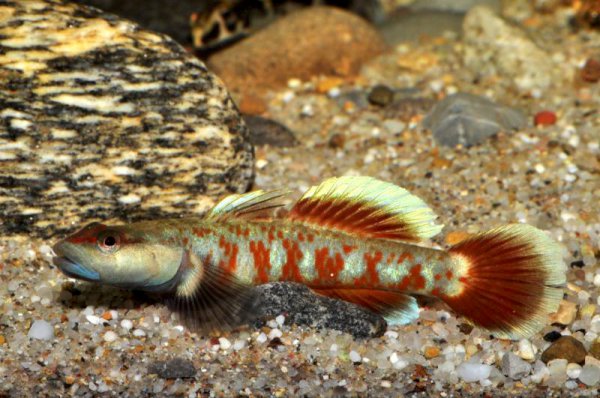
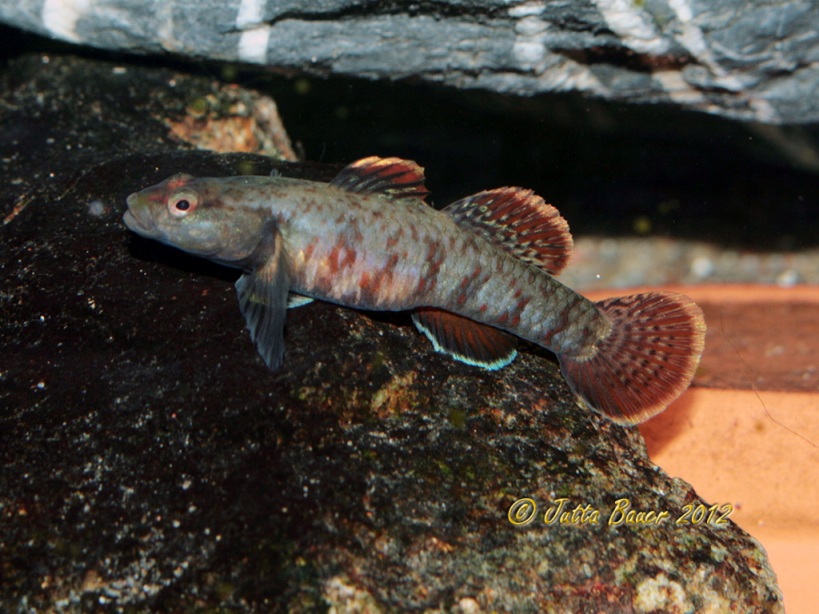
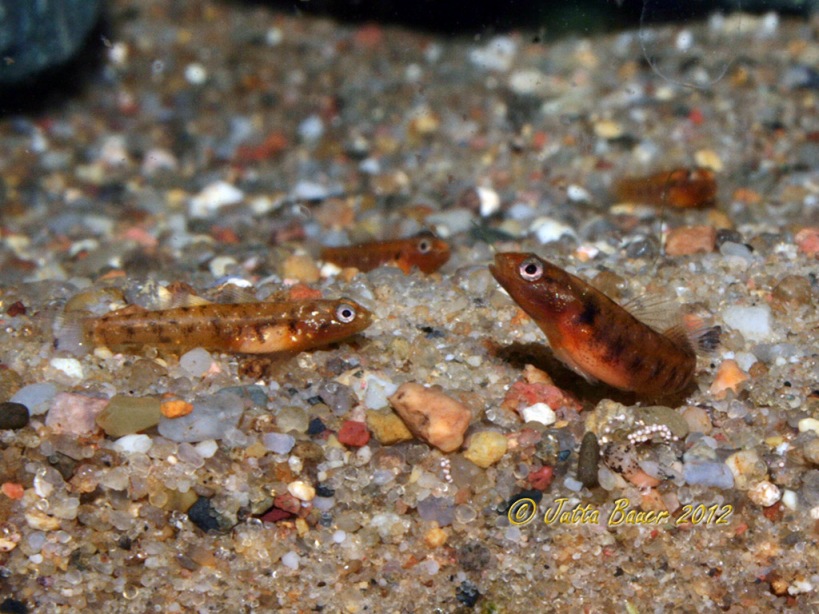
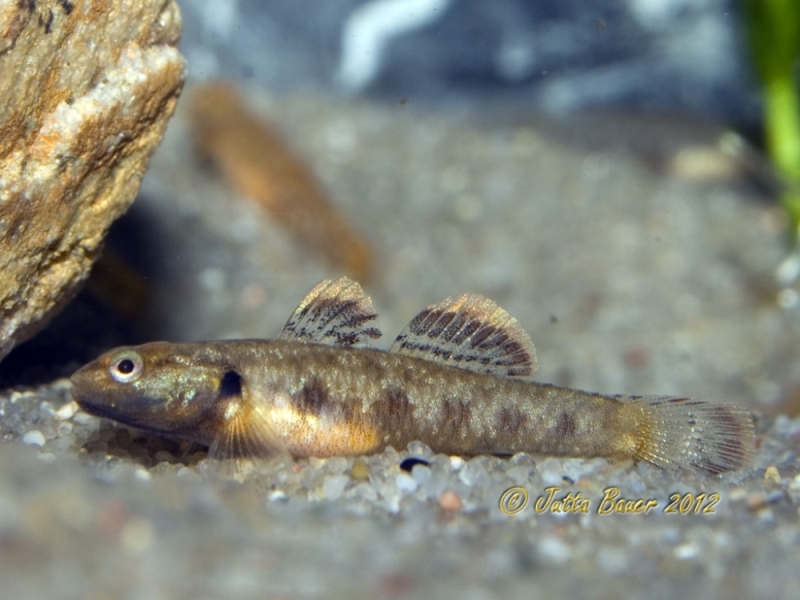
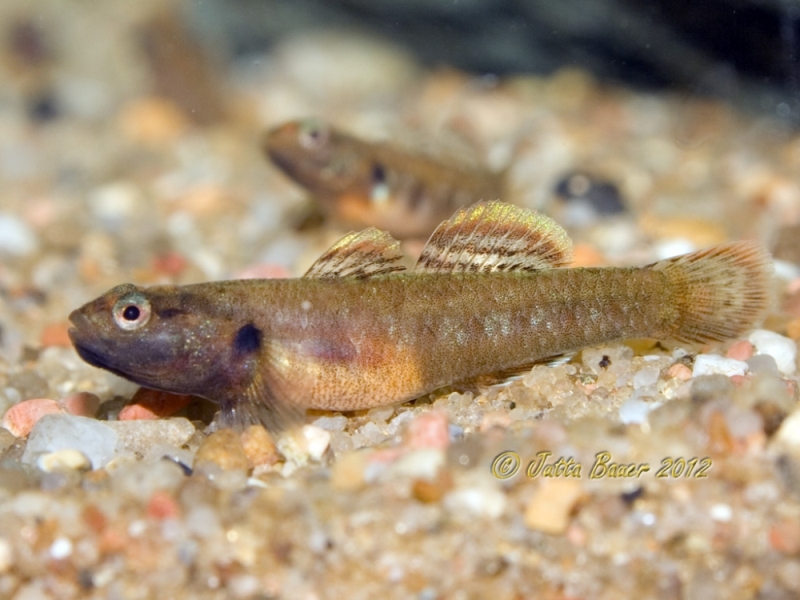
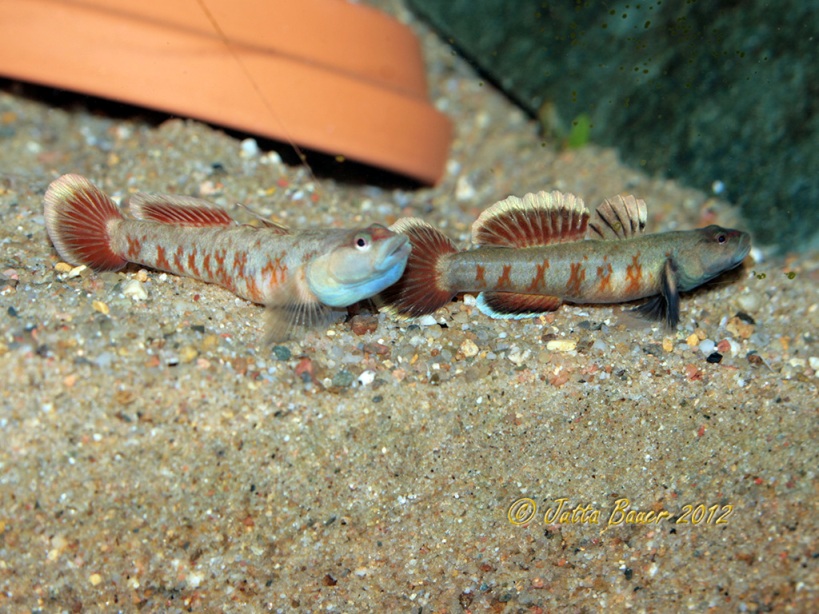
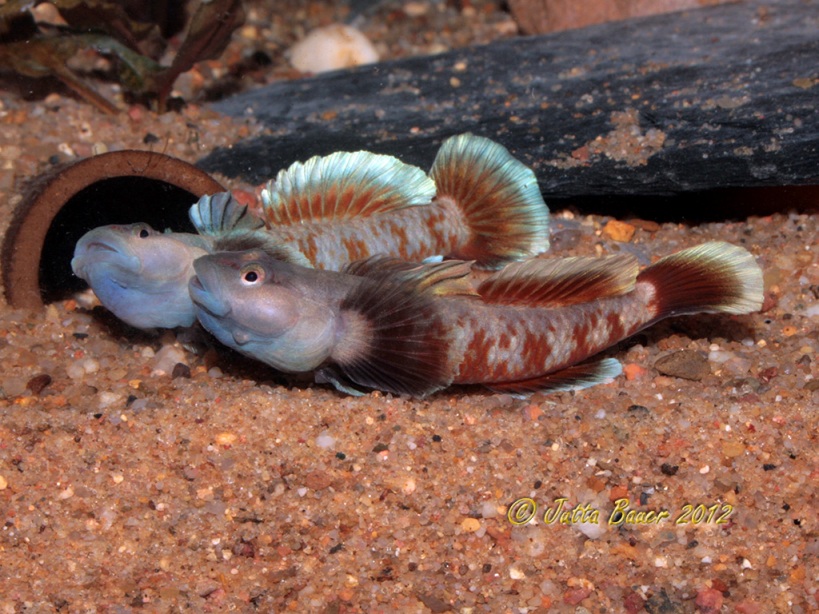
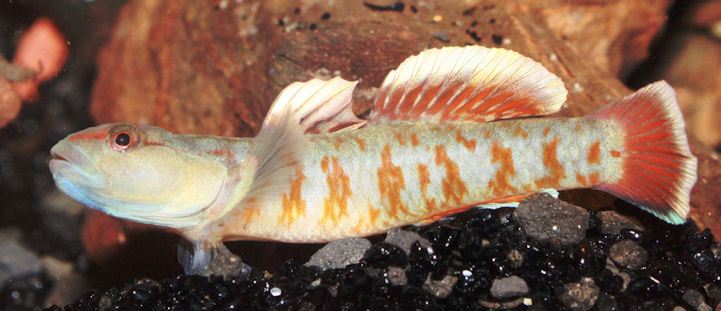
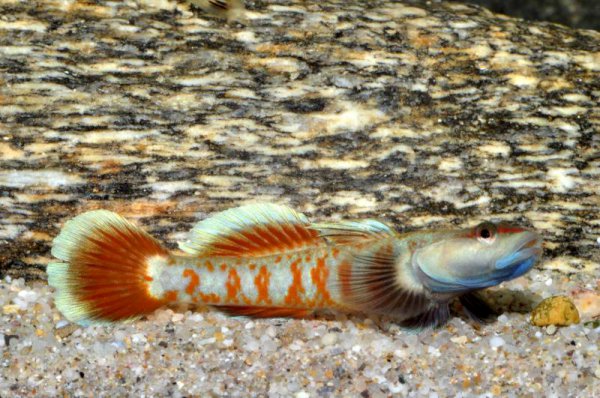
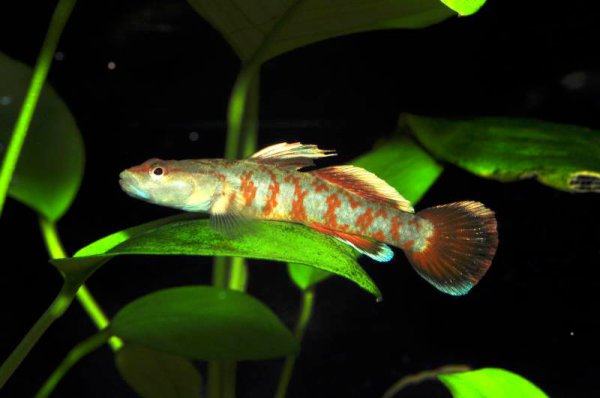
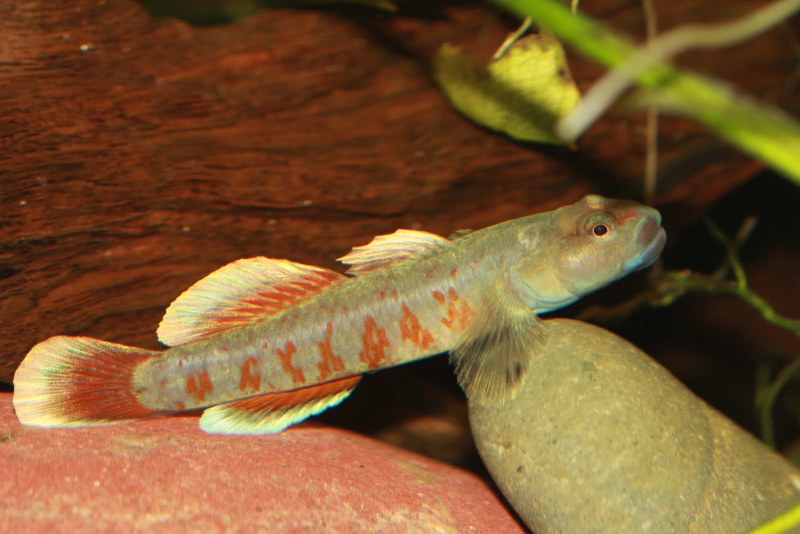
雄鱼不成对鳍更长,鳍缘有厚而亮的蓝白色带,幼鱼较早就能看见,可用于分辨。雌鱼两背鳍和尾鳍边缘偏红。
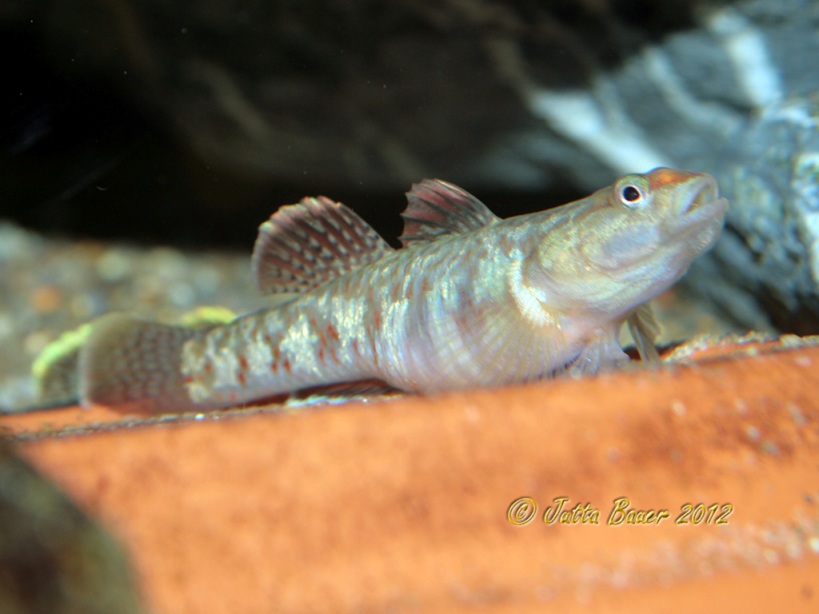
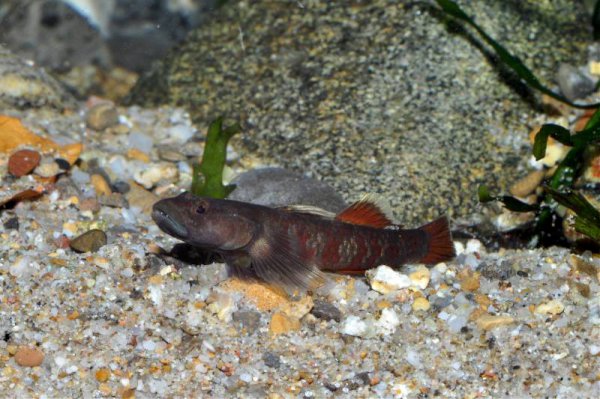
体侧颜色不是同样可靠的判断方法,雌鱼可很淡也可相当鲜艳,有时近似雄鱼。
繁殖
繁殖时可只用一至两雄,每雄配一条或更多雌鱼,同时提供多个石下、陶管或花盆洞位。与许多近缘鱼只守一个洞不同,雄鱼会巡游一片区域并干扰其他雄鱼。
雌鱼常主动求偶,准备好时甚至攻击不愿繁殖的雄鱼,配对需要耐心。双方可能在洞里停留两至五天,期间不要打扰。雌鱼产后被赶出,卵附在洞顶,由雄鱼守护。
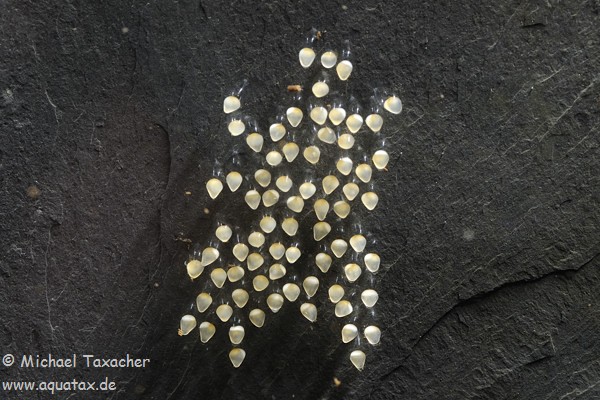
新手亲鱼可能吃卵、粘卵不良或受精不全,水质差似乎也会降低雄鱼受精能力。可在水中轻抬洞体检查,卵长约 4 mm,一窝约三十至六十枚。随后移走其他鱼,或把雄鱼与卵一起转移。
部分雄鱼产后二十四至四十八小时持续吃卵时,需改人工孵化。连同产卵基质移到漂浮网式繁殖盒,避免实壁塑料盒;操作时不离水、不强光照射。用小水泵或气石向卵提供定向水流,模拟雄鱼扇水。
卵容易受霉菌或细菌影响,有用桤木果配少量盐、或特定防病配方辅助的经验,但不能把某一配方的滴数当作所有商品通用剂量。正常护卵的雄鱼可一直留到孵化,不必照搬人工孵化处理。
孵化通常需十三至二十一天,受温度影响。临近孵化雄鱼加快扇水,可能帮助破膜;人工孵化常分散持续约五天,有的鱼苗难以脱卵。
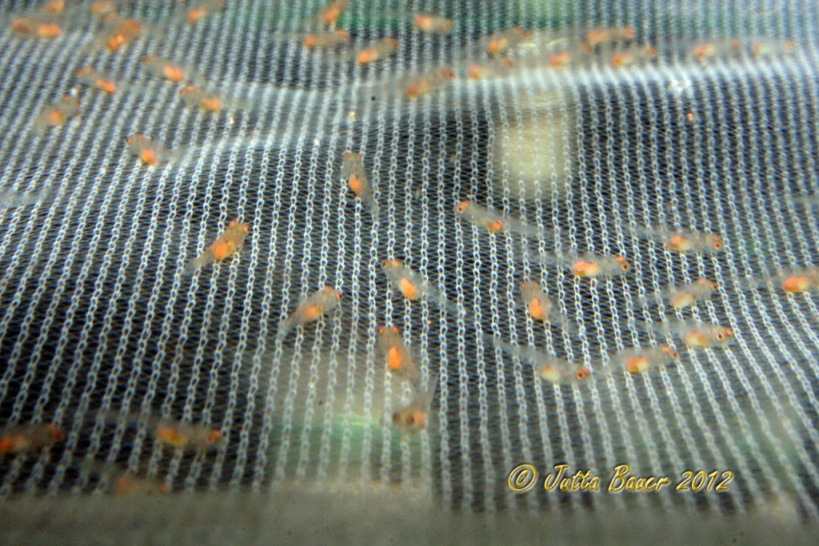
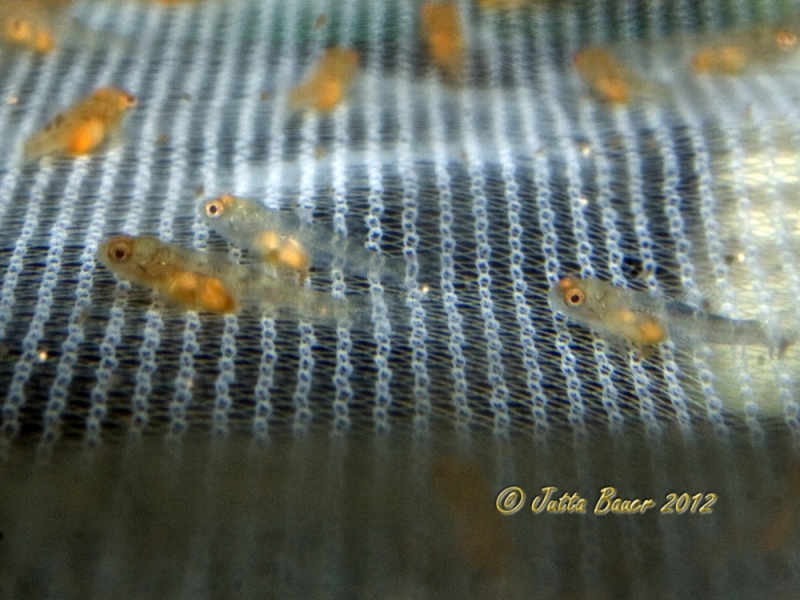
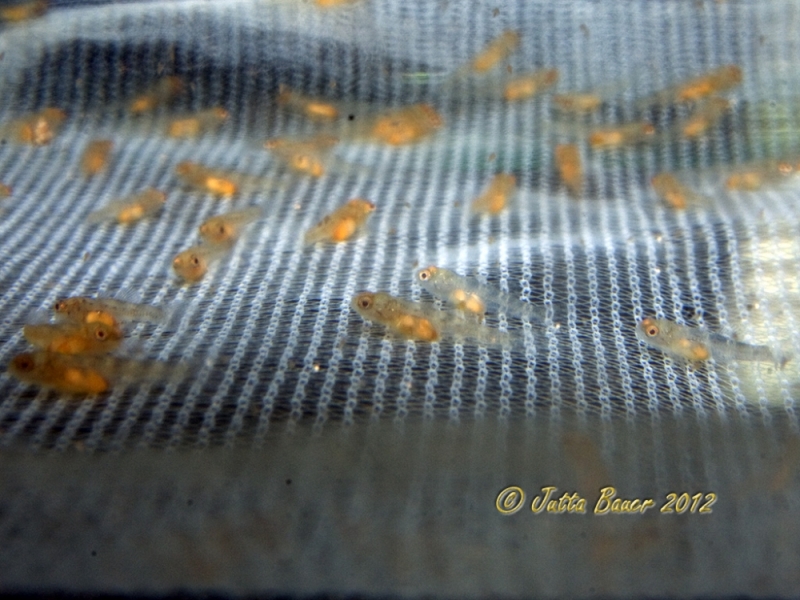
初孵鱼苗带大卵黄囊,数日内活动有限。悬空网可减少落在实底时出现的大量健康问题。卵黄约一周吸收,期间保持水流,第二至第三天即可尝试丰年虾无节幼体。之后可移出网盒,生长较慢,每二十四至四十八小时换水有助育成。
补充说明
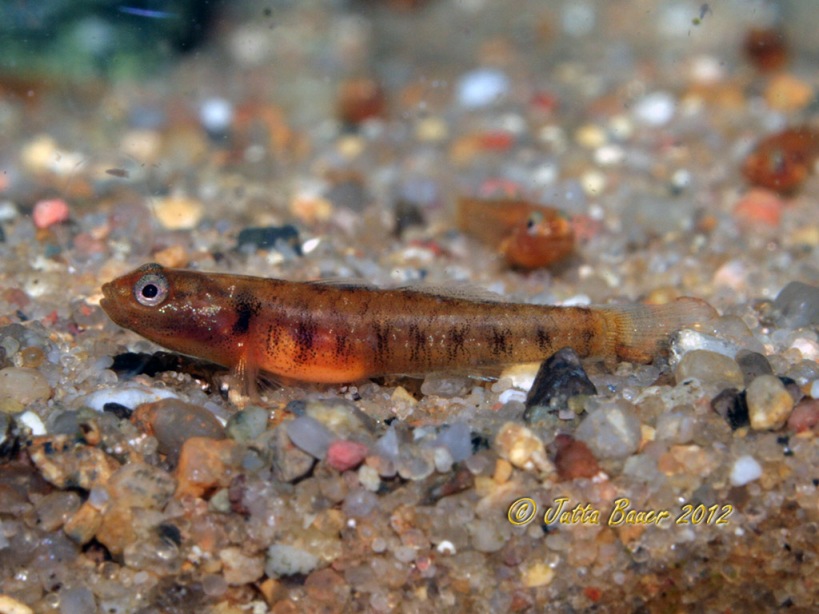
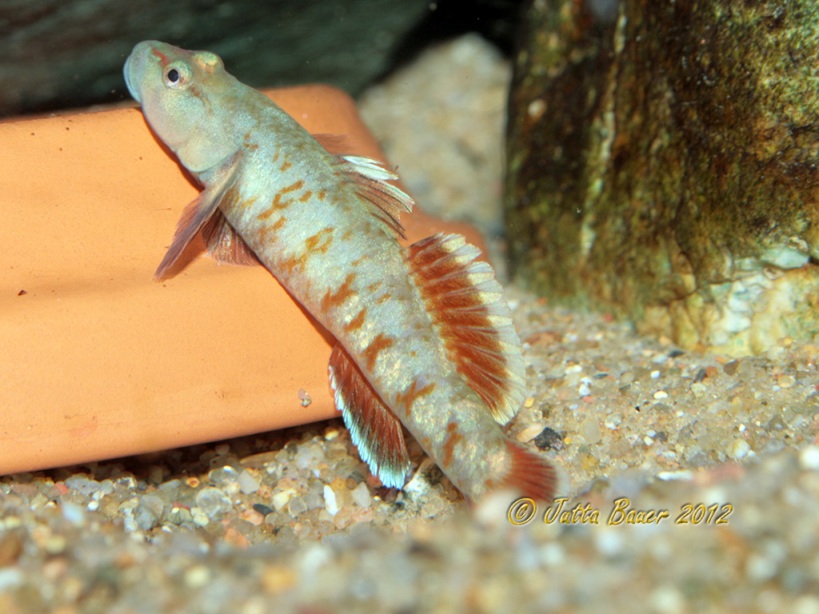
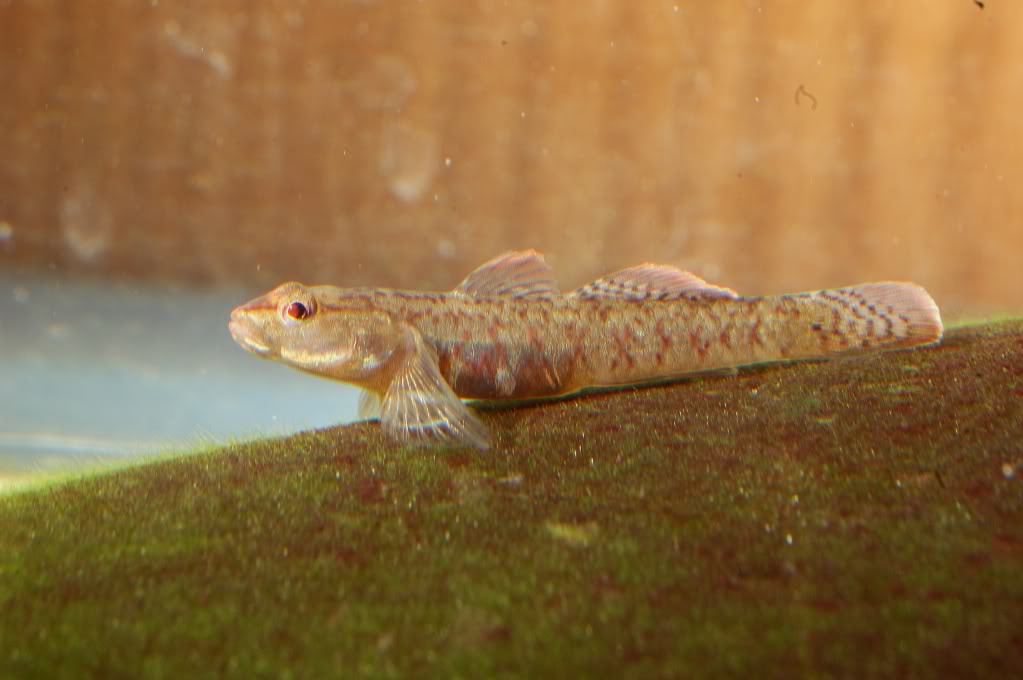
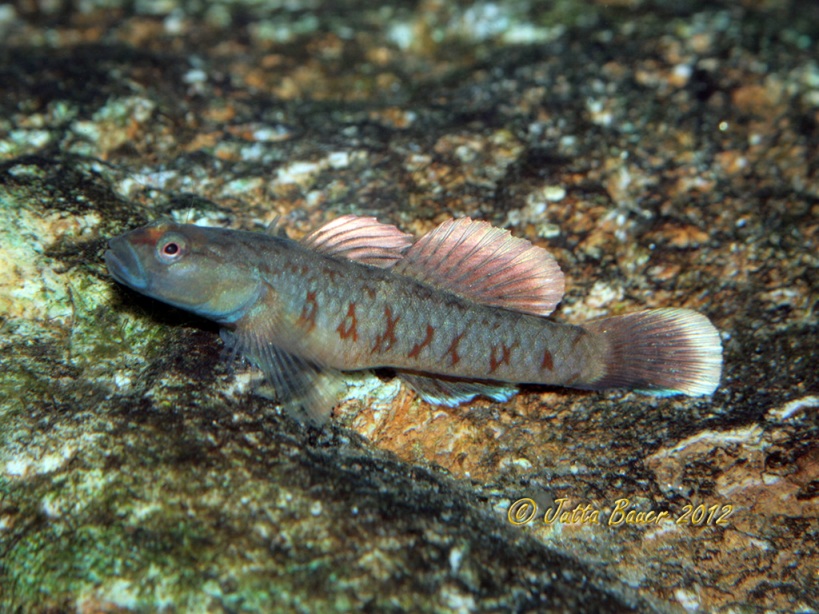
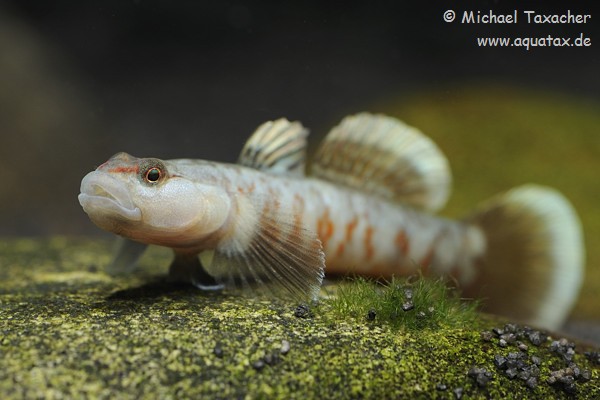
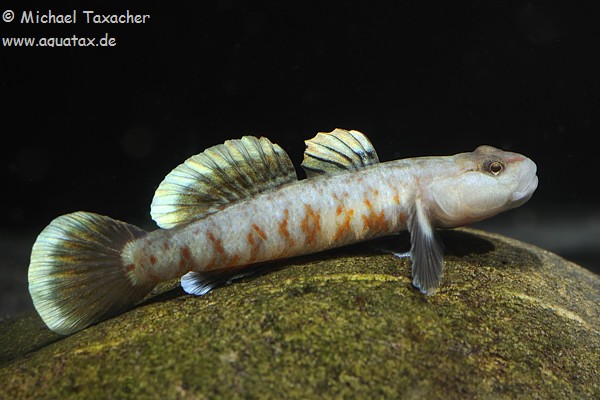
成年雄鱼体侧有六至八枚红斑,各不成对鳍边有宽白带,第一背鳍没有黑斑,颊部和鳃膜也没有色斑。贸易俗名较多,可靠来源和这些特征比“火焰”等泛称更有用。
图片
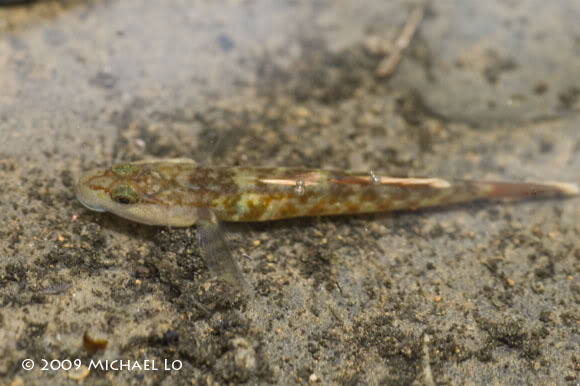
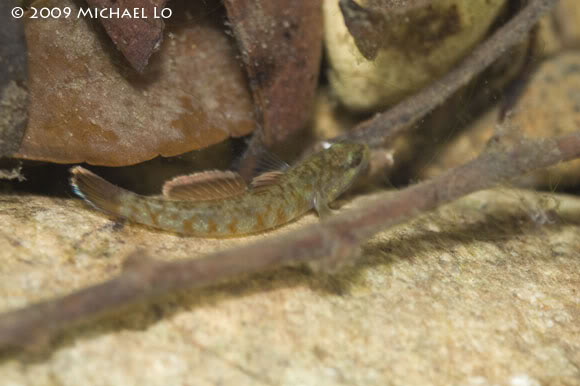
图片来自 SeriouslyFish,版权归各摄影者所有。
English
Overview
The striking male markings of Rhinogobius zhoui come with demanding breeding behavior. This small goby from streams near Lianhua Mountain in Haifeng, Guangdong, has reproduced in captivity, but roaming males, egg eating, and early fry care make it harder than some relatives.
Distribution & habitat
It appears restricted to a few streams around Haifeng's Lianhua Mountain, not the mountain of the same name in Guangzhou.
Shallow, oxygen-rich headwaters alternate riffles with pools and occasional cascades. Small rocks, sand, and gravel lie among larger boulders, leaf patches, and some aquatic plants. Heavy rain can temporarily increase depth, current, and suspended sediment.
Aquarium setup
Use varied stones, sand, and fine gravel with wood, ceramic tubes, or pots providing shade and broken sight lines. Hardy Java fern, Bolbitis, or Anubias can be attached to the furnishings.
Maintain high oxygen levels, moderate movement, and clean water with weekly changes of roughly 30–50%. Torrent-like conditions throughout are unnecessary.
Diet & feeding
Small live and frozen foods should form the principal ration, including mosquito larvae, bloodworms, and Artemia. Dry food may be accepted but should not become routine, especially during breeding preparation.
Behaviour & compatibility
A dedicated aquarium is usually preferable. Any companions should be small, peaceful upper-water fishes with compatible needs. Small freshwater shrimp are usually eaten.
Avoid mixing other Rhinogobius for breeding while hybridization potential remains unresolved. Males defend space, but sufficient cover usually prevents serious injury. For routine group housing, at least two males with as many or more females encourages activity; insufficient company may leave fish listless.
Sexual dimorphism
Males develop longer unpaired fins with broad, bright blue-white margins, visible early enough to help sex young fish. Female dorsal and caudal margins are reddish.
Body color is less reliable because females range from pale to strongly colored and can resemble males.
Breeding
Use only one or two males for an attempt, with at least one female per male and several rock, tube, or pot shelters. Unlike many relatives that defend one cave, males patrol an area and interfere with competitors.
Females commonly initiate courtship and may attack an unresponsive male. Patience may be needed. A pair can remain hidden for two to five days and should not be disturbed. After spawning, the female is expelled and the male tends eggs attached to the cave roof.
Inexperienced fish may eat eggs, attach them poorly, or achieve incomplete fertilization. Poor water quality also appears to impair male fertility. Inspect by gently tilting the shelter underwater. Clutches contain around thirty to sixty eggs approximately 4 mm long. Remove other fishes or transfer the male and eggs together.
Males that repeatedly eat eggs within twenty-four to forty-eight hours require artificial incubation instead. Move the eggs with their substrate into a floating mesh nursery, avoiding solid-sided traps. Keep them submerged and away from strong light, directing gentle pump flow or aeration toward them to replace fanning.
Fungal and bacterial problems remain significant. Alder cones with a small salt addition or particular anti-pathogenic preparations have been used, but a drop count for one formulation is not a universal product dose. A reliable guarding male can remain until hatching without those artificial-incubation treatments.
Incubation generally lasts thirteen to twenty-one days depending on temperature. Increased late-stage male fanning may aid emergence. Artificially incubated eggs may hatch over about five days, with some fry struggling to escape.
New fry have large yolk sacs and limited mobility for several days. A suspended net reduces the health problems observed when they settle on a solid floor. Maintain flow during the roughly week-long yolk period and try Artemia nauplii from day two or three. Afterward, juveniles can leave the net. Growth is slow, with changes every twenty-four to forty-eight hours supporting rearing.
Notes
Adult males have six to eight red flank blotches and broad white unpaired-fin margins, without a black first-dorsal spot or pigmented cheek and branchiostegal membrane. These features and a dependable origin are more useful than broad flame-goby trade names.
来源
- https://www.seriouslyfish.com/species/rhinogobius-zhoui(抓取于 2026-10-10)
rhinogobius-zhoui · 文件: data/species/rhinogobius-zhoui.md · 状态: 草稿