雀斑吻鰕虎鱼
概要
| 字段 | 值 |
|---|---|
| 类别 | 鱼 |
| 学名 | Rhinogobius lentiginis |
| 别名 | 雀斑吻鰕虎魚、Ctenogobius lentiginis |
| 分类 | 虾虎鱼目 Gobiiformes › 虾虎鱼科 Gobiidae › Rhinogobius |
| 水体 | 淡水 |
| 原产地 | 中国 |
| 成体体长 | 3.2 cm |
| 饲养难度 | 中等 |
| 最小水体 | 54 L |
| 最小缸长 | 60 cm |
| 群居方式 | 群游 |
| 外部数据 | seriouslyfish rhinogobius-lentiginis;fishbase 54776 |
水质参数
| 参数 | 耐受范围 | 最适范围 | 单位 |
|---|---|---|---|
| 水温 | 16–24 | — | °C |
| pH | 6–8 | — | — |
| 总硬度 | 2–15 | — | dGH |
概述
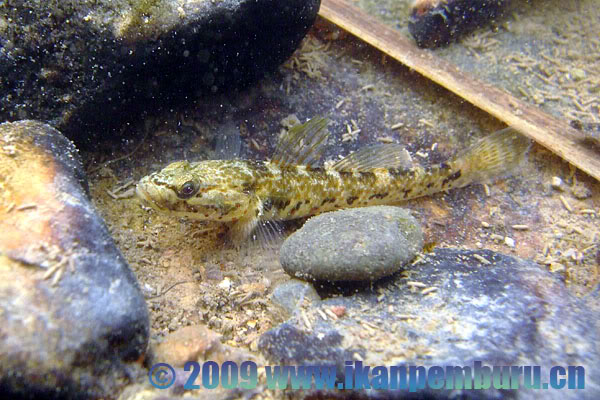
雀斑吻鰕虎鱼(Rhinogobius lentiginis)是一种中国浙江的小型溪流虾虎鱼,脸颊和鳃盖散布不规则深色斑点。它似乎尚未进入观赏鱼贸易,不能把商家使用的相近名称直接当作可靠鉴定。
分布与栖息地
现有记录指向浙江的若干河流,模式产地位于天台县灵江。它似乎为该省特有种,生活在小河、支流与溪流中,河床由砾石、岩石、大石和裸露基岩组成。水位、流速及浑浊程度会随季节改变。
饲养环境
小群饲养可参考底面约 60 × 30 cm 的水族箱。其他具体的缸内管理经验尚不能由它的分布和体形推定。
食性与喂食
吻鰕虎鱼属通常捕食小型无脊椎动物和甲壳类。按这一属的饲养建议,可提供红虫、蚊幼虫、丰年虾、水蚤和糠虾等小型活饵或冷冻饵料。适应后可能接受干饲料,但不宜长期仅靠干饲料喂养。
雌雄区分
照片显示雄鱼的第一背鳍鳍条可能较长,这只是识别线索,不能当作已经充分验证的性别判据。
补充说明
与外形相近的同属种相比,本种头侧为散斑而非单条深色竖纹,鳍条和鳞片计数也有差异。吻鰕虎鱼的腹鳍愈合成吸盘状结构,可附着在水下岩面;属内不同种的生活史有差别,不能仅凭属名判断是否需要海水阶段。
图片
图片来自 SeriouslyFish,版权归各摄影者所有。

English
Overview
A spotted cheek and gill cover are conspicuous features of Rhinogobius lentiginis, a small stream goby associated with Zhejiang in eastern China. It seems unlikely to have reached the aquarium trade. Similar-looking fish sold under loosely applied names should therefore not be assumed to belong to this species.
Distribution & habitat
Records suggest a range restricted to Zhejiang, with the type locality in the Lingjiang River in Tiantai County. The fish occupies small rivers and streams whose beds contain gravel, stones, larger rocks, and exposed bedrock. Flow, depth, and suspended sediment change seasonally.
Aquarium setup
A small group is suggested for an aquarium with a footprint of about 60 × 30 cm. Detailed husbandry cannot be inferred simply from the fish's size or geographic range.
Diet & feeding
Members of Rhinogobius generally take small invertebrate prey, including crustaceans. Genus-level feeding guidance favors appropriately sized live or frozen items: bloodworms, mosquito larvae, brine shrimp, water fleas, and mysids. Some individuals may learn to accept dry food, but it should not form the regular basis of feeding.
Sexual dimorphism
Available photographs suggest that males may develop longer rays in the first dorsal fin. This is a tentative visual clue rather than a thoroughly established sexing character.
Notes
Head markings, fin-ray counts, and scale counts help distinguish this fish from its closest relatives. The pelvic fins of these gobies unite into an attachment disc. Reproductive migrations vary within the genus, so a marine larval phase should not be assigned to this species merely because it is a Rhinogobius.
来源
- https://www.seriouslyfish.com/species/rhinogobius-lentiginis(抓取于 2026-10-10)
rhinogobius-lentiginis · 文件: data/species/rhinogobius-lentiginis.md · 状态: 草稿