Rhinogobius chiengmaiensis · Chiangmai Stream Goby
概要
| 字段 | 值 |
|---|---|
| 类别 | 鱼 |
| 学名 | Rhinogobius chiengmaiensis |
| 分类 | 虾虎鱼目 Gobiiformes › 虾虎鱼科 Gobiidae › Rhinogobius |
| 水体 | 淡水 |
| 原产地 | 泰国 |
| 成体体长 | 5 cm |
| 饲养难度 | 中等 |
| 最小水体 | 54 L |
| 最小缸长 | 60 cm |
| 群居方式 | 群游 |
| 领地性 | 是 |
| 水流偏好 | 高 |
| 外部数据 | seriouslyfish rhinogobius-chiengmaiensis;fishbase 61736 |
| 繁殖方式 | 附着产卵 |
水质参数
| 参数 | 耐受范围 | 最适范围 | 单位 |
|---|---|---|---|
| 水温 | 18–26 | — | °C |
| pH | 6–8 | — | — |
| 总硬度 | 2–15 | — | dGH |
概述
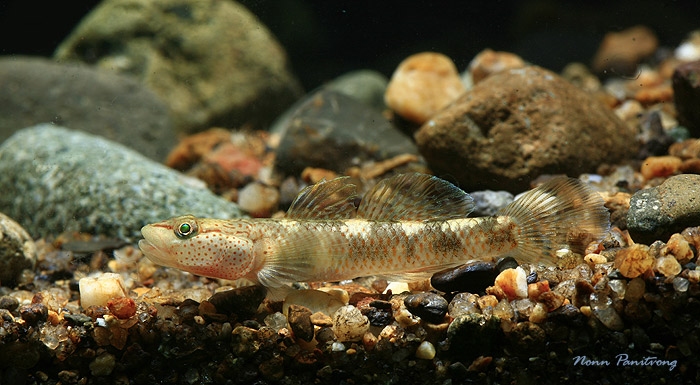
Rhinogobius chiengmaiensis 是泰国湄南河水系的小型溪流虾虎,常被误标为近缘种。它需要富氧、洁净的流水环境,同种互动重要,不能因雄鱼有领地性就长期只养单条。
分布与栖息地
仅知来自湄南河中上游,包括滨河、难河等主要支流,模式产地在清迈。
生活在小河、支流和溪流中,底床有砾石、岩块和裸露基岩,水流、深度与浑浊度随季节变化。水中通常缺少植物,岸边和悬垂植被却可能很浓密。
饲养环境
用不同大小石块、沙和细砾模拟溪流,配沉木、陶管、花盆形成洞隙、阴影和视线隔断。耐受的爪哇蕨、黑木蕨、水榕等可附着造景生长。
不耐有机污染积累,每周约 30%~50% 换水。高溶氧与适当水流很重要,但不必整缸制造激流,可用过滤、造流或气石按需补充。
食性与喂食
同属鱼多为机会性摄食小型动物的鱼,缸中可提供红虫、孑孓、丰年虾、水蚤、糠虾等小活饵或冷冻饵。适应后可能接受干粮,但不应作为长期常规主食。
习性与混养
可与体型相近、适应流水且温和的中上层鱼混养。避免大型鱼、强势抢食鱼,以及多数占据底部的领地型慈鲷。小型溪流鳅或其他虾虎也要核对性情,不能只看同为流水鱼。
不宜与其他 Rhinogobius 同养繁殖,属内杂交可能尚未明确。淡水观赏虾可能被捕食,也不是理想同伴。
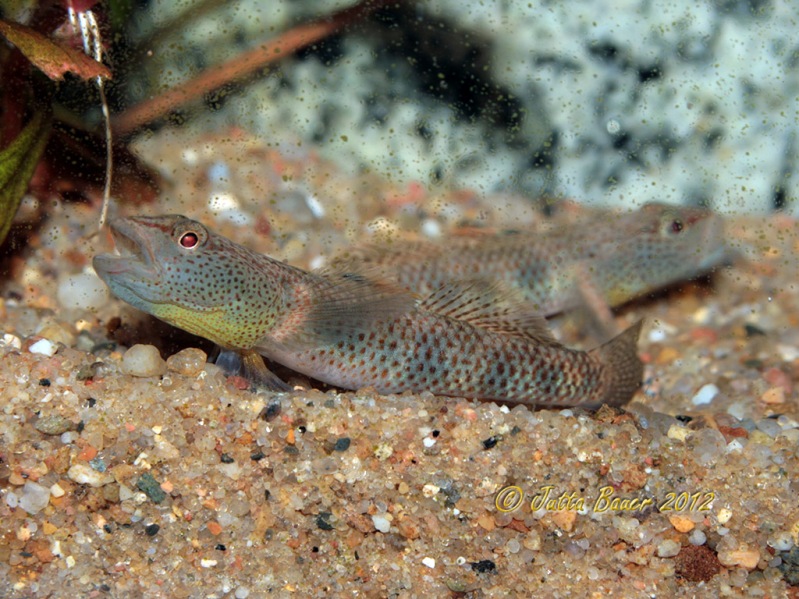
雄鱼间有领地较量,遮蔽充足时一般不易造成严重伤害。建议至少两雄,雌鱼数量不少于雄鱼,缺少同伴时可能显得迟钝、不活跃。
雌雄区分
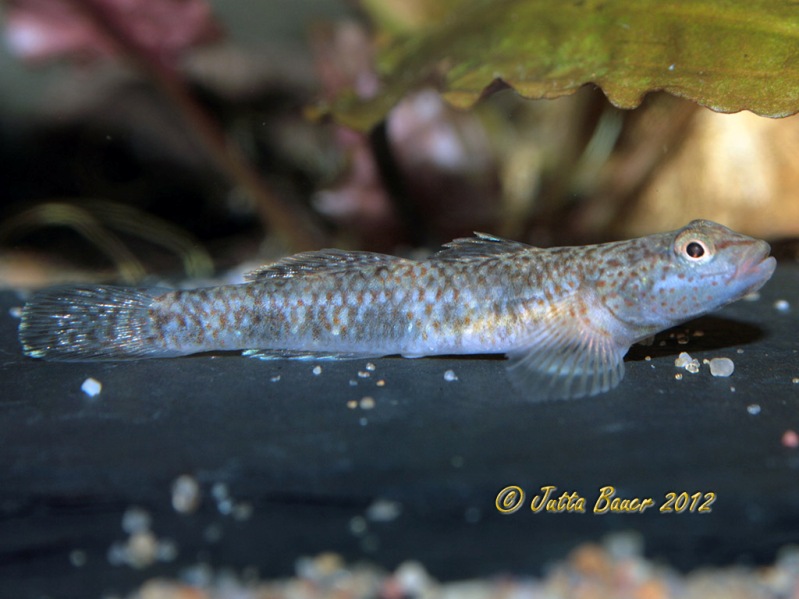
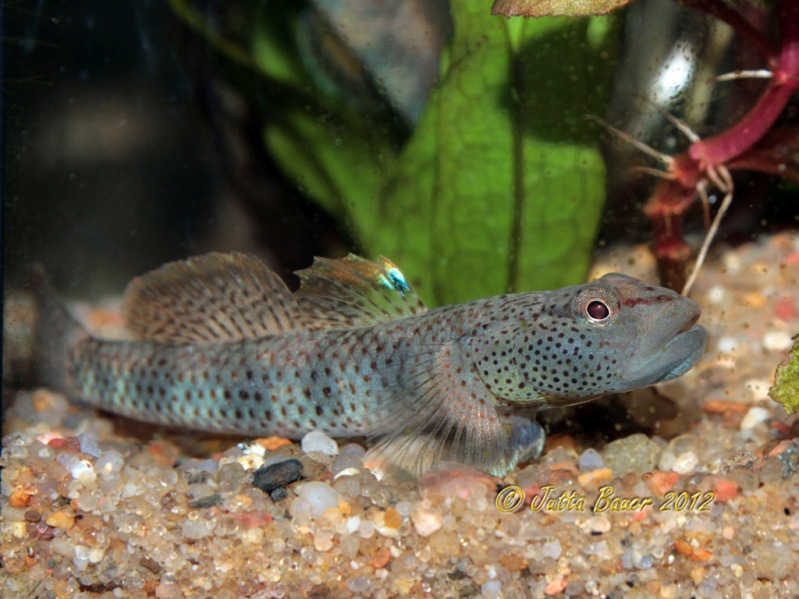
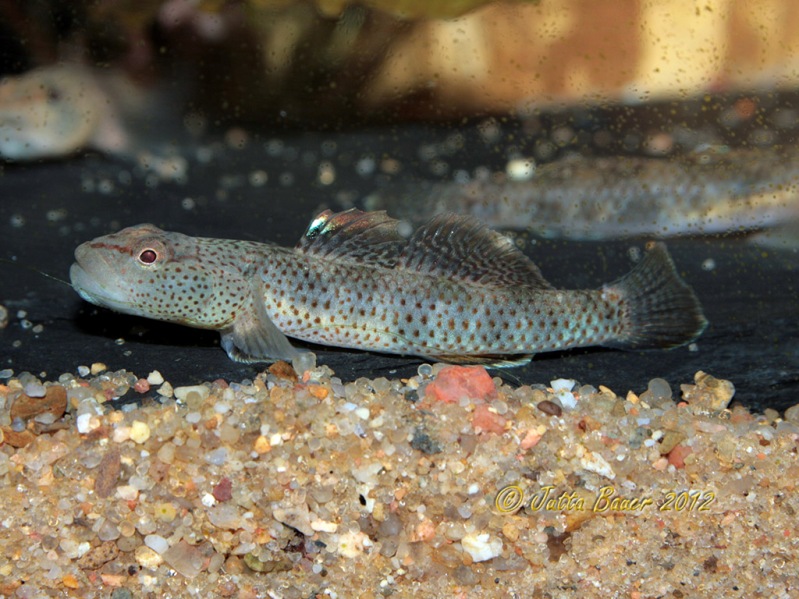
成年雄鱼色彩更浓,背鳍与臀鳍略延长。
繁殖
人工条件下可全年繁殖,在同属中相对容易。野外记录有五月至八月及十二月至三月的繁殖期,不宜直接照搬成所有缸中的固定月份。
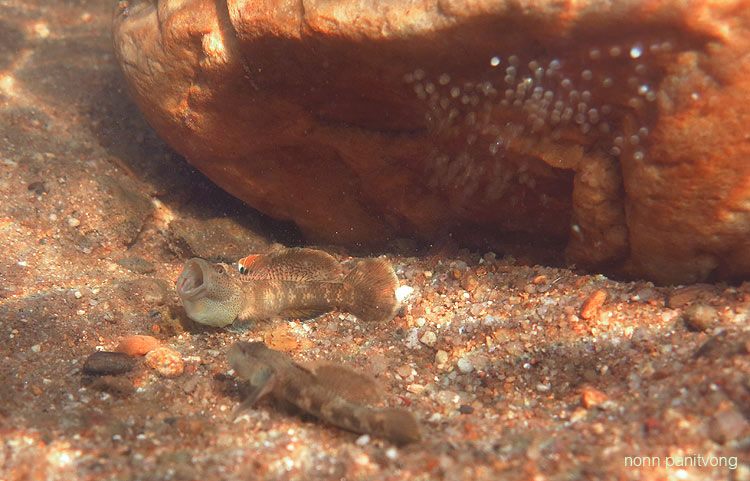
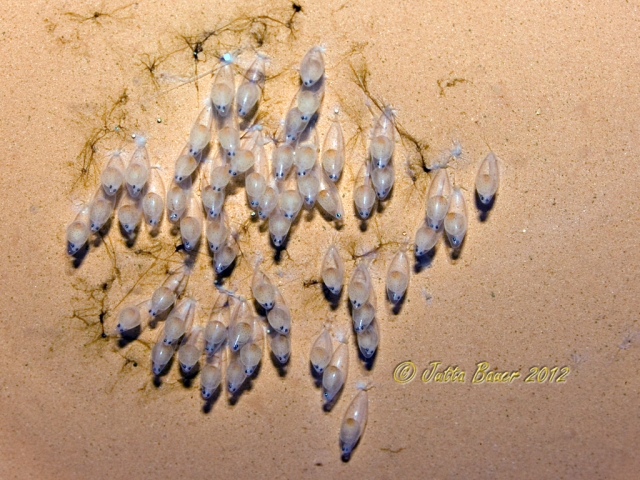
卵产在洞穴或缝隙顶壁,由雄鱼守到孵化。准备多个平石、陶管或花盆洞位,雄鱼会选择并守卫;缺乏合适洞时可能在石下挖出空间。
一对鱼可能在洞内停留两至三天,期间不应打扰。雌鱼产后被赶出,届时可在水中轻轻抬起并倾斜洞体检查,避免把卵暴露空气。
新手亲鱼可能吃卵、粘卵不好或受精不全,经过数次尝试常能改善。确认产卵后可移走其他鱼,只留雄鱼,或用小容器把雄鱼与卵一起转移。
每窝通常二十至六十枚较大卵,约九至十一天孵化,没有游离漂浮的仔鱼阶段,初孵鱼带较大卵黄囊,已经可以提供丰年虾无节幼体和微虫等。
补充说明
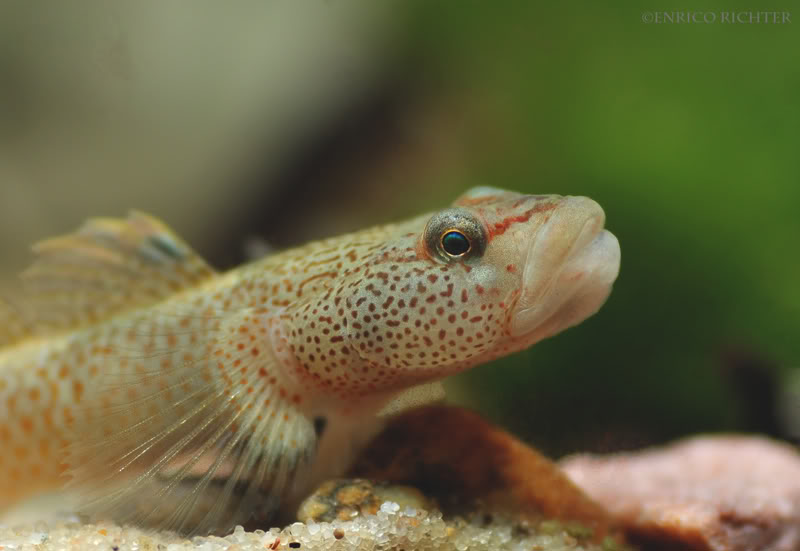
本种常被误作 Rhinogobius mekongianus。体侧有五处不规则深纹而非七至八处,雄鱼颊部和鳃盖斑点更多更细;这些细节应与可靠产地结合判断。
吻虾虎属既有陆封型,也有需要迁移水域的繁殖策略,不能把另一种的育苗盐度或生活史直接套用到本种。
图片
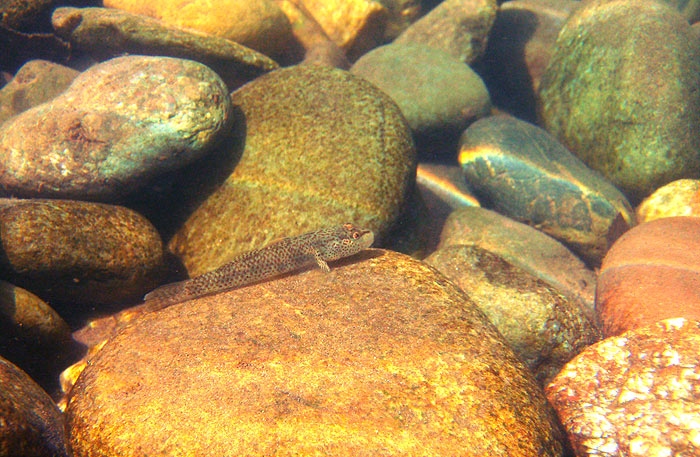
图片来自 SeriouslyFish,版权归各摄影者所有。
English
Overview
Rhinogobius chiengmaiensis is a small Thai stream goby often mislabeled as a relative. Clean, oxygen-rich moving water and opportunities for conspecific interaction are important. Male territoriality is not a reason to assume that permanent solitary housing is best.
Distribution & habitat
Known records are restricted to the middle and upper Chao Phraya system, including the Ping and Nan. Chiang Mai is the type locality.
It occupies small rivers and streams over gravel, rocks, boulders, and exposed bedrock. Flow, depth, and turbidity change seasonally. Aquatic plants are usually absent, though banks and overhanging vegetation may be densely grown.
Aquarium setup
Combine varied rocks, sand, and fine gravel with wood, ceramic tubes, or pots to provide shaded crevices and interrupted sight lines. Hardy Java fern, Bolbitis, or Anubias can be attached to the furnishings.
Prevent organic waste accumulation with weekly changes of roughly 30–50%. High oxygen levels and some movement are essential, without requiring torrent-like flow throughout. Supplement filtration with circulation or aeration as needed.
Diet & feeding
Related Rhinogobius are generally opportunistic animal feeders. Offer small live or frozen bloodworms, mosquito larvae, Artemia, water fleas, or mysids. Dry foods may eventually be accepted but should not form the regular staple.
Behaviour & compatibility
Peaceful, similarly sized upper-water fishes adapted to current are suitable candidates. Avoid large fishes, forceful feeders, and territorial bottom-dwelling cichlids. Small stream loaches or other gobies require individual assessment rather than automatic approval as fellow stream inhabitants.
Do not mix other Rhinogobius for breeding while their hybridization potential remains unresolved. Small freshwater shrimp may be eaten.
Males defend space, but serious injury is unlikely with ample cover. At least two males with an equal or greater number of females is recommended; fish without enough conspecific company may become inactive.
Sexual dimorphism
Adult males show stronger color and slightly extended dorsal and anal fins.
Breeding
It can reproduce year-round in aquaria and is comparatively straightforward within the genus. Wild breeding has been recorded in May–August and December–March, rather than establishing compulsory aquarium months.
Eggs adhere to the roof of a cave or crevice, with the male guarding until hatching. Offer several sites using flat stones, tubes, or pots. A male selects and defends one, sometimes excavating beneath a rock if suitable shelter is unavailable.
A pair may remain hidden for two to three days and should be left undisturbed. After the female is expelled, inspect by gently tilting the shelter underwater rather than exposing the eggs to air.
Inexperienced parents may eat eggs, attach them poorly, or achieve incomplete fertilization, often improving with repeated attempts. Remove other fishes after spawning, or transfer the male and eggs together using a small container.
Clutches usually contain twenty to sixty relatively large eggs. Incubation takes about nine to eleven days, with no free-drifting larval phase. Newly hatched fry retain a substantial yolk sac and can already be offered Artemia nauplii or microworms.
Notes
Compared with the commonly confused Rhinogobius mekongianus, this fish has five irregular body marks rather than seven or eight, plus more numerous finer male cheek and opercular spots. Combine these features with trustworthy locality information.
The genus contains both landlocked and migratory reproductive strategies. Larval salinity requirements of another species should not be transferred automatically to this one.
来源
- https://www.seriouslyfish.com/species/rhinogobius-chiengmaiensis(抓取于 2026-10-10)
rhinogobius-chiengmaiensis · 文件: data/species/rhinogobius-chiengmaiensis.md · 状态: 草稿