明潭吻鰕虎鱼
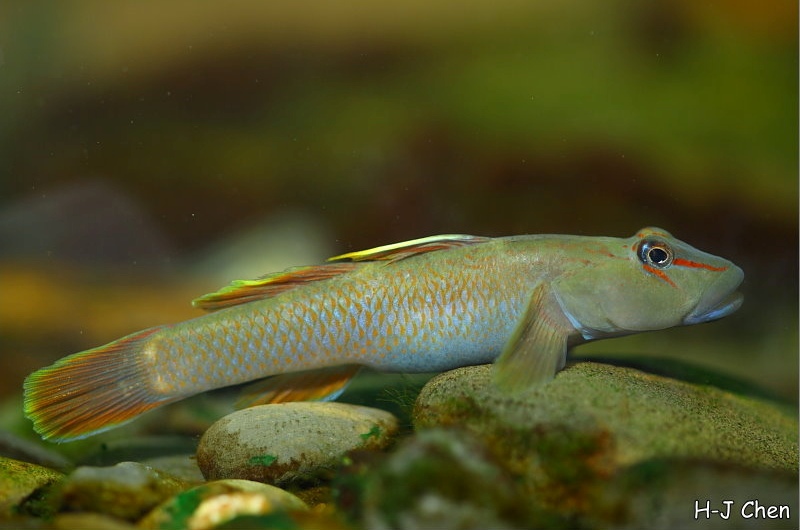
概要
| 字段 | 值 |
|---|---|
| 类别 | 鱼 |
| 学名 | Rhinogobius candidianus |
| 别名 | 明潭吻鰕虎、明潭吻鰕虎魚、Ctenogobius candidianus、Rhinogobius taiwanus |
| 分类 | 虾虎鱼目 Gobiiformes › 虾虎鱼科 Gobiidae › Rhinogobius |
| 水体 | 淡水 |
| 原产地 | 台湾北部及西部的溪流水系 |
| 成体体长 | 8 cm |
| 饲养难度 | 中等 |
| 最小水体 | 72 L |
| 最小缸长 | 80 cm |
| 群居方式 | 群游 |
| 领地性 | 是 |
| 水流偏好 | 高 |
| 外部数据 | seriouslyfish rhinogobius-candidianus;fishbase 27215 |
| 游动层 | 底层 |
| 繁殖方式 | 附着产卵 |
水质参数
| 参数 | 耐受范围 | 最适范围 | 单位 |
|---|---|---|---|
| 水温 | 18–28 | — | °C |
| pH | 6–8 | — | — |
| 总硬度 | 5–12 | — | dGH |
概述
明潭吻鰕虎鱼(Rhinogobius candidianus)是强健的溪流虾虎鱼,雄鱼会守域,饲养需要洞穴、视线屏障和洁净富氧水。贸易中常与体形更小、吻部更短的近似种混在一起,配对和群养前应先确认身份。
分布与栖息地
广布台湾北部和西部水系。名称所关联的模式产地是日月潭,但它是河流性鱼,实际并未在湖体中被记录,不宜据名字把它当湖栖鱼。
多生活在小支流和山溪,底部有砾石、岩块、大石和基岩。季风期水深、流速及浑浊度通常上升。
饲养环境
小群底面积至少约 80 × 30 cm,用砂砾、石块、枝木、陶管或小花盆构成多处洞穴,阻隔视线。耐受水草可附着在硬景上。维持高溶氧和适当流动,不必猛烈激流;每周换水约三至五成,避免有机污物累积。
食性与喂食
吻鰕虎鱼属总体偏机会性肉食,缸内宜提供适口红虫、蚊幼虫、丰年虾、水蚤或糠虾等小型活饵和冷冻饵。部分个体适应后会接受干粮,但不宜把干粮作为经常性主食。
习性与混养
偶尔会有攻击行为,混养优先选择适应相似环境、温和且活动于中上层的小型鱼。小缸最好只由它占据底层,避免其他守域底栖鱼;较大空间才考虑合适鳅类。淡水小虾可能被捕食。
雄鱼之间有领域性,遮蔽充分时严重伤害较少。建议至少两雄配同数或更多雌鱼,缺少同伴可能变得不活跃。不要混养其他同属种,尤其近似种,杂交可能性尚未厘清。
雌雄区分
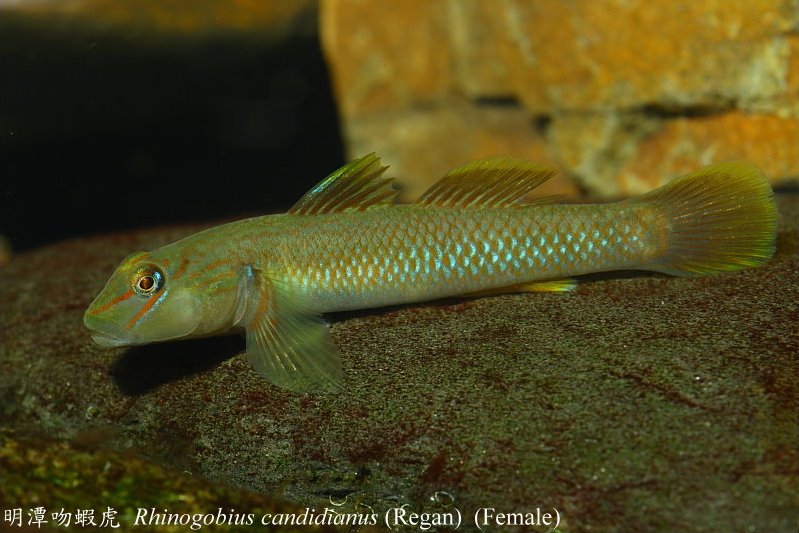
成熟雄鱼第一背鳍首条鳍条延长,下颌略长。抱卵雌鱼腹部可透见蓝色卵团。
繁殖
在洞顶产卵,由雄鱼守护。准备多个合适巢位,配对进入洞内后可能两至三天不露面,此时不要打扰;雌鱼离洞后再在水下轻抬巢体检查。
初次繁殖可能有吃卵、卵附着不牢或受精不全,多次尝试后往往改善。可移走其他鱼,或把雄鱼和卵一起转移到安全环境。一窝通常二十至一百粒,孵化约九至十一天。幼鱼初期在水层中活动,之后落底,开口即可喂丰年虾无节幼体和微虫。
补充说明
较长吻部是排除同名混售近似种的一条线索,产地、成年体形与完整鳍纹也应一起核对。本种属于不需海水洄游阶段的河流型吻鰕虎鱼。
图片
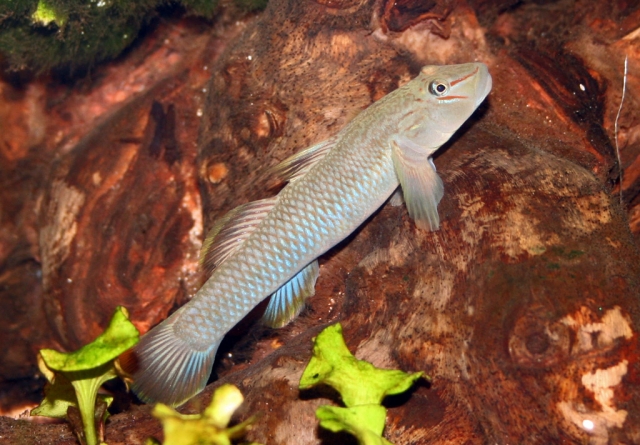
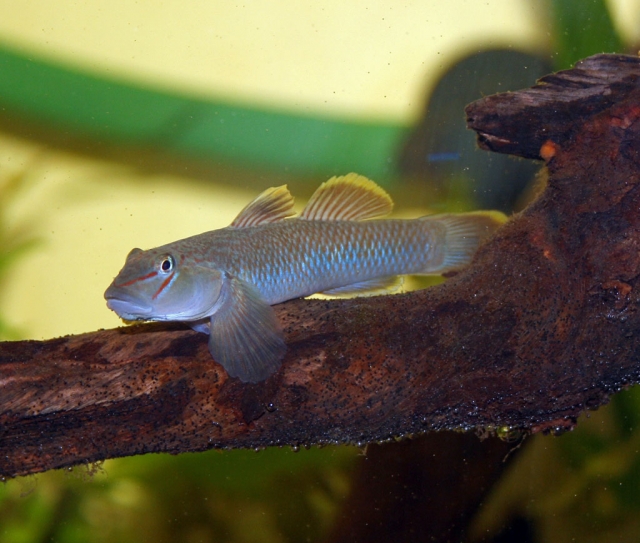
图片来自 SeriouslyFish,版权归各摄影者所有。
English
Overview
Rhinogobius candidianus is a robust stream goby that needs caves, visual barriers, and clean, oxygen-rich water. Males defend territories. It is often sold mixed with a smaller, shorter-snouted relative, making identification important before assembling a group.
Distribution & habitat
The species is widespread in northern and western Taiwan. Although its type locality name refers to Sun Moon Lake, it is a river fish and has not been recorded from the lake itself.
Small tributaries and hill streams are typical, with gravel, rocks, boulders, and exposed bedrock. Monsoon conditions usually increase depth, current, and turbidity.
Aquarium setup
Allow a small group a footprint of at least about 80 × 30 cm. Combine sand, gravel, rocks, wood, ceramic tubes, or pots into numerous retreats with broken sight lines. Hardy attached plants can be included. Maintain high oxygen levels and some circulation without requiring a torrent. Weekly changes of roughly 30–50 percent help prevent organic waste buildup.
Diet & feeding
The genus generally takes small animal prey opportunistically. In captivity, offer appropriately sized live or frozen foods such as bloodworms, mosquito larvae, brine shrimp, water fleas, and mysids. Dry food may be accepted after acclimation, but should not be a regular staple.
Behaviour & compatibility
Some aggression is possible. Peaceful open-water fishes with matching requirements are the better companions. In a small aquarium, leave the bottom to these gobies; compatible loaches are more feasible in larger spaces. Small freshwater shrimp may be eaten.
Male disputes rarely cause serious injury when ample cover is available. Keep at least two males with an equal or greater number of females, since isolated or poorly balanced groups may become inactive. Avoid other species of the genus, particularly close lookalikes, because hybridization potential is unresolved.
Sexual dimorphism
Mature males develop an extended first ray in the initial dorsal fin and a slightly longer jaw. A bluish egg mass can be visible through a ripe female's abdomen.
Breeding
Eggs attach to a cavity roof and receive male care. Offer several sites. Pairs may remain hidden for two or three days; avoid disturbing them, then inspect gently underwater once the female emerges.
Early attempts may involve egg eating, poor attachment, or incomplete fertilization. Remove other fishes or move the male with his clutch to safety. Clutches usually contain twenty to one hundred eggs and hatch after about nine to eleven days. Young initially occupy the water column before settling and can take brine shrimp nauplii or microworms immediately.
Notes
A longer snout helps distinguish the commonly mixed lookalike, but locality, adult size, and fin patterns also matter. This is a river-resident species without a required marine migration stage.
来源
- https://www.seriouslyfish.com/species/rhinogobius-candidianus(抓取于 2026-10-10)
rhinogobius-candidianus · 文件: data/species/rhinogobius-candidianus.md · 状态: 草稿