神仙鱼 · Angelfish
概要
| 字段 | 值 |
|---|---|
| 类别 | 鱼 |
| 学名 | Pterophyllum "scalare" |
| 分类 | 慈鲷目 Cichliformes › 慈鲷科 Cichlidae › Pterophyllum |
| 水体 | 淡水 |
| 成体体长 | 15 cm |
| 饲养难度 | 入门 |
| 最小水体 | 200 L |
| 最小缸长 | 100 cm |
| 性情 | 温和 |
| 外部数据 | seriouslyfish pterophyllum-scalare |
| 别名 | Pterophyllum "scalare" |
| 原产地 | 哥伦比亚、圭亚那、苏里南、法属圭亚那、秘鲁、巴西 |
| 食性 | 杂食 |
| 繁殖方式 | 附着产卵 |
| 领地性 | 是 |
| 特征 | 吃小鱼: 是 |
水质参数
| 参数 | 耐受范围 | 最适范围 | 单位 |
|---|---|---|---|
| 水温 | 24–30 | — | °C |
| pH | 6–7.4 | — | — |
| 总硬度 | 0–15 | — | dGH |
概述
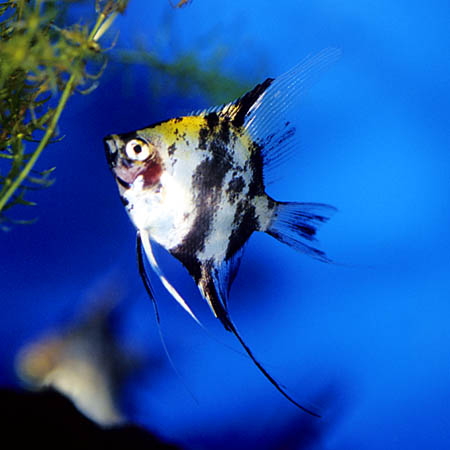
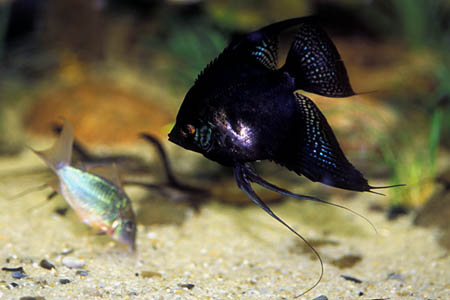
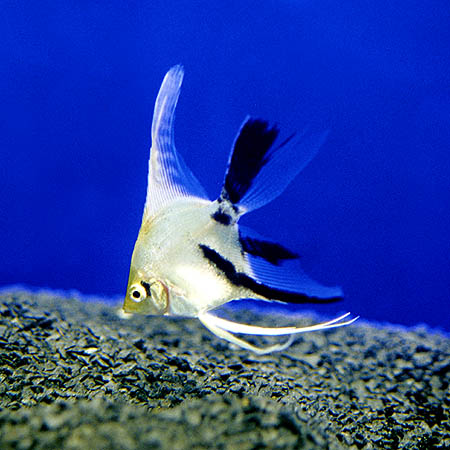
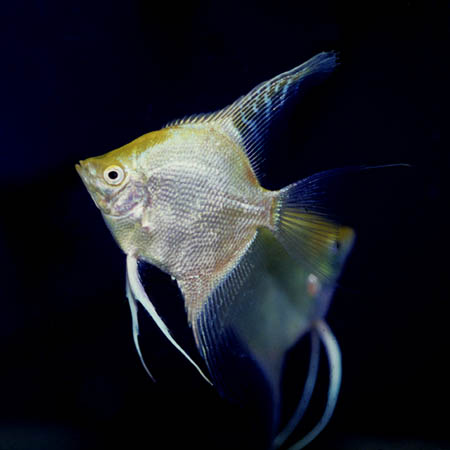
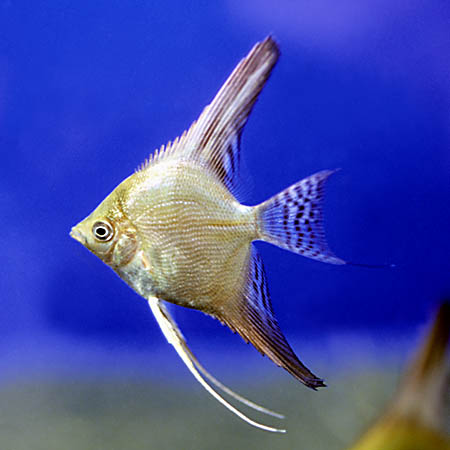
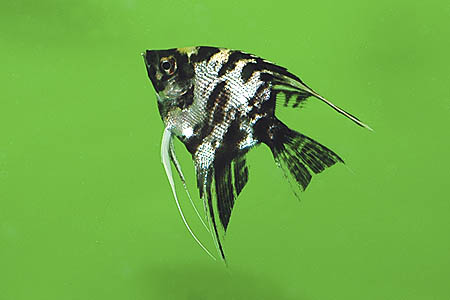
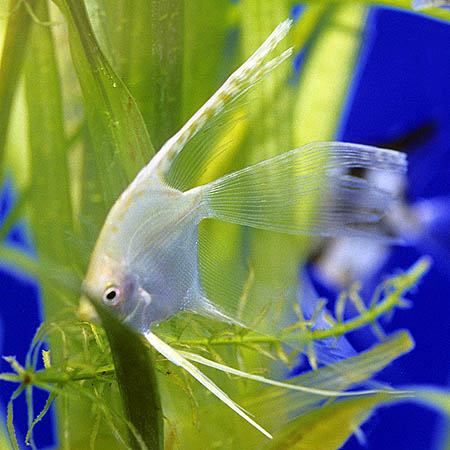
神仙鱼(Pterophyllum scalare)是体形高耸的南美慈鲷。常见商品鱼大多经过人工繁殖,有银色、黑色、金色和锦鲤色等品系。它通常较温和,但仍可能争斗,也会吞食小鱼。
分布与栖息地
自然分布涉及哥伦比亚、圭亚那、苏里南、法属圭亚那、秘鲁和巴西,包括亚马孙河、埃塞奎博河及奥亚波克河等水系。如今市场上的野生个体较少,多数商品鱼来自批量繁殖。
饲养环境
缸体除了足够长,也要有足够高度,成鱼缸建议至少高 50 cm。高大的阔叶水草适合提供遮蔽和活动结构,水流保持轻柔。
食性与喂食
属于杂食性鱼,野外主要吃小型甲壳动物等底栖动物。人工繁殖鱼通常接受颗粒或薄片,也乐于摄食活饵及冷冻饵料,可交替搭配。
习性与混养
可以小群饲养,但同种之间也可能发生争执。混养时不能只看“温和”的标签,体形太小的灯鱼可能被吞食。繁殖状态下,雄鱼的攻击性和领地意识可能更明显。
雌雄区分
平时较难可靠分辨雌雄。繁殖时雄鱼的生殖突起较小而尖,行为也可提供线索。若打算繁殖,可从一群幼鱼开始,让它们自行配对。
繁殖
配对后会在石板、宽叶甚至缸壁等竖直表面产卵。可用红虫和丰年虾等活饵调理亲鱼。双亲会护卵和照顾鱼苗,但也可能吃苗,育苗时仍需观察,并让亲鱼获得充分食物。鱼苗吸收卵黄后可喂刚孵化的丰年虾,再逐步接人工育苗饲料。
补充说明
不同观赏花色并不改变它属于慈鲷的基本习性,偶发争斗仍需纳入饲养安排。
图片
图片来自 SeriouslyFish,版权归各摄影者所有。
English
Overview
Angelfish, Pterophyllum scalare, are tall-bodied South American cichlids. Farmed silver, black, gold, and koi forms dominate the trade. Their generally calm manner does not prevent disputes or predation on sufficiently small companions.
Distribution & habitat
The natural range includes Colombia, Guyana, Suriname, French Guiana, Peru, and Brazil. Populations occur in the Amazon system and rivers such as the Essequibo and Oyapock. Wild specimens are much less common in shops than commercially raised fish.
Aquarium setup
Allow generous vertical room as well as floor space. An adult aquarium should be at least 50 cm tall. Tall, broad-leaved plants provide useful structure, and circulation should remain gentle.
Diet & feeding
Angelfish are omnivores, although wild diets emphasize small bottom-associated animals, including crustaceans. Captive-bred fish usually accept flakes and pellets readily. Add live or frozen foods for variety.
Behaviour & compatibility
Small groups can be kept, but interactions within the species sometimes become quarrelsome. Tiny tetras may be viewed as food. Males can become more forceful and territorial around breeding, so a peaceful temperament label should not be interpreted as a guarantee for every tankmate.
Sexual dimorphism
Reliable sexing is difficult away from spawning. A male's genital papilla is relatively small and pointed; breeding behavior can provide additional clues. Starting with juveniles allows a compatible pair to develop naturally.
Breeding
Bonded adults deposit eggs on upright surfaces, including broad leaves, slate, or glass. Live foods can help prepare them for reproduction. Both parents protect the spawn and subsequent fry, though brood consumption sometimes occurs. Keep the adults well fed and observe their behavior. Once larvae exhaust their yolk, newly hatched brine shrimp are suitable, followed later by prepared fry diets.
Notes
Ornamental color forms retain the basic social behavior of a cichlid. Occasional aggression remains possible even in an otherwise settled group.
来源
- https://www.seriouslyfish.com/species/pterophyllum-scalare(抓取于 2026-10-10)
pterophyllum-scalare · 文件: data/species/pterophyllum-scalare.md · 状态: 草稿