Pseudotropheus tropheops tropheops
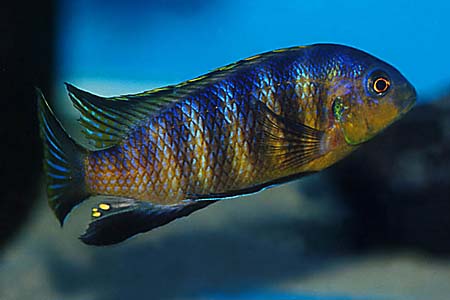
概要
| 字段 | 值 |
|---|---|
| 类别 | 鱼 |
| 学名 | Pseudotropheus tropheops tropheops |
| 分类 | 慈鲷目 Cichliformes › 慈鲷科 Cichlidae › Pseudotropheus |
| 水体 | 淡水 |
| 成体体长 | 20 cm |
| 饲养难度 | 中等 |
| 最小水体 | 137 L |
| 最小缸长 | 120 cm |
| 外部数据 | seriouslyfish pseudotropheus-tropheops-tropheops |
| 原产地 | 马拉维湖马莱里群岛至奇尼亚姆韦齐礁之间 |
| 繁殖方式 | 口孵 |
| 特征 | 翻底砂: 是 |
水质参数
| 参数 | 耐受范围 | 最适范围 | 单位 |
|---|---|---|---|
| 水温 | 24–28 | — | °C |
| pH | 7.6–8.8 | — | — |
| 总硬度 | 10–25 | — | dGH |
概述
Pseudotropheus tropheops tropheops 是体形健壮的岩栖慈鲷,觅食时常以约四十五度倾斜姿势浏览底部。它在岩栖鱼中不算特别凶,但仍不适合胆小温和的孔雀类或其他容易受压的伙伴。
分布与栖息地
马拉维湖特有,记录在马莱里群岛与奇尼亚姆韦齐礁之间,生活于岩岸、岛岸和礁区。
饲养环境
砂底配大量稳固石景,形成多处洞穴和退路,洞穴之间仍要有开放游动区。更大空间有利安排领地,不应只按最低缸体参考把成鱼密集塞满。
食性与喂食
饲料中植物性部分应占较大比例,如螺旋藻薄片、焯菠菜、海苔,另可补充适量活饵和冷冻饵。避免牛心及不适当肉类作为常规饲料。
习性与混养
可与体型相近、同样健壮的岩栖慈鲷搭配,不宜与温吞孔雀类混养。通常只养一雄并配数雌,以分散追逐;只有很大空间才考虑更多雄鱼。相似亚型和色型容易杂交,繁殖时应分开。
雌雄区分
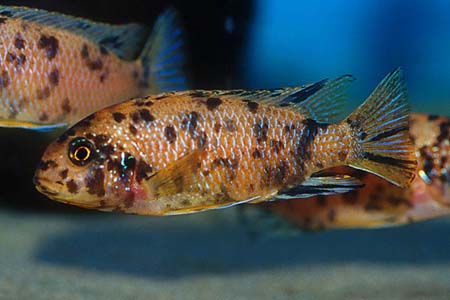
雌鱼通常比雄鱼小,颜色也较淡。
繁殖
母系口孵,混养缸也可能产卵,专缸一雄配至少三雌更便于控制。准备平石和沙面;雄鱼可在平石旁或自己挖出的浅坑附近展示,雌鱼产卵后立即含入嘴中,通过追啄雄鱼卵点接受精子。
母鱼含卵育幼约三至四周,期间停食。受惊会有吐卵或吞卵风险;隔离保护同时也要考虑离群太久后回群受压。释放后的鱼苗可吃丰年虾无节幼体、微虫及细粉饲料。某些近似色型可能在雄鱼挖的洞内产卵,不能假定所有类型流程完全相同。
补充说明
旧商品和分类名称较复杂,不同色型可能涉及不同物种。维持繁殖群时应保留来源与标签,不将外观相似的鱼随意合并。
图片
图片来自 SeriouslyFish,版权归各摄影者所有。
English
Overview
A robust mbuna, Pseudotropheus tropheops tropheops browses at a characteristic angle of about forty-five degrees. It is not exceptionally aggressive within that group, yet is unsuitable for timid peacocks and other easily intimidated fishes.
Distribution & habitat
It is endemic to Lake Malawi between the Maleri Islands and Chinyamwezi Rocks, occupying rocky coasts, island shores, and reefs.
Aquarium setup
Use sand and substantial stable rockwork with multiple caves and escape routes, retaining open swimming areas between. Additional room helps organize territories beyond a bare minimum footprint.
Diet & feeding
Vegetable-rich foods such as spirulina flakes, blanched spinach, and nori should form a substantial share of the diet, with appropriate live and frozen supplements. Avoid beefheart and unsuitable meat-based staples.
Behaviour & compatibility
Similarly sized mbuna are more appropriate than placid peacocks or utaka. Keep several females per male to distribute attention, and normally use only one male unless space is very large. Related forms should remain separate for breeding because they hybridize.
Sexual dimorphism
Females are usually smaller and less colorful than males.
Breeding
A maternal mouthbrooder, it may spawn in a community, though a dedicated setup with one male and at least three females is easier to manage. The male displays over a flat rock or excavated shallow pit. Females collect eggs and receive sperm through the egg-spot sequence.
Brooding lasts roughly three to four weeks without feeding. Disturbance may cause brood loss, and prolonged separation can affect reintegration. Released young accept Artemia nauplii, microworms, and powdered foods. Some related forms spawn inside excavated caves, so not every form follows an identical site choice.
Notes
Historic names and color-form labels conceal unresolved species boundaries. Retain provenance and identification labels rather than combining look-alikes into breeding groups.
来源
ID:pseudotropheus-tropheops-tropheops · 文件: data/species/pseudotropheus-tropheops-tropheops.md · 状态: 草稿