Pseudotropheus sp. 'acei'
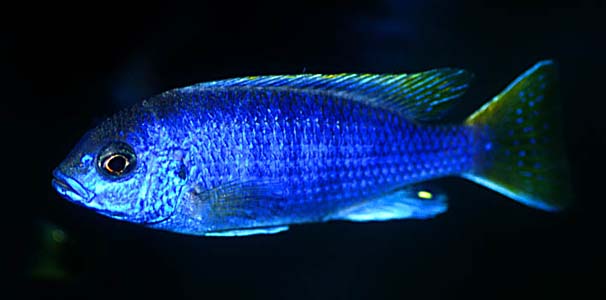
概要
| 字段 | 值 |
|---|---|
| 类别 | 鱼 |
| 学名 | Pseudotropheus sp. 'acei' |
| 分类 | 慈鲷目 Cichliformes › 慈鲷科 Cichlidae › Pseudotropheus |
| 水体 | 淡水 |
| 成体体长 | 12.5 cm |
| 饲养难度 | 中等 |
| 群居方式 | 群游 |
| 外部数据 | seriouslyfish pseudotropheus-sp-acei |
| 原产地 | 马拉维湖西岸恩卡塔湾、森加湾至卡龙加等沿岸及南鲁库鲁河口一带 |
| 游动层 | 上层 |
| 领地性 | 是 |
| 繁殖方式 | 口孵 |
水质参数
| 参数 | 耐受范围 | 最适范围 | 单位 |
|---|---|---|---|
| 水温 | 24–28 | — | °C |
| pH | 7.6–8.8 | — | — |
| 总硬度 | 10–25 | — | dGH |
概述
Pseudotropheus sp. ‘acei’ 是相对温和的岩栖慈鲷,野外常围绕沉水枝干、木头聚群,刮食木表面的藻类和其他附生生物。它并非始终贴底活动,缸内更常利用上半部空间。
分布与栖息地
马拉维湖特有,已知在西岸恩卡塔湾、森加湾、恩加拉、鲁阿尔韦、班达韦、卡龙加和南鲁库鲁河附近。岩岸和沙岸都有,在沙底环境尤其与沉水石块、木头等结构有关。
饲养环境
用砂底,石堆搭出洞穴和退路,同时留开阔游动区。石景可以延伸得较高,以配合它常用的上半缸空间。水有充分缓冲能力时可加入沉木模拟觅食环境,但沉木并非必须。
食性与喂食
蔬菜性食物应占较大比例,如含螺旋藻薄片、焯菠菜及海苔,再配适量活饵和冷冻饵。不要喂牛心或其他红肉。天然刮食附生物的习性不等于只会吃藻,也不能由吃藻推断会替代维护。
习性与混养
不要和大型、强势的岩栖慈鲷或其他过分活跃的鱼混养,可选性情适中的马拉维湖伙伴。雄鱼仍有领地意识,但通常不如许多岩栖种强。足够大缸可以有多雄,每雄配数雌,并确保各有活动空间。
雌雄区分
两性颜色相近,都可有臀鳍卵点,不能只凭卵点判雄。雄鱼通常较大,繁殖时更鲜明,卵点也往往更多、更浓;结合守域、追逐等行为更有帮助。
繁殖
母系口孵,专缸一雄配至少三雌较便于管理,准备平石和开放底部。以植物性食物为主调理,雄鱼清理产卵点并展示,雌鱼产卵后含入嘴中,在追啄卵点时完成受精。
雌鱼约三至四周后放出幼鱼,期间不进食,鼓嘴明显。受惊或被追逐可能导致失卵,移动保护时应减少干扰。幼鱼释放时能吃丰年虾无节幼体、微虫和细粉干粮。
补充说明
黄色尾和白色尾等产地色型不应在繁殖群中混合,以免产生杂交后代。商品标签仍带未定名形式,保留来源比仅凭尾色更可靠。
图片
图片来自 SeriouslyFish,版权归各摄影者所有。
English
Overview
Relatively mild for a mbuna, Pseudotropheus sp. ‘acei’ gathers around submerged wood in nature and grazes algae and associated organisms from its surface. It often uses the upper half of an aquarium rather than remaining close to the bottom.
Distribution & habitat
It is endemic to western Lake Malawi, with records around Nkhata Bay, Senga Bay, Ngara, Ruarwe, Bandawe, Karonga, and the South Rukuru area. Both rocky and sandy shores are occupied, with submerged structures important in sandy settings.
Aquarium setup
Use sand, rock caves, and escape routes while leaving open swimming space. Extend rockwork upward to match its frequent use of the upper aquarium. Wood can recreate a feeding surface where water is well buffered, but is not essential.
Diet & feeding
Make vegetable-rich foods a substantial part of the menu, using spirulina products, blanched spinach, or nori with live and frozen supplements. Avoid beefheart and other red meats. Natural grazing on attached organisms does not mean an exclusively algal diet.
Behaviour & compatibility
Avoid large, domineering mbuna or other excessively forceful fishes. Moderately assertive or quieter Malawi companions are possible. Males remain territorial, though less strongly than many mbuna. Several males can coexist in a suitably large aquarium, each with several females.
Sexual dimorphism
Both sexes share similar colors and anal-fin egg spots, so spots alone do not identify males. Males usually grow larger, intensify in breeding condition, and have more prominent spots. Territorial and courtship behavior provides additional clues.
Breeding
This maternal mouthbrooder is conveniently bred with one male and at least three females in a dedicated setup with flat rocks and open substrate. Condition fish primarily on vegetable-rich foods. The male prepares a site and displays; females collect eggs, with fertilization occurring during the egg-spot interaction.
Females brood for around three to four weeks without feeding. Disturbance or harassment may cause brood loss, so any protective move should be careful. Released fry take Artemia nauplii, microworms, and fine powdered foods.
Notes
Keep yellow-tail, white-tail, and other forms separate in breeding groups to avoid mixed offspring. Preserve source information alongside color labels.
来源
- https://www.seriouslyfish.com/species/pseudotropheus-sp-acei(抓取于 2026-10-10)
pseudotropheus-sp-acei · 文件: data/species/pseudotropheus-sp-acei.md · 状态: 草稿