埃氏拟丽鱼 · Red Zebra
概要
| 字段 | 值 |
|---|---|
| 类别 | 鱼 |
| 学名 | Pseudotropheus estherae |
| 别名 | 埃氏擬麗魚 |
| 分类 | 慈鲷目 Cichliformes › 慈鲷科 Cichlidae › Pseudotropheus |
| 水体 | 淡水 |
| 成体体长 | 13.5 cm |
| 饲养难度 | 中等 |
| 最小水体 | 137 L |
| 最小缸长 | 120 cm |
| 外部数据 | seriouslyfish pseudotropheus-estherae;fishbase 60044 |
| 原产地 | 马拉维湖 |
| 繁殖方式 | 口孵 |
| 特征 | 翻底砂: 是 |
水质参数
| 参数 | 耐受范围 | 最适范围 | 单位 |
|---|---|---|---|
| 水温 | 24–28 | — | °C |
| pH | 7.6–8.8 | — | — |
| 总硬度 | 10–25 | — | dGH |
概述
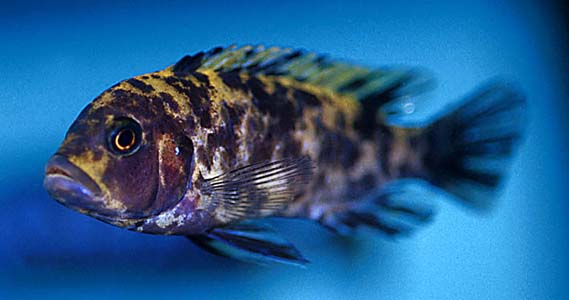
埃氏拟丽鱼(Pseudotropheus estherae)是体色多变的马拉维湖岩栖慈鲷,雌雄并不总是蓝雄橙雌。它在岩栖类中不算特别凶,却仍需分散雄鱼对雌鱼的追逐,并控制喂食避免肥胖。
分布与栖息地
马拉维湖特有,沿莫桑比克和马拉维湖岸,由梅坦古拉、米诺斯礁至戈梅一带,生活在岩质湖岸和礁区。
饲养环境
可从约 120 × 38 × 30 厘米开始,更大更合适。沙底上设置大量稳定岩洞,留少量开放空间,并保留可供啄食的岩面藻类。
食性与喂食
植物成分占较大比例,含螺旋藻饲料、烫菠菜或海苔可作选择,再补活饵、冷冻食物。避免牛心等肉类食物,人工粮少量投喂,它尤其容易肥胖。
习性与混养
不适合温和孔雀类或乌塔卡类,可考虑体型相近的岩栖慈鲷。一般留一雄配多雌,多雄需很大的缸;群体搭配不能替代对持续追逐和弱鱼的观察。
雌雄区分
某些产地雄鱼蓝色、雌鱼橙色,另有橙雄、橙斑雄、黄色或橙斑雌。颜色相同的群体可结合体型和臀鳍卵点判断,雄鱼通常更大且卵点更多、更大。
繁殖
雌鱼口孵,一雄至少三雌的专缸较合适,也可在混养缸产卵。参考水温 25~26.5 °C、酸碱度 8.2~8.5。雄鱼清理平石或挖浅坑,雌鱼收卵后受臀鳍卵点吸引取得精子。含卵约三至四周,雌鱼不进食;受惊可能弃卵,长期隔离也可能使回群地位改变。鱼苗可吃丰年虾无节幼体、微虫及粉粮。
补充说明
不同地域型易杂交,应分开繁殖。没有雄鱼时,雌鱼有时会呈雄性花色并向其他雌鱼求偶,但这种行为不代表能使卵受精。
图片
图片来自 SeriouslyFish,版权归各摄影者所有。
English
Overview
Color varies widely in Pseudotropheus estherae, and the familiar blue-male/orange-female pattern is not universal. This robust mbuna is relatively moderate within its group, but courtship pressure and a tendency to gain excess weight still require attention.
Distribution & habitat
It occurs along the Mozambican and Malawian shores of Lake Malawi, from the Metangula and Minos Reef area toward Gome. Rocky coasts and reefs form its habitat.
Aquarium setup
Start around 120 by 38 by 30 cm and favor a larger aquarium where possible. Provide extensive secure rockwork over sand, with open gaps and algae-covered surfaces for browsing.
Diet & feeding
Keep plant ingredients prominent, using spirulina-based foods and suitable greens with live or frozen supplements. Avoid rich meats such as beef heart. Prepared foods should be portioned carefully because obesity is a particular concern.
Behaviour & compatibility
Similarly sized mbuna are more suitable companions than peaceful peacocks or utaka. One male with several females is the more manageable arrangement; multiple males need a very large aquarium. Watch for persistent pursuit within any group.
Sexual dimorphism
Locality affects coloration: males may be blue, orange, or orange-blotched, and females can also vary. When both sexes share a color, larger size and more numerous, larger anal-fin egg spots favor identification as male.
Breeding
Maternal incubation is readily possible with one male and at least three females. Use about 25–26.5 °C and pH 8.2–8.5. The male prepares a flat surface or shallow pit; the female collects eggs and receives sperm while responding to his egg spots. She carries the brood for three to four weeks without eating. Disturbance can cause brood loss, and extended separation may affect her return to the social group. Fry take small live foods and fine prepared foods.
Notes
Keep geographic forms separate because they hybridize. In the absence of a male, a female may assume male-like coloration and court other females, without being able to fertilize eggs.
来源
- https://www.seriouslyfish.com/species/pseudotropheus-estherae(抓取于 2026-10-10)
pseudotropheus-estherae · 文件: data/species/pseudotropheus-estherae.md · 状态: 草稿