德氏拟丽鱼
概要
| 字段 | 值 |
|---|---|
| 类别 | 鱼 |
| 学名 | Pseudotropheus demasoni |
| 别名 | 德氏擬麗魚 |
| 分类 | 慈鲷目 Cichliformes › 慈鲷科 Cichlidae › Pseudotropheus |
| 水体 | 淡水 |
| 成体体长 | 7.5 cm |
| 饲养难度 | 中等 |
| 最小水体 | 205 L |
| 最小缸长 | 120 cm |
| 领地性 | 是 |
| 外部数据 | seriouslyfish pseudotropheus-demasoni;fishbase 53380 |
| 原产地 | 马拉维湖坦桑尼亚岸的蓬博礁 |
| 性情 | 攻击性 |
| 繁殖方式 | 口孵 |
| 特征 | 翻底砂: 是 |
水质参数
| 参数 | 耐受范围 | 最适范围 | 单位 |
|---|---|---|---|
| 水温 | 24–28 | — | °C |
| pH | 7.6–8.8 | — | — |
| 总硬度 | 10–25 | — | dGH |
概述
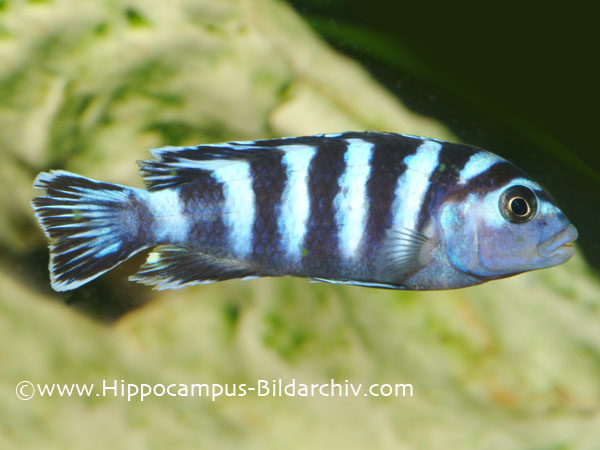
德氏拟丽鱼(Pseudotropheus demasoni)虽小,却属于攻击性很强的岩栖慈鲷,敢挑战比自己大得多的鱼。它常贴岩面钻洞,侧身甚至倒着游是探索狭缝时的常见动作。
分布与栖息地
马拉维湖特有,分布于坦桑尼亚岸的蓬博礁,常在浅水岩顶附近活动,很少进入开阔水域。
饲养环境
约 120 × 45 × 38 厘米也只是因攻击性而设的最低参考。沙底上用大量稳定岩石建立相通洞穴和隐蔽处,较少的开阔游泳区即可,但繁殖仍需平石及小片沙地。
食性与喂食
植物成分应占较大比例,可用含螺旋藻薄片、烫菠菜、海苔等,辅以活饵和冷冻食物。不要喂牛心或其他红肉。
习性与混养
不适合温和孔雀类或乌塔卡类慈鲷。若配强健岩栖类,宜避开纹样相似者。对同种极强势,雌鱼也不温顺;增加群体数量只能尝试分散压力,次优势雄鱼仍可能被杀。必须持续观察并具备分隔个体的条件。
雌雄区分
雌雄颜色和纹样近似,成熟雄鱼通常稍大、守域更强,仅凭外观很难可靠判断。
繁殖
雌鱼口孵,可从六至八尾幼鱼培养,参考水温 25~26.5 °C、酸碱度 8.2~8.5。雄鱼在平石或浅坑守域求偶,雌鱼产卵受精后收入口中,约含三周且停食。受惊可能吐卵或吞卵。放出的鱼苗能吃丰年虾无节幼体,但幼龄已会激烈争斗,应观察生长并按需要分养。
图片
图片来自 SeriouslyFish,版权归各摄影者所有。
English
Overview
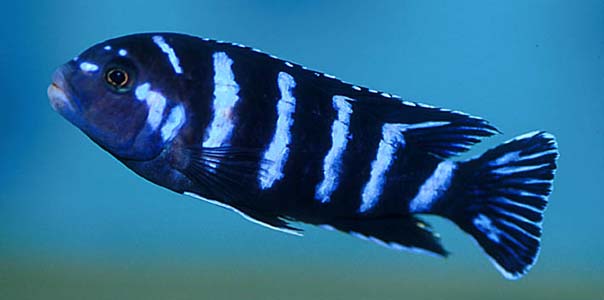
A small but exceptionally combative mbuna, Pseudotropheus demasoni may challenge much larger fishes. Its close association with rock surfaces includes sideways or upside-down swimming while exploring crevices.
Distribution & habitat
Its restricted range centers on Pombo Rocks off the Tanzanian shore of Lake Malawi. Shallow rocky areas are occupied, with fish seldom venturing into open water.
Aquarium setup
Even a tank around 120 by 45 by 38 cm is only a minimum starting point. Cover much of the sandy floor with secure rockwork containing numerous caves and crevices. Extensive open swimming space is less important, though retain small sand patches and flat spawning surfaces.
Diet & feeding
Emphasize vegetable foods such as spirulina-based flakes, blanched spinach, and nori, with live and frozen supplements. Beef heart and other red meats are unsuitable.
Behaviour & compatibility
Avoid peaceful peacocks and utaka. Robust mbuna with different patterning are more plausible companions, but conspecific aggression remains severe in both sexes. Larger groups may distribute aggression without preventing subordinate males from being killed. Be prepared to separate vulnerable individuals.
Sexual dimorphism
Both sexes share the same basic colors and pattern. Mature males tend to be slightly larger and more territorial, but visual sexing remains difficult.
Breeding
A juvenile group of six to eight can be raised for breeding, around 25–26.5 °C and pH 8.2–8.5. The male courts at a flat surface or pit. The female collects fertilized eggs and incubates them for approximately three weeks without feeding. Disturbance risks brood loss. Released fry take brine shrimp nauplii, but aggression starts early; monitor them and separate individuals as needed.
来源
- https://www.seriouslyfish.com/species/pseudotropheus-demasoni(抓取于 2026-10-10)
pseudotropheus-demasoni · 文件: data/species/pseudotropheus-demasoni.md · 状态: 草稿