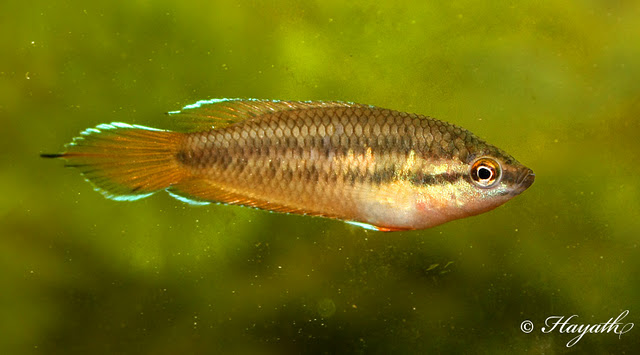
褐斗鱼 · Brown Spike-tailed Paradise Fish
概要
| 字段 | 值 |
|---|---|
| 类别 | 鱼 |
| 学名 | Pseudosphromenus dayi |
| 别名 | 戴氏拟丝足鲈、褐鬥魚、戴氏擬絲足鱸、Polyacanthus cupanus dayi、Macropodus dayi、Macropodus cupanus dayi |
| 分类 | 攀鲈目 Anabantiformes › 丝足鲈科 Osphronemidae › Pseudosphromenus |
| 水体 | 淡水 |
| 原产地 | 印度 |
| 成体体长 | 6.5 cm |
| 饲养难度 | 入门 |
| 最小水体 | 54 L |
| 最小缸长 | 60 cm |
| 群居方式 | 成对 |
| 性情 | 温和 |
| 水流偏好 | 低 |
| 外部数据 | seriouslyfish pseudosphromenus-dayi;fishbase 55308 |
| 繁殖方式 | 附着产卵 |
水质参数
| 参数 | 耐受范围 | 最适范围 | 单位 |
|---|---|---|---|
| 水温 | 20–28 | — | °C |
| pH | 6–7.5 | — | — |
| 总硬度 | 2–15 | — | dGH |
概述
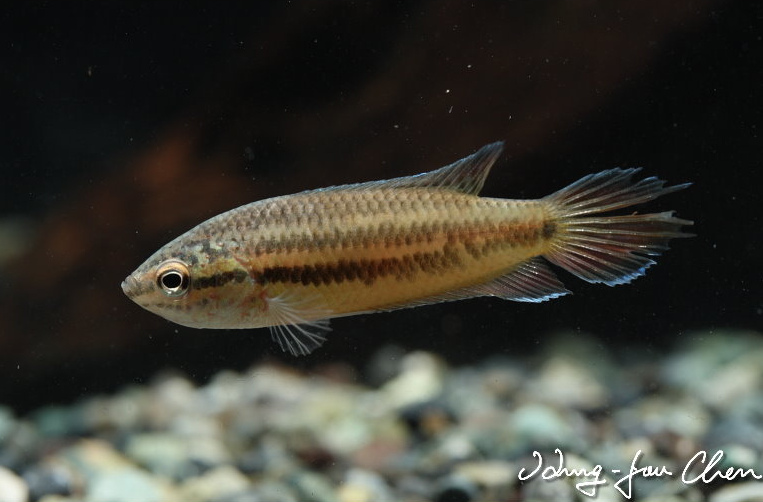
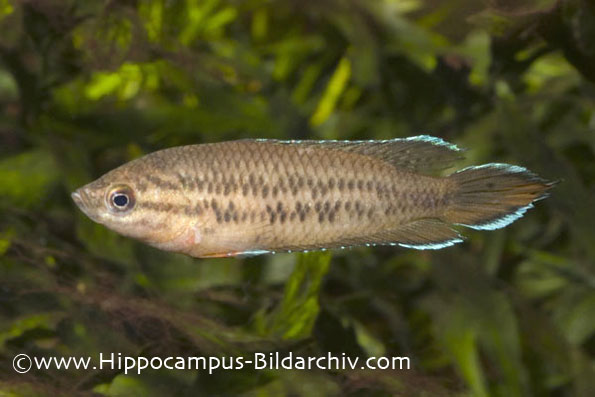
褐斗鱼(Pseudosphromenus dayi)是一种安静的小型迷鳃鱼,头体两条不规则暗带与雄鱼较长的尖尾可帮助区别尖尾斗鱼。它虽温和,仍因胆怯而需要细选伙伴和充足隐蔽处。
分布与栖息地
已知来自印度喀拉拉邦西高止山沿海水系,包括查拉库迪、穆瓦图普扎与佩里亚尔河,可能还有未确定分布。多生活于低地缓流、静水、稻田、草丛池塘及植被密集的岸边沟渠。
饲养环境
至少参考 60 × 30 厘米底面积,以沉木、叶堆及浮水植物形成弱光环境。椰壳、花盆或陶管可作产卵处,过滤水流保持轻缓。
食性与喂食
常备小型活冷冻饵,包括水蚤、丰年虾及小蠕虫,适口昆虫也可。干粮可能只是被观察或啄食,不应作为唯一营养来源。
习性与混养
成对或群养均可,群体更易展现同种互动。可考虑同环境的小型温和鲤科鱼或鳅类,避免形态相近或过分活跃的伙伴。
雌雄区分
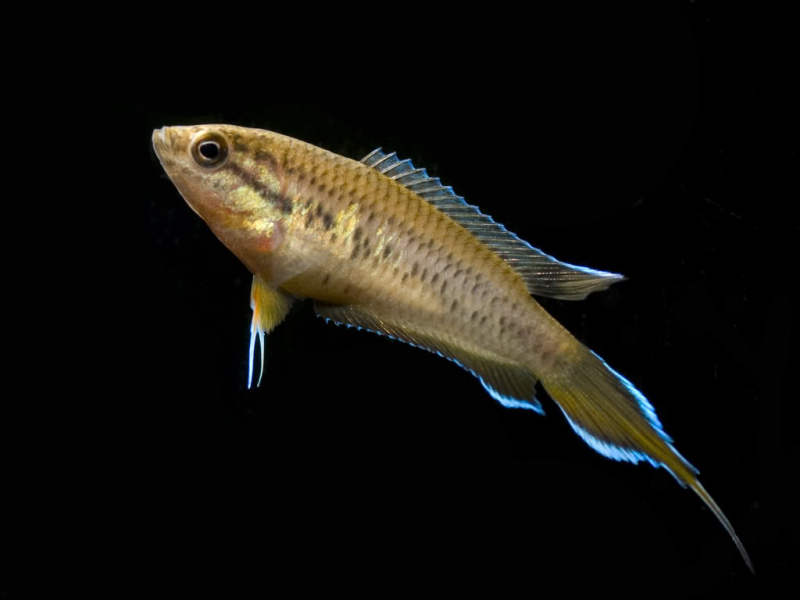
成熟雄鱼背、臀、尾鳍更长,下头部和喉部出现橙色;雌鱼鳍短、颜色较淡。
繁殖
雄鱼偏好在洞穴或遮蔽物下筑巢,也可能选根叶间。泡巢有的简陋、有的甚至不建,但环抱产出的卵均由双方尝试附到顶部。产后雄鱼逐走雌鱼独自护卵;约 24~48 小时孵化,再二至三天自由游动,可接受初孵丰年虾和微虫。自由游动后亲鱼也可能捕食,建议另处育苗。
图片
图片来自 SeriouslyFish,版权归各摄影者所有。
English
Overview
Two irregular dark body stripes and an elongated male tail distinguish Pseudosphromenus dayi from its closest relative. Its peaceful temperament does not remove the need for shelter and carefully chosen companions: this small labyrinth fish is easily unsettled.
Distribution & habitat
Confirmed records concern Kerala’s coastal Western Ghats drainages, including the Chalakkudy, Muvattupuzha, and Periyar rivers. Its range may be wider. Lowland still waters, paddies, weedy ponds, and densely planted margins provide favored habitat.
Aquarium setup
Use at least a 60 by 30 cm base with wood shade, leaf litter, and surface vegetation. Coconut shells, pots, or clay tubes offer nesting retreats. Low lighting and gentle sponge filtration suit its sluggish-water background. Leaves also support microorganisms that can supplement early fry feeding.
Diet & feeding
Small live or frozen invertebrates should anchor feeding: water fleas, brine shrimp, and small worms are useful, with suitable insects as an alternative. Dry-food investigation or pecking does not ensure sufficient nutrition.
Behaviour & compatibility
Pairs and groups are possible, with more social behavior visible in groups. Small, peaceful cyprinids or loaches from compatible environments can work, while similarly shaped or overly vigorous companions are better excluded.
Sexual dimorphism
Adult males have longer unpaired fins and orange coloration beneath the head and throat. Females retain shorter fins and subdued colors.
Breeding
Males favor cavities or overhangs, though leaves and roots may be used. A bubble nest can be rudimentary or absent; eggs from repeated embraces are nonetheless positioned against the overhead surface. The male excludes the female afterward and tends the brood. Eggs hatch in 24–48 hours, with free swimming two to three days later. Offer nauplii and microworms, and rear separately because even the parents may consume free-swimming young.
来源
- https://www.seriouslyfish.com/species/pseudosphromenus-dayi(抓取于 2026-10-10)
pseudosphromenus-dayi · 文件: data/species/pseudosphromenus-dayi.md · 状态: 草稿