条纹鸭嘴鲶 · Barred Shovelnose
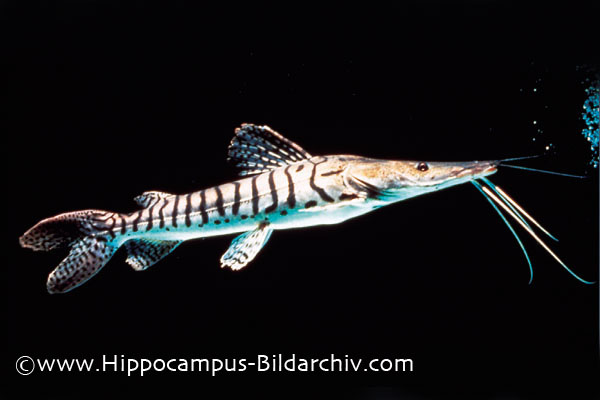
概要
| 字段 | 值 |
|---|---|
| 类别 | 鱼 |
| 学名 | Pseudoplatystoma fasciatum |
| 别名 | 條紋鴨嘴鯰 |
| 分类 | 鲶形目 Siluriformes › 长须鲶科 Pimelodidae › Pseudoplatystoma |
| 水体 | 淡水 |
| 成体体长 | 104 cm |
| 饲养难度 | 中等 |
| 性情 | 温和 |
| 外部数据 | seriouslyfish pseudoplatystoma-fasciatum;fishbase 6410 |
| 原产地 | 厄瓜多尔、哥伦比亚、委内瑞拉、圭亚那、苏里南、法属圭亚那、秘鲁、玻利维亚、巴西、阿根廷 |
| 食性 | 肉食 |
| 特征 | 吃小鱼: 是 |
| 领地性 | 是 |
水质参数
| 参数 | 耐受范围 | 最适范围 | 单位 |
|---|---|---|---|
| 水温 | 22–26 | — | °C |
| pH | 6–7.6 | — | — |
| 总硬度 | 2–30 | — | dGH |
概述
条纹鸭嘴鲶(Pseudoplatystoma fasciatum)是快速长大的大型捕食鲶,寿命可能超过二十年。条纹商品名容易让人忽视其成年体量,长期设施应在买鱼前落实,不能依赖以后转养。
分布与栖息地
南美洲分布广,确认记录从厄瓜多尔、哥伦比亚和委内瑞拉,经圭亚那地区及秘鲁、玻利维亚、巴西至阿根廷;巴拉圭和乌拉圭的记录尚未确认。栖息大河、湖泊和淹水森林,可能较其他大型同科鲶更常利用缓流水域。
饲养环境
成体可参考 360 × 240 × 120 厘米,仍只算大型设施的起点。成鱼在弱光下可用简单布置,大木石必须固定,留下游动区;幼鱼需要根枝、石洞或合口径管道。普通砾石可能被吞或卡鳃,砂可用但会移动,大光滑卵石或裸底更便于清洁。
配巨大而高效的生物过滤,底滤可使玻璃加热棒和温度计等远离成鱼碰撞。水体微酸较适合,养在小缸不会让它健康地停止长大。
食性与喂食
天然吃鱼,人工通常能接受虾、贝肉、蚯蚓和鱼肉等非活饵,轮换以免偏食。幼鱼隔日喂,随成长减频,成鱼每周最多一餐;过喂容易肥胖。不要用牛心、禽肉或活饵鱼作常规饵料。
习性与混养
对大到无法吞下的鱼可较温和,但许多常见大型观赏鱼仍会被吞。对同种及其他大型同科鲶有领地意识,多数情况下只养一尾此类鱼。
雌雄区分
外观很难分性,成年雌鱼可能较粗壮,不能当作确定标准。
繁殖
野外依靠长距离迁移完成繁殖,家庭缸很难复制相应条件。
补充说明
与虎纹鸭嘴鲶(Pseudoplatystoma tigrinum)常共用商品名,本种花纹通常更不规则,但地域与个体差异使单凭条纹并不可靠。贸易中还有与招财猫鱼(Phractocephalus hemioliopterus)等大型鲶杂交的个体,购买时须区分纯种和杂交鱼。
图片
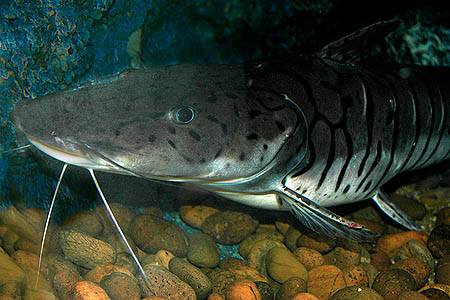
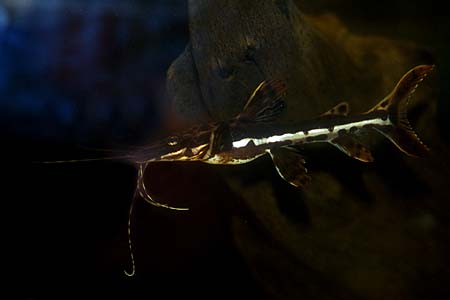
图片来自 SeriouslyFish,版权归各摄影者所有。
English
Overview
A rapidly growing large predator, Pseudoplatystoma fasciatum may live beyond twenty years. Attractive markings and juvenile availability can obscure the scale of lifetime care. Adult facilities should be ready before purchase rather than rely on future rehoming.
Distribution & habitat
Confirmed records span much of South America from northern countries and the Guianas through Peru, Bolivia, Brazil, and Argentina. Paraguay and Uruguay records remain unconfirmed. Habitats include large rivers, lakes, and flooded forest, apparently with greater use of sluggish water than some other large pimelodids.
Aquarium setup
An adult reference of 360 by 240 by 120 cm is still only a starting point. Dim light permits sparse decor, with substantial pieces secured and open space retained. Juveniles benefit from shelters. Ordinary gravel can be swallowed or lodge in gills; movable sand, large smooth pebbles, or a bare bottom are alternatives.
Heavy waste requires substantial biological filtration. A sump protects fragile equipment from a powerful fish. Slightly acidic conditions suit it. A small aquarium does not safely arrest growth.
Diet & feeding
A natural fish predator, it usually accepts varied nonliving shellfish, prawns, earthworms, and fish pieces. Rotate meals and reduce frequency from alternate-day juvenile feeding to at most weekly adult feeding. Avoid obesity, mammalian or avian meats, and feeder fish.
Behaviour & compatibility
It can be peaceful with unswallowable companions, yet many large aquarium fishes are still prey-sized. Territoriality toward conspecifics and other large pimelodids usually favors one fish of this type.
Sexual dimorphism
External sexing is difficult; greater female bulk remains only a possible clue.
Breeding
Wild reproduction involves long-distance migration, conditions very difficult to reproduce in home aquariums.
Notes
It shares trade names with Pseudoplatystoma tigrinum. More irregular markings may help, but geographic and individual variation prevent reliable identification by stripes alone. Hybrids with other large catfish also occur in trade and should not be assumed to represent the natural species.
来源
- https://www.seriouslyfish.com/species/pseudoplatystoma-fasciatum(抓取于 2026-10-10)
pseudoplatystoma-fasciatum · 文件: data/species/pseudoplatystoma-fasciatum.md · 状态: 草稿