珍珠燕子 · Spotted Blue-eye
概要
| 字段 | 值 |
|---|---|
| 类别 | 鱼 |
| 学名 | Pseudomugil gertrudae |
| 别名 | 格氏鯔銀漢魚、格氏鲻银汉鱼 |
| 分类 | 银汉鱼目 Atheriniformes › 鲻银汉鱼科 Pseudomugilidae › Pseudomugil |
| 水体 | 淡水 |
| 原产地 | 澳大利亚北部、巴布亚新几内亚、印度尼西亚阿鲁群岛 |
| 成体体长 | 3.8 cm |
| 饲养难度 | 中等 |
| 最小水体 | 41 L |
| 最小缸长 | 45 cm |
| 群居方式 | 群游 |
| 性情 | 温和 |
| 外部数据 | seriouslyfish pseudomugil-gertrudae;fishbase 22749 |
| 食性 | 浮游生物食性 |
| 繁殖方式 | 散卵 |
水质参数
| 参数 | 耐受范围 | 最适范围 | 单位 |
|---|---|---|---|
| 水温 | 21–28 | — | °C |
| pH | 4.5–7.5 | — | — |
| 总硬度 | 5–12 | — | dGH |
概述
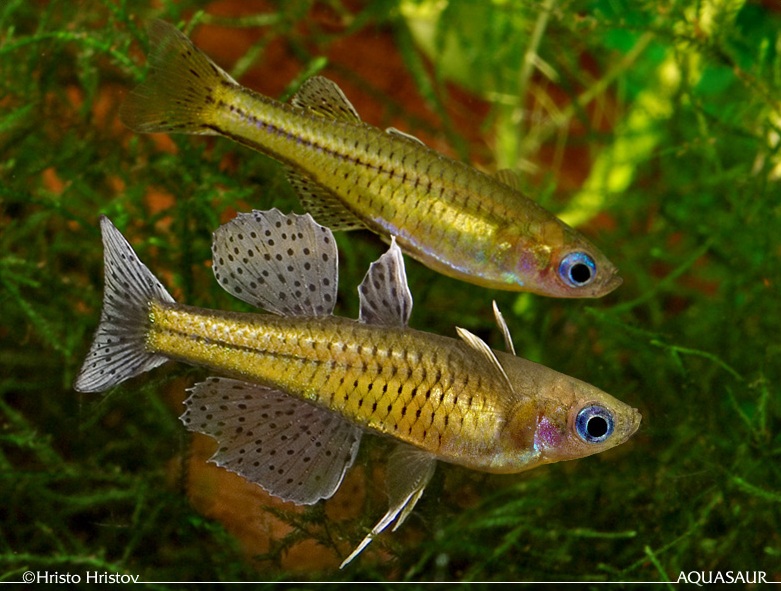
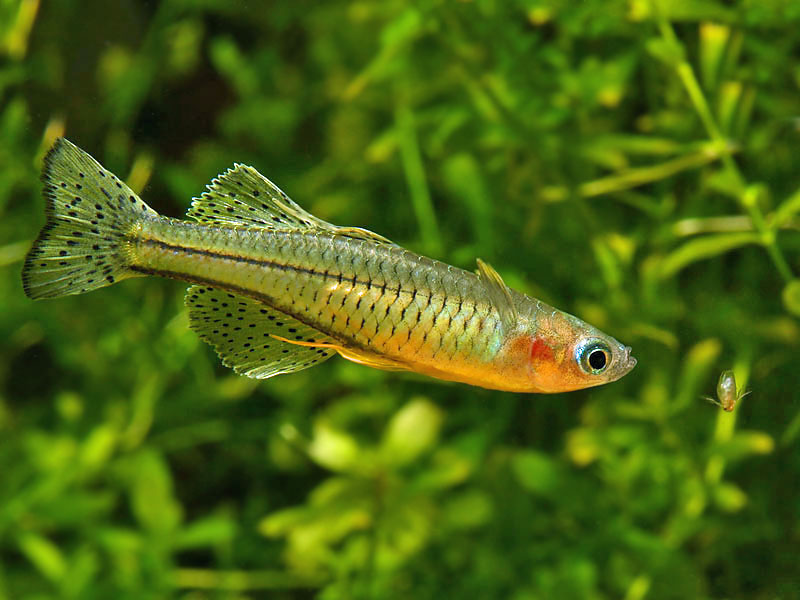
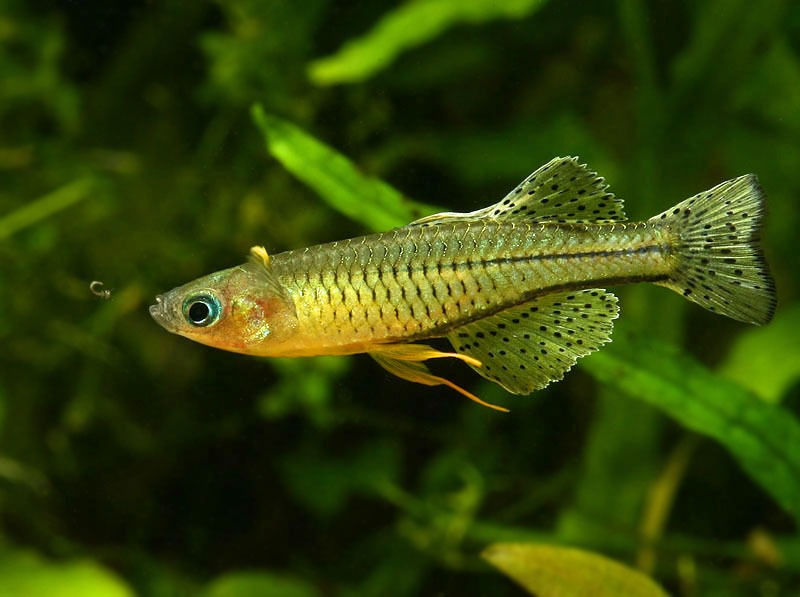
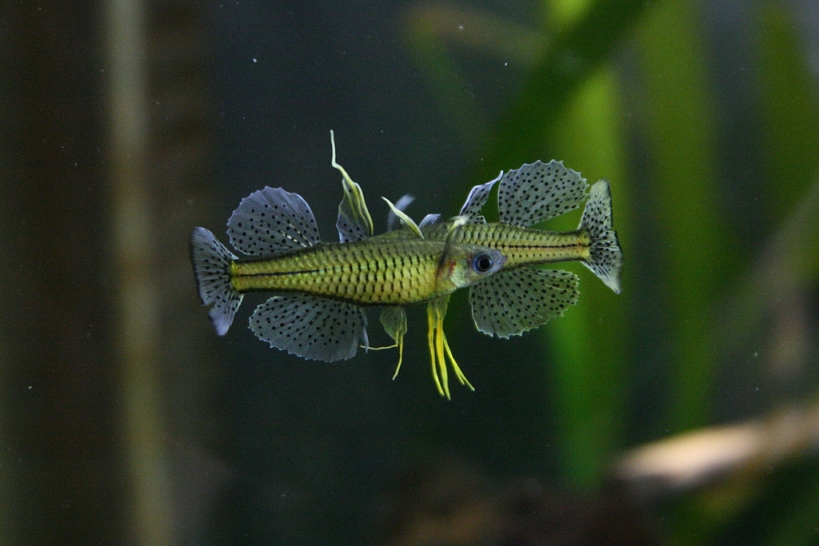
珍珠燕子(Pseudomugil gertrudae)鳍上有细小暗斑,温和而胆怯,容易在普通热闹混养缸中抢不到食物。至少八至十条成群,密植水草和稳定水质更能展现它的状态。
分布与栖息地
分布记录涉及澳大利亚北部多个水系、巴布亚新几内亚南部及印度尼西亚阿鲁群岛。野生种群之间常较隔离,体色、大小和鳍形可有地域差异,应保留产地标签、避免不同线混繁。
偏好浅水边缘、植物茂密的缓流或静水,如小溪、湖泊、旧河道水潭和沼泽,常在植物、树根、枝条及落叶间活动。水有时清澈,有时是贫营养、酸性很强的黑水,水面植被尤其常见。
饲养环境
底面积至少约 45 × 30 cm,局部密植,浮水植物和沉木枝条可柔化照明。成熟缸的细叶苔藓及上部掩护有利于幼苗存活。
保持高溶氧和适度水流,避免入未成熟系统。现有维护范围针对常见观赏品系,特定野生产地鱼,尤其贫营养黑水来源,可能需要更专门的条件,不能简单套同一参数。
食性与喂食
主要吃漂浮、悬浮的浮游动植物及小型无脊椎动物。应多用适口的小型活饵,如水蚤、丰年虾无节幼体、微虫,也可搭配细碎浮性干饲料。
习性与混养
单种缸更容易照顾,也可选择体形、性情和水环境需求接近的安静鱼或合适淡水虾。至少八至十条,空间允许可更多,同伴能降低紧张并促进雄鱼展示。
雌雄区分
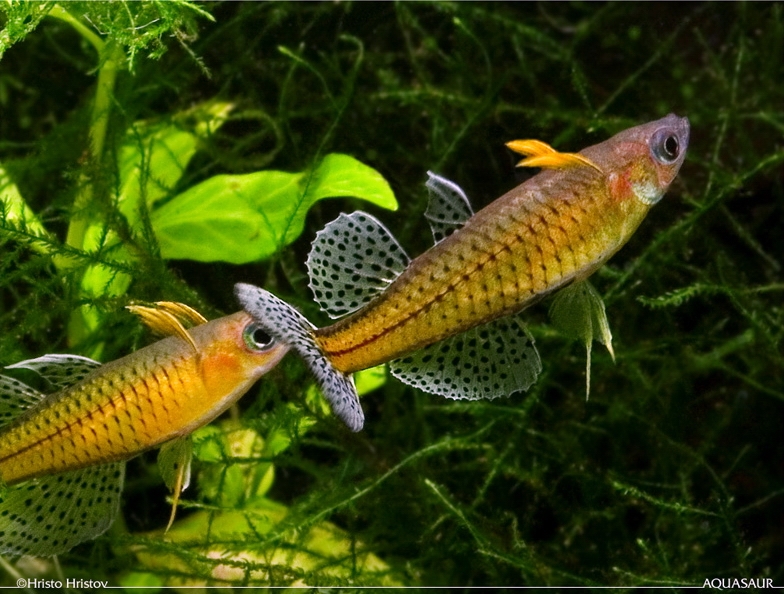
雄鱼颜色和花纹更明显,成熟后背鳍、臀鳍等非成对鳍延长。
繁殖
散卵、不护幼,会吃自己的卵苗。自然繁殖随雨季开始,缸内温暖稳定时也可较持续繁殖,白天尤其临近中午更活跃。雌鱼连续数日每天产少量带附着丝的卵,雄鱼可与多雌交配。
可将一雄两三雌移入有海绵过滤及产卵拖把或苔藓的容器,每天多次检查并收卵另孵。也可在较大的成熟密植缸维持群体,依靠高处苔藓和长根浮草让少量近水面幼苗存活,产量较低但水质稳定、微型食物较丰富。
卵约十天孵化,鱼苗最初可能需要草履虫等微型饵持续至约五天,之后再转为丰年虾无节幼体或微虫,也可使用适口粉料。每天至少少量喂两次,清除剩饵并规律少量换水。
补充说明
背鳍、臀鳍和尾鳍暗斑是重要线索,但并非只有本种具备。贸易中观赏品系与保留产地信息的野生来源线不能混为一谈,单凭一张花纹照片也难确定种群来源。
图片
图片来自 SeriouslyFish,版权归各摄影者所有。
English
Overview
The spotted fins of Pseudomugil gertrudae make it distinctive, but its timid nature makes feeding competition a practical concern. Keep at least eight to ten in a mature, densely planted aquarium with stable conditions rather than a busy general community.
Distribution & habitat
Records extend across northern Australia, southern Papua New Guinea, and Indonesia's Aru Islands. Wild populations are often isolated and differ in color, size, and fin form. Locality information should be retained and breeding lines kept separate.
It favors shallow vegetated margins of slow or standing water, including streams, lakes, billabongs, and swamps. Plants, roots, branches, and litter provide cover. Habitats range from clear water to strongly acidic, nutrient-poor blackwater, often with vegetation at the surface.
Aquarium setup
Provide a base around 45 × 30 cm. Dense planting, floating cover, and branches soften the light. Fine moss and high-level shelter in an established aquarium help retain young.
Maintain oxygenation and moderate circulation, avoiding immature systems. The established maintenance range concerns the common ornamental strain. Fish of specific wild provenance, especially blackwater origin, may need different conditions and should not automatically receive the same treatment.
Diet & feeding
It primarily takes floating or suspended plankton and small invertebrates. Suitable live foods include water fleas, brine-shrimp nauplii, and microworms. Finely crushed floating dry food can supplement the menu.
Behaviour & compatibility
A species aquarium simplifies care. Carefully selected small quiet fishes or suitable freshwater shrimp are alternatives when requirements match. Maintain at least eight to ten conspecifics, preferably more where space allows, to reduce nervousness and encourage male displays.
Sexual dimorphism
Males show stronger color and pattern and develop extended unpaired fins at maturity.
Breeding
Eggs are scattered without care, and adults may eat eggs and offspring. Natural reproduction follows the wet season; stable warmth can sustain aquarium spawning. Activity occurs by day, often peaking around midday. Females deposit small batches over several days, attaching eggs by threads, and males may mate with several females.
One method uses a male and two or three females with sponge filtration and mops or moss. Check repeatedly during the day and incubate collected eggs separately. A larger mature planted colony can instead produce fewer surviving young with less intervention. Elevated moss and trailing roots shelter surface-oriented fry while resident microorganisms supply early food.
Incubation lasts roughly ten days. Fry may need microscopic food such as paramecia for up to about five days before taking brine-shrimp nauplii or microworms. Appropriate powdered diets are another option. Feed small portions at least twice daily, remove waste, and change small amounts of water regularly.
Notes
Spots in the dorsal, anal, and caudal fins are useful clues but are not unique to this species. Ornamental stock and locality-tracked lines should be distinguished; a photograph of the pattern alone cannot establish provenance.
来源
- https://www.seriouslyfish.com/species/pseudomugil-gertrudae(抓取于 2026-10-10)
pseudomugil-gertrudae · 文件: data/species/pseudomugil-gertrudae.md · 状态: 草稿