叉沼汉鱼 · Forktail Blue-eye
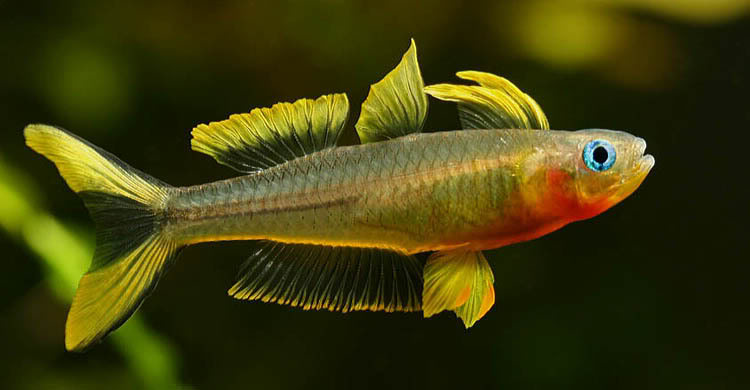
概要
| 字段 | 值 |
|---|---|
| 类别 | 鱼 |
| 学名 | Pseudomugil furcatus |
| 别名 | 叉尾鲻银汉鱼、叉沼漢魚、叉尾鯔銀漢魚、Popondetta furcata、Popondichthys furcatus、Pseudomugil furcata |
| 分类 | 银汉鱼目 Atheriniformes › 鲻银汉鱼科 Pseudomugilidae › Pseudomugil |
| 水体 | 淡水 |
| 原产地 | 巴布亚新几内亚东部北部省及米尔恩湾省 |
| 成体体长 | 6 cm |
| 饲养难度 | 中等 |
| 最小水体 | 54 L |
| 最小缸长 | 60 cm |
| 群居方式 | 群游 |
| 性情 | 温和 |
| 外部数据 | seriouslyfish pseudomugil-furcatus;fishbase 10530 |
| 食性 | 浮游生物食性 |
| 繁殖方式 | 散卵 |
水质参数
| 参数 | 耐受范围 | 最适范围 | 单位 |
|---|---|---|---|
| 水温 | 24–28 | — | °C |
| pH | 7–8 | — | — |
| 总硬度 | 15–30 | — | dGH |
概述
叉沼汉鱼(Pseudomugil furcatus)是适合密植水草缸的小型蓝眼鱼,至少八至十条成群更安定。它需要稳定、偏硬且近中性至碱性的水,繁殖还要留意人工种群可能存在的近交和低受精率问题。
分布与栖息地
特有于巴布亚新几内亚东部北部省和米尔恩湾省的一小片范围,记录涉及穆萨及夸吉拉河流域。常生活于低海拔、植物丰富且清澈的林间溪流,水流缓至中等。
雨季流量、浑浊度增加,旱季部分溪段可能断流成为水潭,不能将这些季节现象当成缸内应反复改变水质的要求。
饲养环境
底面积至少约 60 × 30 cm,密植区与泳道兼顾,用浮水植物、沉木根和枝条柔化照明。想让鱼苗随亲鱼存活,可增加细叶苔藓和上部庇护。
保持高溶氧及适度水流,使用成熟系统。它对化学条件波动敏感,不宜入新开缸;水温应保持在已有适养范围内,不能按其他耐冷蓝眼鱼处理。
食性与喂食
自然主要吃漂浮、悬浮的浮游生物及小型无脊椎动物。水蚤、丰年虾无节幼体、微虫等小型活饵较合适,也可接受细小或碾碎的浮性干饲料,粒径必须适口。
习性与混养
温和,可配体形、性情及水质需求相近的鱼。至少八至十条同种成群,有助减少紧张,并让雄鱼充分展示。
雌雄区分
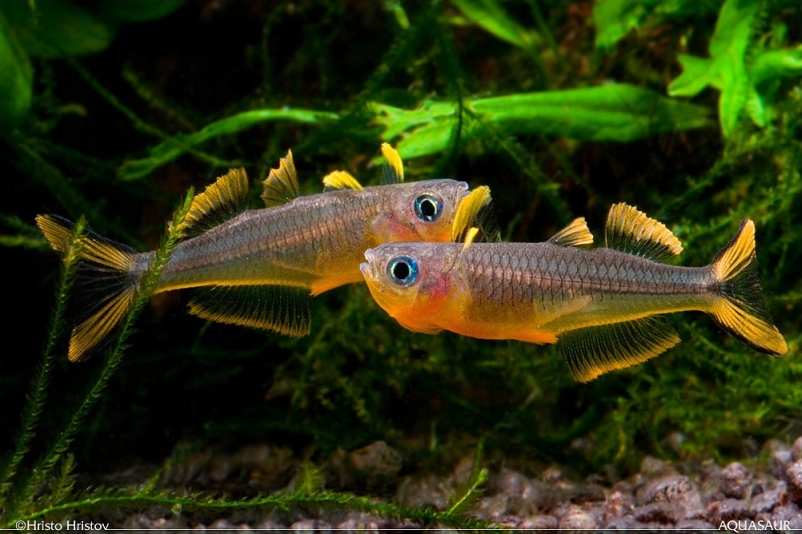
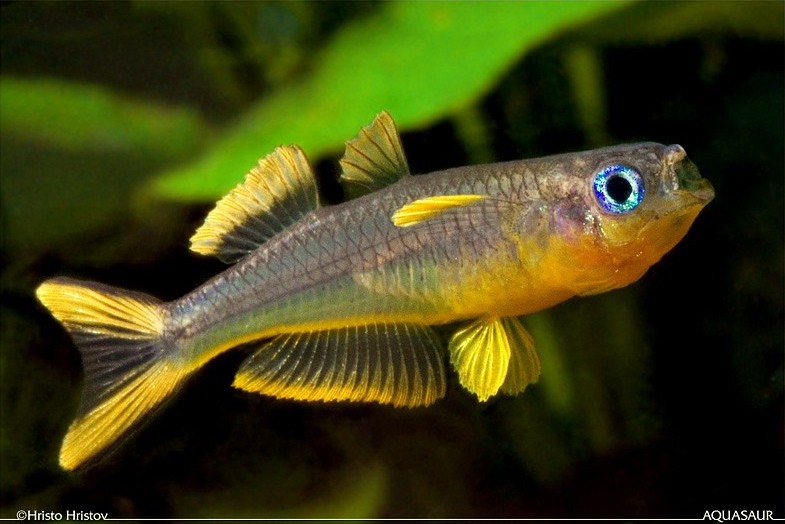
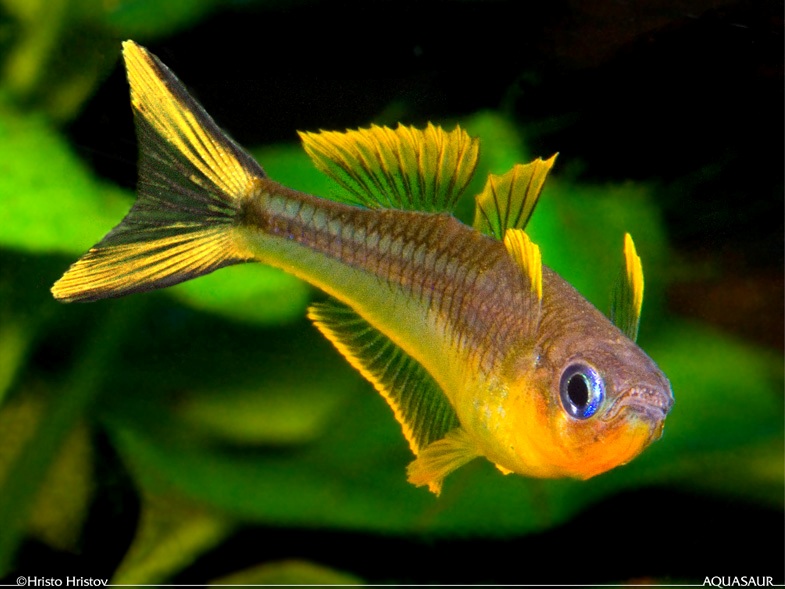
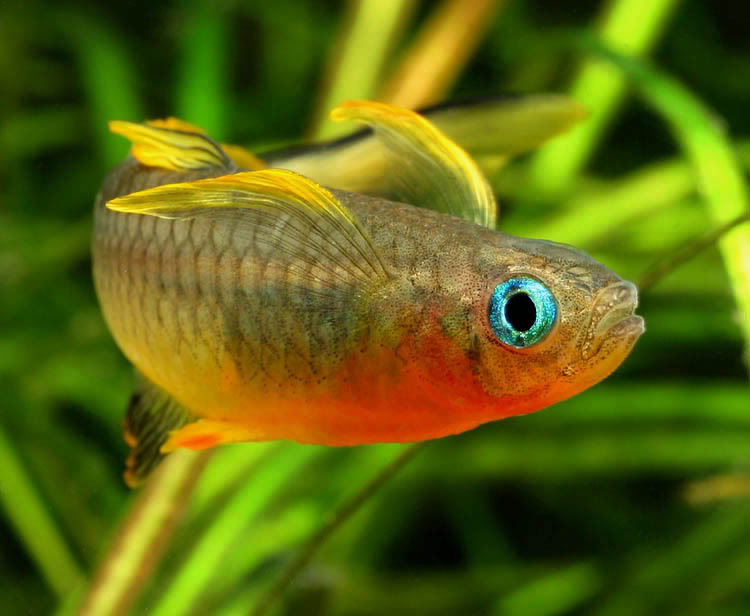
雄鱼花纹和颜色更鲜明,成熟后非成对鳍明显延长。
繁殖
本种散卵、不护幼,有机会会吃卵苗。较暖时白天求偶和产卵更积极,雌鱼可连续数日每天产少量卵,附着在植物或其他表面,雄鱼可与多雌交配。
可用六至八条小群,或一雄配两三雌,在配有海绵过滤的繁殖容器里设置拖把、苔藓,每天检查收卵另孵。另一方式是在较大成熟草缸留群,依靠上部苔藓和长根浮草让少量近水面鱼苗存活,产量较低但管理较简便。
卵约二十一天孵化,鱼苗可直接吃丰年虾无节幼体、微虫或适口粉料。每天至少少量喂两次,规律少量换水并清除剩饵。
人工种群据称可能主要源自一次早期采集,近交可导致受精率、寿命下降及畸形。约八个月前的雌鱼所产卵常偏小、难发育,成熟亲鱼也可能有一半以上未受精,因此获得卵不等于能稳定获得鱼苗。
补充说明
属名曾数次调整,旧名不能直接当作另一物种。人工繁殖数量多,也不能忽略种群来源和亲鱼繁殖质量。
图片
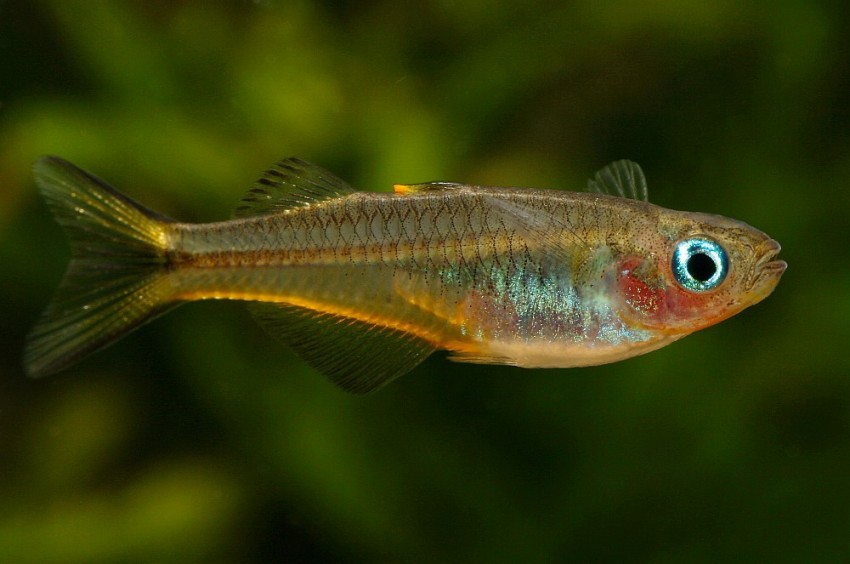
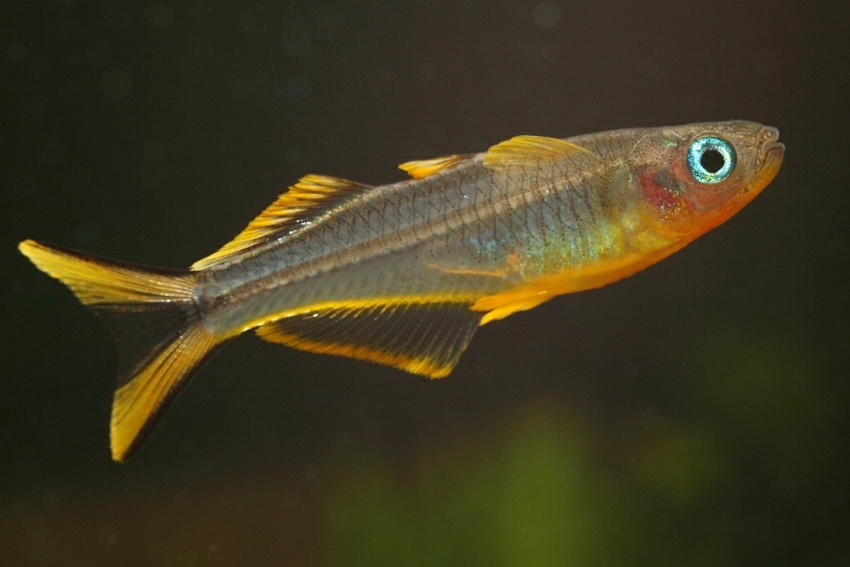
图片来自 SeriouslyFish,版权归各摄影者所有。
English
Overview
Pseudomugil furcatus suits a densely planted aquarium and is more secure in a group of at least eight to ten. Stable, relatively hard water near neutral to alkaline is important. Breeders should also account for possible inbreeding and low egg fertility in captive lines.
Distribution & habitat
It is endemic to a small part of eastern Papua New Guinea's Northern and Milne Bay provinces, including the Musa and Kwagila drainages. Lowland forest streams are typically clear, heavily vegetated, and slow to moderately flowing.
Monsoon rains raise water volume and turbidity, while dry periods may leave isolated pools. These natural changes do not imply a need to recreate unstable conditions in captivity.
Aquarium setup
Use a base around 60 × 30 cm, combining dense plants with swimming room. Floating cover and wood can soften the light. Fine moss and elevated shelter are useful when attempting to retain offspring with adults.
Maintain oxygen-rich water and moderate circulation in an established system. Avoid immature aquariums and rapid chemical changes. Keep temperature within its established maintenance range rather than treating it like a cool-tolerant relative.
Diet & feeding
Floating and suspended plankton and small invertebrates form its natural food base. Water fleas, brine-shrimp nauplii, and microworms are appropriate live options. Small or crushed floating dry food is also taken when particles fit the mouth.
Behaviour & compatibility
Peaceful companions of comparable size and matching needs can be selected. At least eight to ten conspecifics reduce nervousness and encourage male displays.
Sexual dimorphism
Males develop stronger color and pattern, with noticeably elongated unpaired fins at maturity.
Breeding
It scatters eggs without care and may eat eggs or fry. Warm conditions favor daytime spawning, with small batches attached to plants or other surfaces over several days. A male may spawn with multiple females.
One approach isolates six to eight adults, or a male and two or three females, with sponge filtration and mops or moss. Collect eggs daily for separate incubation. Alternatively, a mature planted colony aquarium can retain a smaller number of young. Moss placed high in the water and trailing floating roots shelter the surface-oriented fry.
Hatching takes roughly twenty-one days. Fry immediately accept brine-shrimp nauplii, microworms, or appropriately sized powdered food. Offer small meals at least twice daily, removing leftovers and making regular small water changes.
Captive lines have reportedly derived largely from an early single collection, raising concerns about reduced fertility, deformity, and shortened lifespan. Eggs from females younger than roughly eight months often fail to develop, while even mature breeders may produce more than half infertile eggs. Egg production alone therefore does not guarantee reliable fry output.
Notes
The species has undergone several generic-name changes. Older labels need not denote different species. Commercial abundance does not remove the importance of breeding-line history and reproductive quality.
来源
- https://www.seriouslyfish.com/species/pseudomugil-furcatus(抓取于 2026-10-10)
pseudomugil-furcatus · 文件: data/species/pseudomugil-furcatus.md · 状态: 草稿