青背鲻银汉鱼 · Neon Blue-eye
概要
| 字段 | 值 |
|---|---|
| 类别 | 鱼 |
| 学名 | Pseudomugil cyanodorsalis |
| 别名 | 青背鯔銀漢魚 |
| 分类 | 银汉鱼目 Atheriniformes › 鲻银汉鱼科 Pseudomugilidae › Pseudomugil |
| 水体 | 半咸水 |
| 原产地 | 澳大利亚北部沿海;印度尼西亚及巴布亚新几内亚所在的新几内亚南部可能也有分布 |
| 成体体长 | 3.5 cm |
| 饲养难度 | 中等 |
| 最小水体 | 41 L |
| 最小缸长 | 45 cm |
| 群居方式 | 群游 |
| 性情 | 温和 |
| 特征 | 会跳缸: 是 |
| 外部数据 | seriouslyfish pseudomugil-cyanodorsalis;fishbase 15167 |
| 食性 | 浮游生物食性 |
| 繁殖方式 | 散卵 |
水质参数
| 参数 | 耐受范围 | 最适范围 | 单位 |
|---|---|---|---|
| 水温 | 21–31 | — | °C |
| pH | 7–8.5 | — | — |
| 总硬度 | 10–25 | — | dGH |
概述
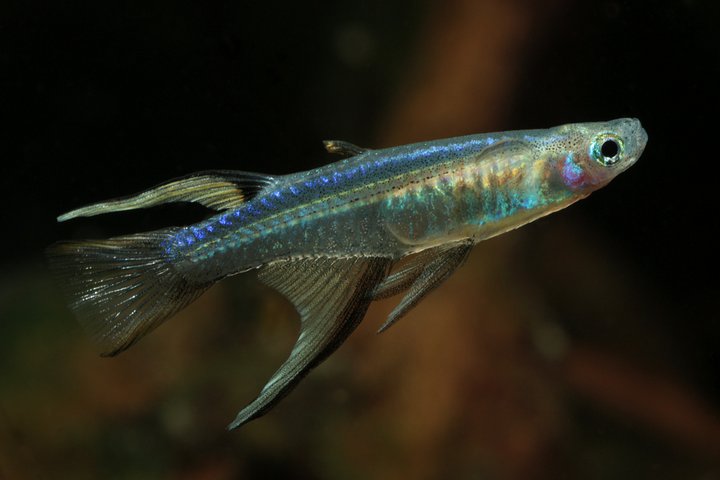
青背鲻银汉鱼(Pseudomugil cyanodorsalis)雄鱼上半身闪现金属蓝色,性情温和但胆怯、抢食能力弱。至少八至十条成群,配合成熟、富氧的半咸水环境,比放入普通热闹混养缸更合适。
分布与栖息地
记录主要来自澳大利亚北部沿海,包括布鲁姆、温德姆、达尔文附近、梅尔维尔岛和诺曼河等地区,新几内亚南部的分布仍带不确定性。爱好者常保留不同产地标签,避免混线繁殖。
常见于红树林溪流和沼泽,可经历从淡水到海水乃至更高盐度的变化,变化可能与潮汐或旱雨季有关。底部常为淤泥,水草较少,边缘植被及红树根提供掩护。
饲养环境
底面积至少约 45 × 30 cm。通常认为半咸水更有利于状态、繁殖和长期维持,可采用比重约 1.001–1.010 的安排;这不是要求每天模拟野外剧烈变盐。它不适合酸性水。
用细枝模拟根系,搭配石块或沉木形成遮蔽,选植物时考虑耐盐性,也可用人工植物。保持高溶氧和适度水流,必须使用成熟系统,避免水质波动,并加盖防跳。
食性与喂食
主要摄食漂浮或悬浮的浮游动植物及小型无脊椎动物,食物要适合小口。可用水蚤、丰年虾无节幼体、微虫等小型活饵为重要组成,也能接受细碎的浮性干饲料。
习性与混养
至少八至十条,空间允许可更多。同种群体能减轻紧张,雄鱼也会展示颜色争取雌鱼注意。最好单种饲养,或仅配体形、性情和水环境需求相近的鱼;半咸水条件会进一步限制选择。
雌雄区分
雄鱼较大、花纹和颜色更明显,成熟后背鳍、臀鳍等非成对鳍延长,体背金属蓝尤其有辨识度。
繁殖
散卵、不护幼,会吃自己的卵苗。温暖时可在白天持续求偶,雌鱼连续数日每天产少量卵,附在植物上或直接落到底床;自然繁殖与雨季开始有关。
可用六至八条小群,或一雄配两三雌,在气动海绵过滤的繁殖容器放产卵拖把或合适水草,每天收卵另孵;有底床时也应仔细检查,因为本种常在那里放卵。另一办法是在大而成熟、有丰富遮蔽的缸内留群,让少量鱼苗自然长大,产量较低但水质更稳定。上部掩护对近水面生活的幼苗尤其有用,植物仍需适合盐度。
卵约十四至二十一天孵化,鱼苗即可吃丰年虾无节幼体、微虫或适口粉料。每天至少少量喂两次,清除剩饵并规律少量换水,不能让育苗水长期积污。
补充说明
不同产地应分开维持。蓝眼鱼属繁殖能力通常随年龄下降,但不能把繁殖力开始下降的月龄当作本种确定寿命。
图片
图片来自 SeriouslyFish,版权归各摄影者所有。
English
Overview
Male Pseudomugil cyanodorsalis show a metallic-blue upper body. This timid, peaceful fish competes poorly in a busy community. A group of at least eight to ten in mature, oxygen-rich brackish accommodation is a more suitable arrangement.
Distribution & habitat
Records center on northern coastal Australia, including the Broome, Wyndham, Darwin, Melville Island, and Norman River areas. Presence in southern New Guinea remains uncertain. Locality labels are useful for keeping breeding lines separate.
Mangrove creeks and swamps can expose it to fresh, marine, or more saline water as tides and seasons change. Muddy bottoms commonly lack aquatic plants, with marginal vegetation and submerged roots supplying shelter.
Aquarium setup
Provide a base around 45 × 30 cm. Brackish conditions are generally considered beneficial for condition and reproduction, with a specific gravity around 1.001–1.010 commonly used. This does not require repeated abrupt salinity changes. Acidic water is unsuitable.
Branches can suggest root tangles, alongside rocks or wood. Select salt-tolerant planting or artificial cover. Maintain oxygenation and some circulation in a biologically mature system, and fit a cover against jumping.
Diet & feeding
Its diet centers on floating or suspended plankton and small invertebrates. Food must suit its small mouth. Water fleas, brine-shrimp nauplii, microworms, and similar live foods are useful, while finely crushed floating dry food is also accepted.
Behaviour & compatibility
Keep at least eight to ten, preferably more where space permits. Company reduces nervousness and encourages male displays. A species aquarium is preferable; any companions must match its size, placid behavior, and environmental needs. Brackish conditions further narrow the choice.
Sexual dimorphism
Males are larger and more colorful, with extended unpaired fins at maturity. The metallic-blue back is particularly distinctive.
Breeding
It scatters eggs without parental care and can eat both eggs and offspring. Warm conditions encourage daytime spawning, with small daily batches deposited for several days. Eggs attach to vegetation or fall onto the substrate. Wild reproduction follows the onset of the wet season.
One method uses six to eight adults, or one male with two or three females, in a sponge-filtered breeding container. Check mops or suitable plants daily and incubate collected eggs separately. Inspect the substrate too, since it is often used for egg deposition. Alternatively, a mature, heavily sheltered colony aquarium may yield fewer surviving fry with less intervention and more stable water. Upper-level cover benefits the surface-oriented young, but plants must tolerate the chosen salinity.
Incubation takes about fourteen to twenty-one days. Hatchlings can take brine-shrimp nauplii, microworms, or appropriately sized powdered diets. Feed small amounts at least twice daily, remove leftovers, and make regular small water changes.
Notes
Keep geographic lines separate. Declining fertility with age in the genus should not be mistaken for a precise lifespan estimate for this species.
来源
- https://www.seriouslyfish.com/species/pseudomugil-cyanodorsalis(抓取于 2026-10-10)
pseudomugil-cyanodorsalis · 文件: data/species/pseudomugil-cyanodorsalis.md · 状态: 草稿