六斑平鳍鳅
概要
| 字段 | 值 |
|---|---|
| 类别 | 鱼 |
| 学名 | Pseudohomaloptera sexmaculata |
| 别名 | 六斑平鰭鰍、Homaloptera sexmaculata、Homaloptera septemmaculata、Balitoropsis sexmaculata |
| 分类 | 鲤形目 Cypriniformes › 爬鳅科 Balitoridae › Pseudohomaloptera |
| 水体 | 淡水 |
| 原产地 | 泰国 |
| 成体体长 | 7 cm |
| 饲养难度 | 中等 |
| 最小水体 | 72 L |
| 最小缸长 | 80 cm |
| 群居方式 | 群游 |
| 水流偏好 | 高 |
| 特征 | 会跳缸: 是 |
| 外部数据 | seriouslyfish homaloptera-sexmaculata;fishbase 26876 |
水质参数
| 参数 | 耐受范围 | 最适范围 | 单位 |
|---|---|---|---|
| 水温 | 20–25.5 | — | °C |
| pH | 6–7.5 | — | — |
| 总硬度 | 1–12 | — | dGH |
概述
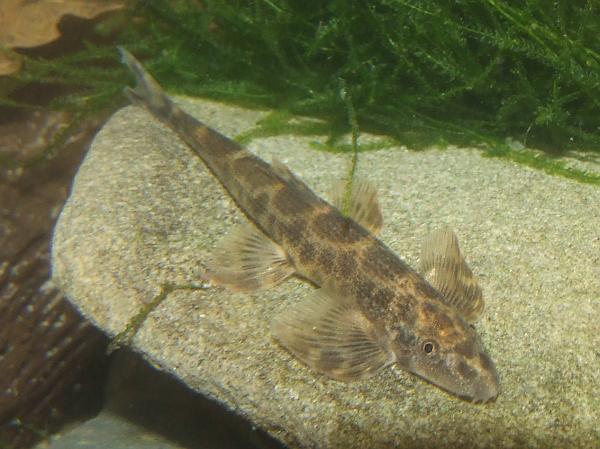
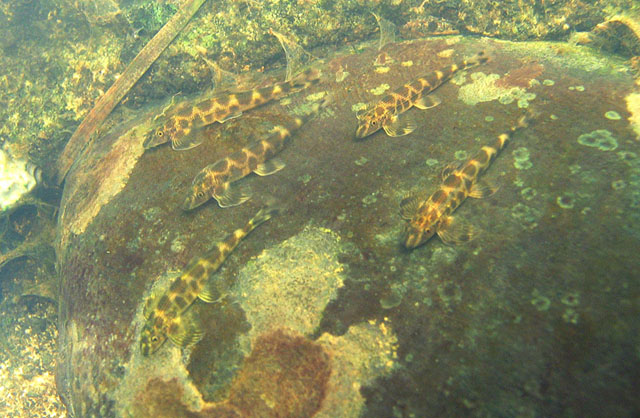
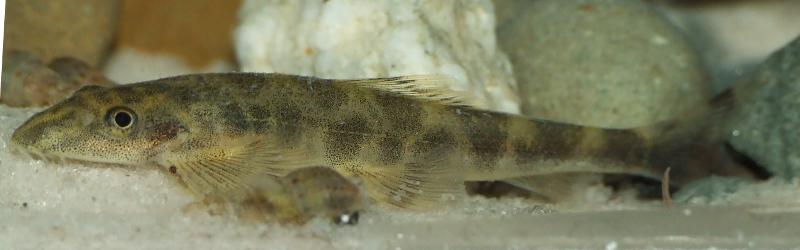
六斑平鳍鳅(Pseudohomaloptera sexmaculata)适应急流生活,身体扁平,常贴着岩石爬行或短距离跳移。它外观近似其他“蜥蜴鳅”,也可能混在别种鱼的货批中,饲养重点是高溶氧、清洁水质及成熟的附着生物环境。
分布与栖息地
原生于泰国,模式地为清迈,主要分布记录涉及湄南河及美功河水系。成鱼多在清澈、富氧的急流浅滩活动,底床为砾石、岩石、大石或基岩,表面覆盖藻类与微生物构成的生物膜。
幼鱼较常出现在流速较缓、具有砾石及浸水树根的河段。水草通常不多,岸边植被却较发达。
饲养环境
底面积至少约 80 × 30 cm。使用容量充足的过滤,目标循环量约为每小时缸水体积的 10~15 倍,必要时加水泵或气石,同时确保溶氧。底床可用沙、砾石或混合材料,上方摆放不同大小的圆滑石块,沉木根枝也可提供结构。
耐受水流的附生植物可固定在木石上。只在水质稳定、生物过滤成熟、已有附着生物的缸中饲养;定期部分换水,保留石块等表面的生物膜,不必将所有表面刷净。它能攀爬玻璃,缸盖必须严密。
食性与喂食
相关平鳍鳅类会刮食生物膜及其中的小型甲壳类、昆虫幼虫和其他无脊椎动物。本种也需要可供啄食的成熟石面。部分个体可接受沉底干粮,但应规律提供水蚤、丰年虾、红虫等活饵或冷冻饵,不能只依靠人工颗粒。
购入时要注意消瘦情况。严重虚弱的鱼恢复不容易,需要容易取得、持续供应的适合食物,并减少其他鱼争食。
习性与混养
本种不具明显攻击性,但较隐蔽,特殊水流和溶氧需求会限制同伴选择。可考虑适应溪流环境的小型开阔水域鱼、虾虎鱼或流域型鲶鱼,其他鳅类也须逐种核对;与同样贴底活动的鱼可能有轻微争执。
相关平鳍鳅类对同类不算特别有领地性,似乎需要同伴,建议至少 4 条。属级观察不能作为所有个体或混养组合的保证。
雌雄区分
成熟雌鱼通常略大,也更丰满。
繁殖
水族箱繁殖尚无记录。
补充说明
本种与 Pseudohomaloptera leonardi 很相似,两者又可能被误认成 Pseudohomaloptera yunnanensis。胸鳍鳍条可辅助鉴别:本种有 2 根不分枝鳍条及 12~14 根分枝鳍条,前者分别为 6 根及 11 根,后者为 7 根及 12 根。
旧记录可能使用 Homaloptera 或 Balitoropsis 属名,现采用 Pseudohomaloptera。扁平头身和横向展开的偶鳍适合附着在急流石面,自由游泳能力相对有限,不能把贴石爬行视作异常。
图片
图片来自 SeriouslyFish,版权归各摄影者所有。
English
Overview
Adapted to fast water, Pseudohomaloptera sexmaculata has a flattened body and commonly moves across solid surfaces by crawling or short hops. Similar-looking lizard loaches and mixed shipments can complicate identification. Clean, oxygen-rich water and mature grazing surfaces are central to its care.
Distribution & habitat
Native records are from Thailand, with Chiang Mai as the type locality and the Chao Phraya and Mae Klong systems forming the principal stated range. Adults favor shallow riffles and runs with clear, highly oxygenated water over gravel, stones, boulders, or bedrock. Algae and other microorganisms cover these surfaces with biofilm.
Juveniles are more often found in gentler sections containing gravel and submerged roots. Aquatic plants are sparse, whereas bankside vegetation is usually well developed.
Aquarium setup
Provide a footprint of at least about 80 × 30 cm. Use substantial filtration and aim for circulation of roughly 10–15 tank volumes per hour, adding pumps or aeration where needed. Oxygen availability matters as much as flow. Sand, gravel, or a mixture can support varied smooth stones, with roots and branches adding structure.
Robust attached plants may be grown on the decorations. Introduce fish only into a stable, biologically mature system with established attached growth. Make regular partial water changes while retaining biofilm on stones and other surfaces. A secure lid is essential because the fish can climb glass.
Diet & feeding
Related hillstream loaches graze biofilm and its small crustaceans, insect larvae, and other invertebrates. This species likewise needs mature surfaces to browse. Some sinking preparations may be accepted, but regular live or frozen Daphnia, Artemia, bloodworms, and similar foods should supplement them.
Assess body condition before purchase. Severely wasted fish can be difficult to restore and need continuously accessible suitable food with minimal competition.
Behaviour & compatibility
It is not aggressive but tends to be retiring, and its flow and oxygen requirements restrict companion choices. Stream-adapted small open-water fishes, gobies, and rheophilic catfishes are possibilities. Evaluate other loaches individually; minor disputes may occur with fishes using similar surfaces.
Related hillstream loaches are not strongly territorial toward one another and appear to benefit from company, supporting a group of at least four. This broader observation does not guarantee the behavior of every individual or community combination.
Sexual dimorphism
Mature females are usually slightly larger and fuller-bodied.
Breeding
Aquarium reproduction has not been recorded.
Notes
Confusion involves the similar Pseudohomaloptera leonardi and Pseudohomaloptera yunnanensis. Pectoral-fin rays help distinguish them: this species has two unbranched and 12–14 branched rays, compared with six and eleven in the former, and seven and twelve in the latter.
Older records may use Homaloptera or Balitoropsis, while the current name is Pseudohomaloptera. Flattened body contours and horizontally expanded paired fins favor attachment to rocks in current. Limited open-water swimming and surface-crawling movements are normal adaptations.
来源
- https://www.seriouslyfish.com/species/homaloptera-sexmaculata(抓取于 2026-10-10)
pseudohomaloptera-sexmaculata · 文件: data/species/pseudohomaloptera-sexmaculata.md · 状态: 草稿