侧头拟半齿甲鲶 · Giant Whiptail Catfish
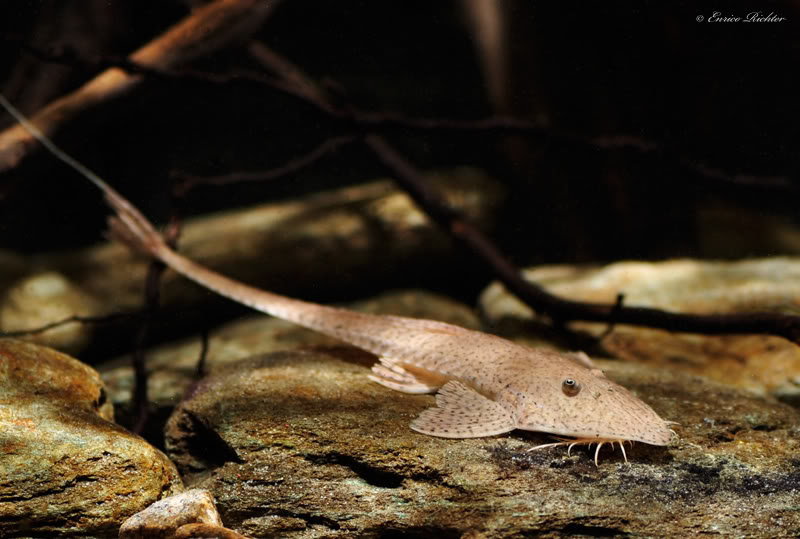
概要
| 字段 | 值 |
|---|---|
| 类别 | 鱼 |
| 学名 | Pseudohemiodon laticeps |
| 别名 | 側頭擬半齒甲鯰、Loricaria laticeps |
| 分类 | 鲶形目 Siluriformes › 骨甲鲶科 Loricariidae › Pseudohemiodon |
| 水体 | 淡水 |
| 原产地 | 阿根廷、巴西、巴拉圭 |
| 成体体长 | 30 cm |
| 饲养难度 | 中等 |
| 最小水体 | 648 L |
| 最小缸长 | 180 cm |
| 群居方式 | 成对 |
| 外部数据 | seriouslyfish pseudohemiodon-laticeps;fishbase 50652 |
| 特征 | 翻底砂: 是;夜行性: 是 |
水质参数
| 参数 | 耐受范围 | 最适范围 | 单位 |
|---|---|---|---|
| 水温 | 18–24 | — | °C |
| pH | 6–7.5 | — | — |
| 总硬度 | 2–12 | — | dGH |
概述
侧头拟半齿甲鲶(Pseudohemiodon laticeps)白天藏在软底里,夜间出来取食。它的繁殖由雄鱼把卵团挂在唇须上照料,属于外部携卵,不能简单等同于把卵含入口腔。
分布与栖息地
分布于巴西南部、巴拉圭和阿根廷的乌拉圭河、巴拉那河及巴拉圭河水系,利用可供埋藏的软质底部。
饲养环境
底面积至少参考 180 × 60 厘米,沙底让它能表现埋身习性。水质要十分洁净且稳定,这两项比复杂装饰更重要。
食性与喂食
有些下沉干粮可能被接受,但仍需规律提供活冷冻水蚤、孑孓、红虫等合口食物。
繁殖
已在人工环境繁殖。产后雄鱼用唇须携卵约十二至十四天,幼鱼孵出后约四十八小时耗尽卵黄,即可吃丰年虾无节幼体。携卵雄鱼似仍会照常活动,甚至带卵埋沙。成功案例常在临孵前把卵移到单独缸孵育,能育成十五至二十尾已算不错的结果。
图片
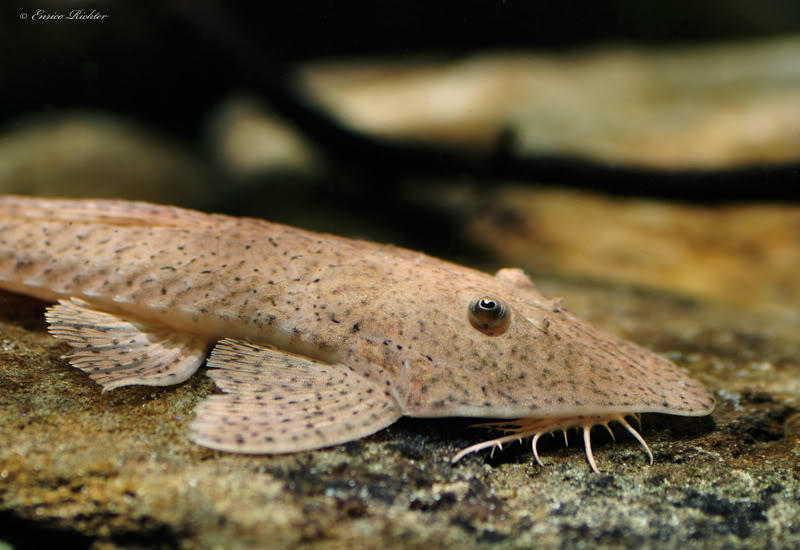
图片来自 SeriouslyFish,版权归各摄影者所有。
English
Overview
By day, Pseudohemiodon laticeps remains buried in soft substrate; it emerges to feed at night. Breeding males carry eggs attached to their labial barbels, an external form of brood care that should be distinguished from holding eggs inside the mouth.
Distribution & habitat
It inhabits the Uruguay, Paraná, and Paraguay drainages of southern Brazil, Paraguay, and Argentina, using soft substrates suitable for burial.
Aquarium setup
Provide at least a 180 by 60 cm footprint. Sand allows natural burying behavior, and very clean, stable water is essential. Those provisions are more important than elaborate decoration.
Diet & feeding
Some sinking prepared foods may be accepted, but regular suitable live or frozen meals remain necessary, including water fleas and insect larvae.
Breeding
Captive breeding has succeeded. Males carry the eggs on their labial barbels for around twelve to fourteen days. Hatched young absorb their yolk over roughly forty-eight hours, then accept brine shrimp nauplii. Brooding apparently does not stop ordinary activity, including burial in sand. Successful attempts have often transferred eggs shortly before hatching, and fifteen to twenty reared young is considered a good outcome.
来源
- https://www.seriouslyfish.com/species/pseudohemiodon-laticeps(抓取于 2026-10-10)
pseudohemiodon-laticeps · 文件: data/species/pseudohemiodon-laticeps.md · 状态: 草稿