尼氏褶唇丽鱼
概要
| 字段 | 值 |
|---|---|
| 类别 | 鱼 |
| 学名 | Pseudocrenilabrus nicholsi |
| 别名 | 尼氏褶唇麗魚 |
| 分类 | 慈鲷目 Cichliformes › 慈鲷科 Cichlidae › Pseudocrenilabrus |
| 水体 | 淡水 |
| 成体体长 | 8.5 cm |
| 饲养难度 | 中等 |
| 最小水体 | 81 L |
| 最小缸长 | 90 cm |
| 群居方式 | 成对 |
| 外部数据 | seriouslyfish pseudocrenilabrus-nicholsi;fishbase 6896 |
| 原产地 | 刚果民主共和国 |
| 繁殖方式 | 口孵 |
| 特征 | 翻底砂: 是 |
| 领地性 | 是 |
| 性情 | 攻击性 |
水质参数
| 参数 | 耐受范围 | 最适范围 | 单位 |
|---|---|---|---|
| 水温 | 22–25 | — | °C |
| pH | 6–8 | — | — |
| 总硬度 | 5–20 | — | dGH |
概述
尼氏褶唇丽鱼(Pseudocrenilabrus nicholsi)虽体小,却是好斗的口孵慈鲷,尤其不容同种雄鱼。部分雄鱼腹鳍有长丝状延伸,水族贸易中并不常见。
分布与栖息地
原生于刚果民主共和国,生活在池塘、小溪和排水沟,常靠近岸边或水草茎丛。
饲养环境
缸长至少约 90 厘米,布置陶罐洞、树根、沉木等丰富躲避处,可加水草形成遮蔽。沙或细砾便于雄鱼挖繁殖坑。
食性与喂食
以优质慈鲷颗粒为基础,规律穿插活饵与冷冻食物,保持多样。
习性与混养
同缸下层鱼可能受攻击,与其他小慈鲷、鲶鱼或鳅类相配需更大空间。合适的大型灯鱼、彩虹鱼或上层鱼较容易分开活动区域。同种宜一雄配多雌,多雄普通情况下往往只有优势雄鱼能占地繁殖。
雌雄区分
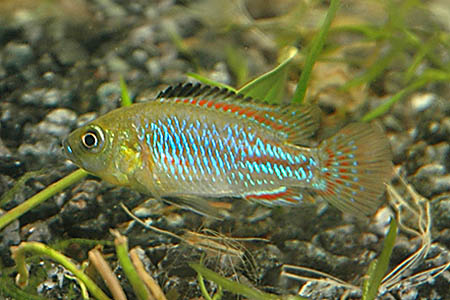
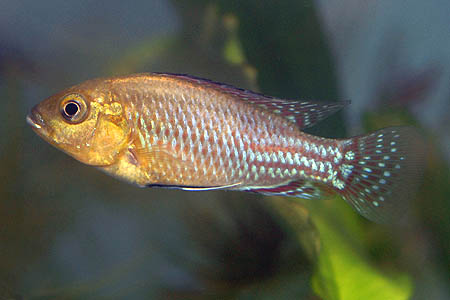
雄鱼略大,体色明显比雌鱼鲜艳。
繁殖
雌鱼口孵,可一雄配三四雌,或从六至八尾幼鱼培养;参考水温 24 °C、酸碱度约 7。雄鱼守域、挖浅坑并可能强追未准备好的雌鱼。雌鱼收卵后接近雄鱼泄殖孔受精,有时卵在收入口前已受精;臀鳍橙点充当假卵的解释并不确定。含卵雌鱼常仍被雄鱼骚扰,可考虑单独安置。约十天放出鱼苗,能吃丰年虾无节幼体、微虫及粉状干粮。
图片
图片来自 SeriouslyFish,版权归各摄影者所有。
English
Overview
Small size does not make Pseudocrenilabrus nicholsi a mild community fish. This uncommon mouthbrooder is pugnacious, particularly toward rival males, and some males develop striking extensions to the pelvic fins.
Distribution & habitat
It occurs in the Democratic Republic of the Congo, using ponds, creeks, and drainage ditches. Banks and stands of aquatic plant stems provide favored cover.
Aquarium setup
Provide at least about 90 cm of length with many shelters made from pots, roots, and wood. Plants add useful cover. A sand or fine-gravel bed allows the male to excavate a spawning pit.
Diet & feeding
Use quality cichlid pellets as a staple, with frequent live and frozen supplements for variety.
Behaviour & compatibility
Lower-water companions may face aggression; other dwarf cichlids, catfishes, and loaches require more room. Suitable larger tetras, rainbowfishes, or surface-oriented fishes can use different space. Keep one male with several females. In a multi-male group, the dominant male may monopolize reproduction unless the tank is very large.
Sexual dimorphism
Males are slightly larger and considerably more colorful than females.
Breeding
One male with three or four females can breed around 24 °C and pH 7; a juvenile group is another starting point. The male defends a pit and may harass unreceptive females. Eggs are collected by the female, with fertilization occurring near the male’s vent or sometimes before collection. The orange anal spot is not clearly established as a functional egg mimic. Brooding females may need separation if pursuit continues. Release follows roughly ten days of incubation, and fry accept small live or powdered foods.
来源
- https://www.seriouslyfish.com/species/pseudocrenilabrus-nicholsi(抓取于 2026-10-10)
pseudocrenilabrus-nicholsi · 文件: data/species/pseudocrenilabrus-nicholsi.md · 状态: 草稿