杂色褶唇丽鱼 · Dwarf Egyptian Mouth-brooder
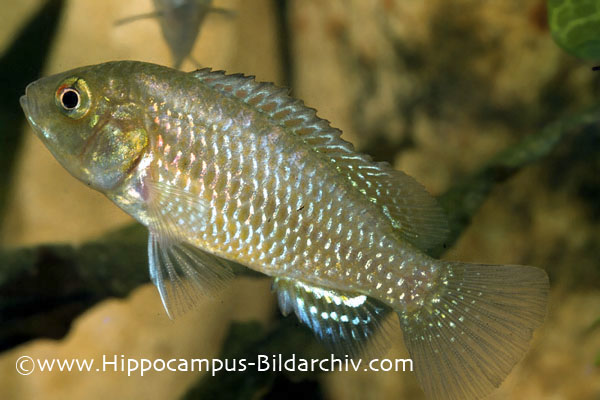
概要
| 字段 | 值 |
|---|---|
| 类别 | 鱼 |
| 学名 | Pseudocrenilabrus multicolor |
| 别名 | 多色朴丽鱼、雜色褶唇麗魚、多色樸麗魚 |
| 分类 | 慈鲷目 Cichliformes › 慈鲷科 Cichlidae › Pseudocrenilabrus |
| 水体 | 淡水 |
| 成体体长 | 8 cm |
| 饲养难度 | 入门 |
| 群居方式 | 成对 |
| 外部数据 | seriouslyfish pseudocrenilabrus-multicolor;fishbase 6894 |
| 原产地 | 埃及、卢旺达、乌干达、苏丹、坦桑尼亚、肯尼亚 |
| 繁殖方式 | 口孵 |
| 特征 | 翻底砂: 是 |
水质参数
| 参数 | 耐受范围 | 最适范围 | 单位 |
|---|---|---|---|
| 水温 | 20–26 | — | °C |
| pH | 6.5–7.2 | — | — |
| 总硬度 | 5–15 | — | dGH |
概述
杂色褶唇丽鱼(Pseudocrenilabrus multicolor)是一种小型雌性口孵慈鲷,长期用于水族繁殖。相对容易繁殖并不等于能随意群放雄鱼;其同种雄鱼冲突明显。
分布与栖息地
分布于埃及、苏丹、乌干达、卢旺达、肯尼亚及坦桑尼亚,见于溪流、池塘与入湖支流。多在缓流或静水处,靠近水草茎丛或浮水植物下方。
饲养环境
一对可参考约 60 × 37.5 × 30 厘米,一雄多雌需更大。陶罐洞、树根与沉木提供充足躲避处,水草可增加遮蔽;铺沙或细砾,方便雄鱼繁殖时挖坑。
食性与喂食
可用优质慈鲷颗粒作基础,规律搭配活饵和冷冻食物,避免长期单一食谱。
习性与混养
可能攻击同样活动于缸下部的鱼,若配其他小慈鲷、鲶鱼或鳅类需大缸。较小环境可优先考虑合适的上层鱼。雄鱼之间攻击性很强,群体繁殖宜一雄配三四雌。
雌雄区分
雄鱼一般略大且颜色更丰富,繁殖时尤其明显。
繁殖
可参考水温 24 °C、酸碱度约 7,一雄三四雌或从六至八尾幼鱼培养。雄鱼挖浅坑并积极引雌,雌鱼边产卵边含入口中,再靠近雄鱼泄殖孔取得精子;也有先受精再收卵的情况。臀鳍橙点是否充当假卵仍有疑问。每窝约 5~100 粒,雌鱼含约十天后释放平游鱼苗,可喂丰年虾无节幼体、微虫和粉状干粮。
补充说明
两个亚种在颜色和纹样上不同,并在野外形成分开的种群;人工饲养应分开繁殖以防杂交。
图片
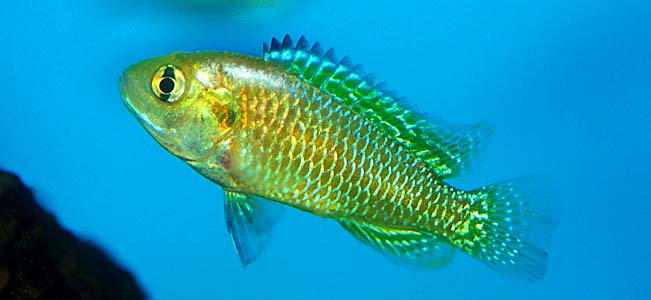
图片来自 SeriouslyFish,版权归各摄影者所有。
English
Overview
A long-established aquarium species, Pseudocrenilabrus multicolor is a small maternal mouthbrooder that reproduces readily. Ease of breeding should not be confused with tolerance of rival males.
Distribution & habitat
It occurs across parts of northeastern and eastern Africa, including Egypt, Sudan, Uganda, Rwanda, Kenya, and Tanzania. Streams, ponds, and lake tributaries provide slow or still water, often with cover among plant stems or beneath floating vegetation.
Aquarium setup
A pair can use a tank around 60 by 37.5 by 30 cm; a harem requires more space. Provide numerous shelters with pots, roots, wood, and optionally plants. Sand or fine gravel accommodates spawning excavations.
Diet & feeding
A quality cichlid pellet can be the staple, supplemented regularly with varied live and frozen foods.
Behaviour & compatibility
Other fishes using the lower part of the tank may be attacked, so bottom-oriented companions require a larger aquarium. Suitable upper-water fishes are easier candidates in smaller setups. Males are highly intolerant of one another; a single male with several females is preferable.
Sexual dimorphism
Males are usually slightly larger and more colorful, especially when breeding.
Breeding
Around 24 °C and pH 7 are suitable breeding targets. Start with one male and three or four females, or grow a group of six to eight juveniles. The male excavates a shallow pit and courts vigorously. The female gathers eggs and receives sperm near the male’s vent; some eggs are fertilized before collection. The anal-fin orange spot’s role as a dummy egg is uncertain. Broods range from about 5 to 100, with release after roughly ten days. Fry accept brine shrimp nauplii, microworms, and finely powdered foods.
Notes
The two subspecies differ in color and pattern and occur as separate wild populations. Maintain them separately to prevent hybridization.
来源
ID:pseudocrenilabrus-multicolor · 文件: data/species/pseudocrenilabrus-multicolor.md · 状态: 草稿