Protopterus annectens annectens · African Lungfish
概要
| 字段 | 值 |
|---|---|
| 类别 | 鱼 |
| 学名 | Protopterus annectens annectens |
| 分类 | 南美肺鱼目 Lepidosireniformes › 原鳍鱼科 Protopteridae › Protopterus |
| 水体 | 淡水 |
| 成体体长 | 100 cm |
| 饲养难度 | 中等 |
| 最小水体 | 1013 L |
| 最小缸长 | 180 cm |
| 特征 | 会跳缸: 是;翻底砂: 是 |
| 外部数据 | seriouslyfish protopterus-annectens-annectens |
| 原产地 | 非洲多国,包括塞内加尔、尼日利亚、肯尼亚和苏丹等 |
| 食性 | 杂食 |
| 繁殖方式 | 产卵 |
水质参数
| 参数 | 耐受范围 | 最适范围 | 单位 |
|---|---|---|---|
| 水温 | 24–30 | — | °C |
| 总硬度 | 0–10 | — | dGH |
概述
Protopterus annectens annectens 是可达 100 cm 的大型肺鱼,活动量虽不高,却需要真正宽大的饲养空间。它能强力咬伤伙伴和饲养者,并可生活超过二十年,适合愿意长期单养的大型鱼爱好者。
分布与栖息地
广布于非洲多国,记录包括塞内加尔、冈比亚、几内亚、塞拉利昂、科特迪瓦、加纳、多哥、贝宁、尼日利亚、尼日尔、布基纳法索、马里、喀麦隆、中非共和国、乍得、苏丹和肯尼亚。常生活在季节性完全干涸的泛滥平原,也见于沼泽及回水区。
饲养环境
水流尽量轻缓,灯光很暗,根枝或光滑大石可提供遮蔽,砂或泥底有益但非必需。最低建议尺寸只是单尾成鱼的下限,必须仍有转身及活动空间。
缸盖要牢固到无法被鱼顶开,并封住可逃出的空隙;同时水面与盖之间保留空气层,让它能上浮呼吸。不能为了防逃而剥夺水面空气通道。
食性与喂食
天然杂食,吃鱼、贝类、两栖动物和植物材料。人工可喂虾、贝肉、适口鱼肉、藻片及其他植物性食物,大个体也接受整鱼。不需要每天投喂;野外休眠时可长时间断食的能力,不应当作正常饲养时的喂养计划。
习性与混养
最好完全单养,对同属鱼极不宽容,对其他大型鱼也不可靠。即使曾经和平同缸,仍可能突然咬掉伙伴身上的组织。维护或转移时应避免手接近嘴部。
繁殖
人工繁殖尚未成功记录。野外会筑巢并在其中产卵,由雄鱼护卵直到孵化。
补充说明
旱季来临时,它会在泥中向下挖洞,底端形成较宽的腔室。水逐渐退去后,体表分泌黏液形成包裹,代谢大幅下降,进入夏眠,直到雨季回归;健康个体可维持很久。
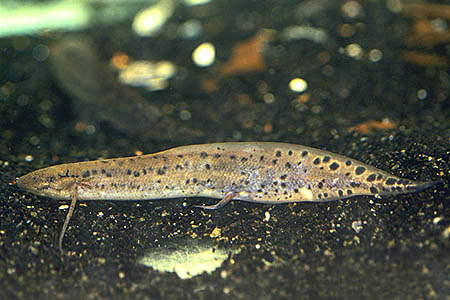
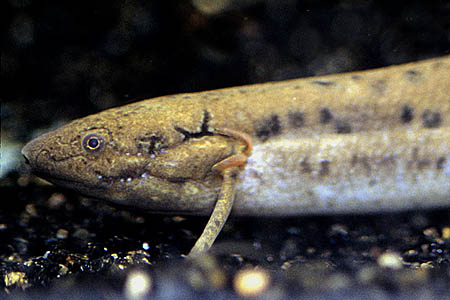
它同时有鳃和成对的肺,仍必须定期上浮呼吸空气。幼鱼的外鳃随成长退化,细长肉质鳍主要用于触探,也能帮助在陆面短距离移动。
图片
图片来自 SeriouslyFish,版权归各摄影者所有。
English
Overview
Reaching 100 cm and living for more than twenty years, Protopterus annectens annectens requires a substantial long-term commitment. Low activity does not remove its space requirements. Powerful bites threaten both tankmates and careless handlers, making dedicated solitary care appropriate.
Distribution & habitat
Records span numerous African countries from Senegal and Guinea eastward to Sudan and Kenya, including much of West Africa and parts of Central Africa. Seasonal floodplains that dry out completely are typical, alongside swamps, marshes, and backwaters.
Aquarium setup
Keep circulation minimal and artificial light very dim. Roots, branches, or smooth rocks provide shelter; sand or mud is beneficial but optional. The stated minimum accommodates only one adult and must still leave room for movement.
Secure the lid against lifting and close escape gaps. At the same time, leave an air space above the water so the fish can surface to breathe. Escape prevention must preserve access to atmospheric air.
Diet & feeding
Its natural omnivorous diet includes fish, shellfish, amphibians, and plant matter. Offer shrimp, mollusks, suitable fish portions, algae wafers, and vegetables; large specimens also accept whole fish. Daily feeding is unnecessary. Prolonged fasting during dormancy is an adaptation, not a routine feeding program.
Behaviour & compatibility
Keep alone. It is strongly intolerant of congeners, and even large unrelated companions are unsafe. Previously uneventful cohabitation can end in sudden biting injuries. Keep hands away from the mouth during maintenance and transfer.
Breeding
Captive spawning is unrecorded. Wild fish construct nests, deposit eggs within them, and leave the male to guard until hatching.
Notes
As seasonal water retreats, it excavates a muddy tunnel ending in an enlarged chamber. Later, mucus forms a covering while metabolism falls sharply. This dormant state, estivation, lasts until rains return and can persist for years in a healthy fish.
It possesses gills and paired lungs but must still surface for air. Juvenile external gills recede with growth. Long fleshy fins primarily serve touch and can also assist movement over land.
来源
ID:protopterus-annectens-annectens · 文件: data/species/protopterus-annectens-annectens.md · 状态: 草稿