背纹丝足鮰 · Large-finned Lampeye
概要
| 字段 | 值 |
|---|---|
| 类别 | 鱼 |
| 学名 | Procatopus nototaenia |
| 别名 | 背紋絲足鮰 |
| 分类 | 鳉形目 Cyprinodontiformes › 花鳉科 Poeciliidae › Procatopus |
| 水体 | 淡水 |
| 成体体长 | 6 cm |
| 饲养难度 | 入门 |
| 最小水体 | 54 L |
| 最小缸长 | 60 cm |
| 群居方式 | 群游 |
| 特征 | 会跳缸: 是 |
| 外部数据 | seriouslyfish procatopus-nototaenia;fishbase 9703 |
| 原产地 | 喀麦隆西南部 |
| 游动层 | 上层 |
| 繁殖方式 | 附着产卵 |
水质参数
| 参数 | 耐受范围 | 最适范围 | 单位 |
|---|---|---|---|
| 水温 | 20–25 | — | °C |
| pH | 5.8–7.5 | — | — |
| 总硬度 | 1–10 | — | dGH |
概述
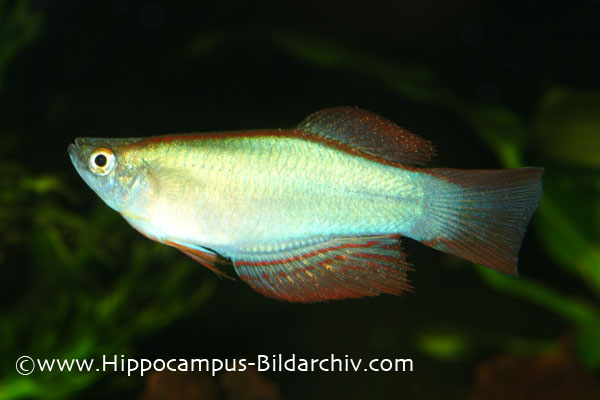
背纹丝足鮰(Procatopus nototaenia)是活跃而较胆怯的群游鱼,眼部光泽与成熟雄鱼延长的鳍是观赏重点。它会跳跃,需要严密缸盖;不同采集地的色型应分开维持。
分布与栖息地
据信仅分布于喀麦隆西南部洛比河和基恩凯河水系。典型环境是林荫下清澈、流速中等的溪流,岸边植被茂盛并向水面悬垂。
饲养环境
小群所需缸长至少约 60 cm、容积约 54 L。密植水草及浮水植物能形成阴影,它主要活动在上层,缸盖需贴合严密。
也可布置清流溪流缸,以粗砂砾、圆滑石块和根枝构成环境。将出水口设在一端形成定向水流,让水面受到扰动以增加溶氧。水草选择耐流、耐阴的水榕或蕨类较合适。
它不耐有机废物积累,应频繁少量换水,每次约 10%~20%。偏好稍凉爽的水,不应因被称为喜欢酸水就忽略个体已适应的水质。
食性与喂食
上翘口和体形提示野外可能主要从水面捕食小型无脊椎动物,但这是推测。缸内喜欢水蚤、红虫和丰年虾等活饵或冷冻饵。
习性与混养
可与偏好相似水流和水质的温和小型鱼混养,避免明显更大、抢食强或咬鳍的同伴。成熟雄鱼的长鳍尤其容易成为咬鳍目标。
至少维持 6~8 条,雌雄混合有助于雄鱼展示体色。群养更能表现自然活动方式,不能仅因它较胆怯便单独饲养。
雌雄区分
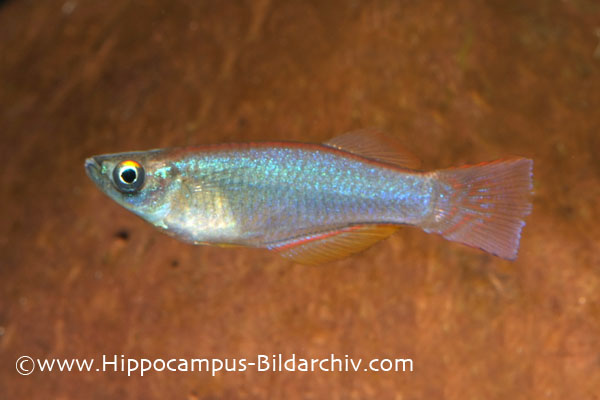
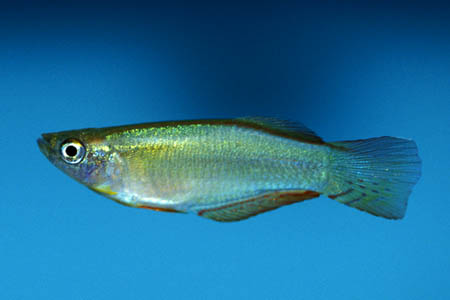
雄鱼更大、更鲜艳,背鳍、臀鳍和尾鳍会随成熟延长;雌鱼多为较朴素的银色,不同产地雌鱼外观往往难以区分。
繁殖
它把卵塞进小缝隙。可用莫丝团,或将产卵拖把分段用橡皮圈束紧,提供狭窄产卵空间;木头或惰性石块也能用,但取卵较难。繁殖缸灯光柔和,气动海绵过滤提供轻微流动和溶氧。
用小型活饵与冷冻饵调理后,性成熟鱼可能每日产卵。轻轻拆开产卵介质取卵,移入装有亲鱼缸水的独立孵化容器,避免直射光,必要时轻微充气。未产卵时可在适温范围内逐步微调温度,不要突然升温。
卵通常约 10~14 天孵化,随温度而变。幼鱼先吃草履虫等微小食物,约 3~4 天后转丰年虾无节幼体或微虫。生长较慢,前两个月可能头向上、看似游动费力,这种姿态可属于正常发育表现。
补充说明
Kribi、Yabassi、Fifinda、Makondo、Edea、Kopongo 等采集地色型主要在雄鱼颜色和鳍形上有差别,雌鱼近似。为避免混杂,应保存产地信息并分开繁殖。本属成员为生活在常年水体中的非一年生鳉类。
图片
图片来自 SeriouslyFish,版权归各摄影者所有。
English
Overview
An active but rather shy schooling fish, Procatopus nototaenia combines luminous eyes with increasingly extended fins in mature males. A secure lid is essential, and collection-locality forms should be maintained separately.
Distribution & habitat
It is thought to be restricted to the Lobi and Kienke systems of southwestern Cameroon. Typical sites are shaded forest streams with clear, moderately moving water and abundant overhanging bank vegetation.
Aquarium setup
Provide at least about 60 cm of tank length and 54 L for a small group. Dense plants and floating shade suit this upper-water fish. Fit the lid closely because it jumps well.
A stream-style layout can use coarse gravel, rounded stones, and branches. An outlet at one end creates directional flow, while surface disturbance improves oxygen supply. Tough shade-tolerant plants such as Anubias and aquatic ferns suit this arrangement.
Organic waste must not accumulate. Frequent changes of about 10–20% help keep the water clean. Slightly cool conditions are preferred; a reputation for favoring acidity should not override attention to the conditions a particular group has adapted to.
Diet & feeding
Body shape and the upward-facing mouth suggest surface feeding on small invertebrates in nature, rather than proving it. In captivity, Daphnia, bloodworms, Artemia, and similar live or frozen foods are favored.
Behaviour & compatibility
Peaceful small companions with matching conditions are suitable. Avoid much larger or highly competitive fishes, and exclude fin nippers that may target adult males.
Maintain at least six to eight, preferably of both sexes. The presence of females encourages male coloration, and a group better expresses its natural schooling behavior.
Sexual dimorphism
Males are larger and more colorful, developing extended dorsal, anal, and caudal fins with maturity. Females are relatively plain silver and can look very similar across locality forms.
Breeding
Eggs are inserted into narrow crevices. Moss clumps or spawning mops compressed at intervals with elastic bands provide accessible sites. Wood or inert rocks can also work, but make collection harder. A dim aquarium with gentle sponge filtration supplies modest flow and oxygen.
Condition adults with small live and frozen foods. Mature fish may lay daily. Carefully open the spawning medium to retrieve eggs, transferring them to a separate shaded container of parental-tank water. Gentle aeration is optional. If reluctant to spawn, gradual temperature adjustment within the established range may help.
Hatching usually takes about 10–14 days, depending on temperature. Start fry on infusoria-sized food, progressing to Artemia nauplii or microworms after three or four days. Growth is slow, and an apparently awkward head-up posture during the first couple of months can be normal.
Notes
Kribi, Yabassi, Fifinda, Makondo, Edea, and Kopongo are among locality labels used for forms differing mainly in male color and fins. Preserve collection information and breed forms separately. Members of the genus are nonannual killifishes associated with permanent waters.
来源
- https://www.seriouslyfish.com/species/procatopus-nototaenia(抓取于 2026-10-10)
procatopus-nototaenia · 文件: data/species/procatopus-nototaenia.md · 状态: 草稿