缘锯鳞鲈 · Malabar Leaffish
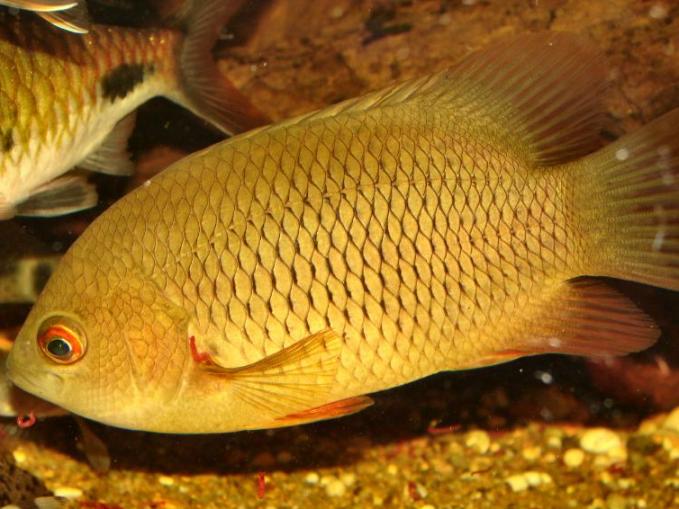
概要
| 字段 | 值 |
|---|---|
| 类别 | 鱼 |
| 学名 | Pristolepis marginata |
| 别名 | 马拉巴锯鳞鲈、緣鋸鱗鱸、馬拉巴鋸鱗鱸 |
| 分类 | 攀鲈目 Anabantiformes › 锯鳞鲈科 Pristolepididae › Pristolepis |
| 水体 | 淡水 |
| 成体体长 | 15 cm |
| 饲养难度 | 中等 |
| 最小水体 | 108 L |
| 最小缸长 | 120 cm |
| 外部数据 | seriouslyfish pristolepis-marginata;fishbase 10231 |
| 原产地 | 印度喀拉拉邦西高止山脉 |
水质参数
| 参数 | 耐受范围 | 最适范围 | 单位 |
|---|---|---|---|
| 水温 | 23–28 | — | °C |
| pH | 6.5–7.5 | — | — |
| 总硬度 | 5–12 | — | dGH |
概述
缘锯鳞鲈(Pristolepis marginata)来自印度西高止山脉,能生活在明显有水流的河溪。它可能吞食足够小的同缸鱼,性情也可能有些好斗,挑选伙伴时应同时考虑体型、性情和对水流的适应。
分布与栖息地
印度喀拉拉邦西高止山脉特有。栖息地包括流速较快的溪流、河流,甚至一些有急流白浪的区域。
饲养环境
可用沙底、圆滑石块和沉木根系搭配较明显水流,模拟天然河溪。它也能适应水流较缓的水草缸,因此无需把急流当作唯一可行布置。
食性与喂食
天然以动物性食物为主,但也吃坚果和种子。缸中通常不挑食,多数干粮、冷冻饵和活饵都能接受,可用多样饵料维持营养。
习性与混养
小到能被当作食物的鱼有被吞食的风险。它也可能主动争斗,较适合体型相当或更大、同样适应流水的鱼;不能因体型不算特别大就把它加入小型鱼群中。
雌雄区分
平时没有明显可靠的外部性别差异。雌鱼临产时腹部明显圆胀,产卵前可能看到小型产卵管。
繁殖
水族箱中已有成功繁殖,商业人工繁育也有记录。有关繁殖过程的报道仍带有一定不确定性:雄鱼据称会用卵石搭成浅坑状巢,经过较长时间的身体接触、颤动等求偶后,与雌鱼并排进入巢区。
雌鱼在数小时内多次返回,每次产下一批卵,随后不再参与照护。雄鱼留守卵及孵出的幼鱼,直到后代自由游动;期间可能重新摆放卵石,使原巢变成简单石堆。
繁殖期尤其是雄鱼会明显更具攻击性,尝试繁殖时可能需要独立缸。不能把平时可混养理解为护卵时也安全。
补充说明
贸易中也使用“Common Catopra”这一名称。人工繁育增加了其进入观赏鱼贸易的机会,但繁殖过程仍不等于已有可直接照搬的家庭操作方案。
图片
图片来自 SeriouslyFish,版权归各摄影者所有。
English
Overview
Native to India's Western Ghats, Pristolepis marginata inhabits flowing rivers and streams. Small companions may become prey, and a somewhat belligerent temperament is possible. Matching size, behavior, and current preferences matters when choosing tankmates.
Distribution & habitat
It is endemic to the Western Ghats in Kerala. Recorded habitat includes fast streams, rivers, and even some whitewater sections.
Aquarium setup
Sand, smooth stones, roots, and a reasonable current approximate its river habitat. A more gently moving planted aquarium can also work, so strong flow is not the only viable arrangement.
Diet & feeding
Animal foods dominate the natural diet, with nuts and seeds also taken. Captive fish are generally undemanding feeders and accept most dry, frozen, and live offerings. A varied menu is appropriate.
Behaviour & compatibility
Any fish small enough to be regarded as food faces a swallowing risk. Occasional belligerence further favors comparable-sized or larger companions that also tolerate flowing water. Its moderate adult size does not make it suitable for a community of tiny fish.
Sexual dimorphism
Reliable external differences are generally absent outside spawning condition. Ripe females become noticeably rounded, and a small ovipositor may be visible shortly before laying.
Breeding
Aquarium reproduction and commercial production have been achieved, but accounts of the sequence remain somewhat tentative. The male reportedly assembles pebbles into a shallow pit. Extended courtship involves physical contact and quivering before the pair moves alongside each other at the nest.
Over several hours the female returns repeatedly, leaving another batch of eggs each time. Her involvement then ends. The male guards eggs and newly hatched young until free swimming, sometimes rearranging the pebbles until the nest becomes a simple mound.
Aggression increases markedly during this period, particularly in the male. Separate breeding accommodation may be needed even when the adults previously lived successfully with companions.
Notes
Common Catopra is another trade name. Captive production has contributed to availability, but those breeding accounts do not constitute a fully established home-aquarium protocol.
来源
- https://www.seriouslyfish.com/species/pristolepis-marginata(抓取于 2026-10-10)
pristolepis-marginata · 文件: data/species/pristolepis-marginata.md · 状态: 草稿