细锯脂鲤 · X-ray Tetra
概要
| 字段 | 值 |
|---|---|
| 类别 | 鱼 |
| 学名 | Pristella maxillaris |
| 别名 | 細鋸脂鯉 |
| 分类 | 脂鲤目 Characiformes › 脂鲤科 Characidae › Pristella |
| 水体 | 淡水 |
| 成体体长 | 4.5 cm |
| 饲养难度 | 入门 |
| 最小水体 | 54 L |
| 最小缸长 | 60 cm |
| 群居方式 | 群游 |
| 性情 | 温和 |
| 外部数据 | seriouslyfish pristella-maxillaris;fishbase 10697 |
| 原产地 | 委内瑞拉、圭亚那、苏里南、法属圭亚那、巴西 |
| 食性 | 肉食 |
| 繁殖方式 | 产卵 |
水质参数
| 参数 | 耐受范围 | 最适范围 | 单位 |
|---|---|---|---|
| 水温 | 22–28 | — | °C |
| pH | 6–7.5 | — | — |
| 总硬度 | 2–20 | — | dGH |
概述
细锯脂鲤(Pristella maxillaris)是一种温和、适应性较好的小型群游鱼,常见市售个体多为商业繁殖。饲养相对容易,繁殖时真正较难的是照顾十分细小的鱼苗。
分布与栖息地
原生于委内瑞拉、圭亚那、苏里南、法属圭亚那及巴西北部沿海水域。旱季生活在清水溪流和支流,雨季进入被淹没的稀树草原,在水下植被之间产卵。季节洪水使水中矿物质含量变化较大。
饲养环境
缸底面积至少约 60 × 30 cm。人工繁殖个体能适应多种合理布置,在较密的水草环境中通常比空旷裸缸更显色。也可采用沙底、沉木、树根和落叶,配合昏暗光照;定期检查并更换衰败的叶片。
日常对硬度的适应范围较宽,但繁殖时偏软、偏酸的水更接近雨季条件。不必将原产地或商业繁殖地混为一谈。
食性与喂食
野外主要捕食小型无脊椎动物。缸中通常不挑食,可混合使用薄片、细颗粒饲料,以及水蚤、丰年虾等小型活饵和冷冻饵。
习性与混养
十分温和,不擅长与大鱼或过分活跃的鱼竞争。可选择其他温和的小型群游鱼、小型鲶鱼及适宜的小型慈鲷。至少养 6 条,最好 10 条或更多,同种群体有助于改善状态与展示效果。
雌雄区分
成熟雌鱼通常更大、更粗壮,雄鱼较纤细。
繁殖
诱导产卵不算困难,但鱼苗细小,开口饵是重点。宜用独立、很暗的繁殖缸,放置细叶植物、产卵拖把或隔网,配合轻柔海绵过滤,使用偏软、偏酸的水;反渗透水可帮助制备。
可约 6 雄、6 雌群繁,也可先分开育肥,再于傍晚放入怀卵雌鱼和状态好的雄鱼,通常次日清晨产卵。配对方法一般更有利于产量,数日未见卵时可更换配对。亲鱼会吃卵,产后移出更可靠;极密植环境也可保留成鱼并及时吸出鱼苗。
卵约 24~36 小时孵化,再过 3~4 天自由游动。先供纤毛虫等微小饵料,随后逐渐添加微虫、丰年虾无节幼体。卵和早期鱼苗对光敏感,尽量保持黑暗。
补充说明
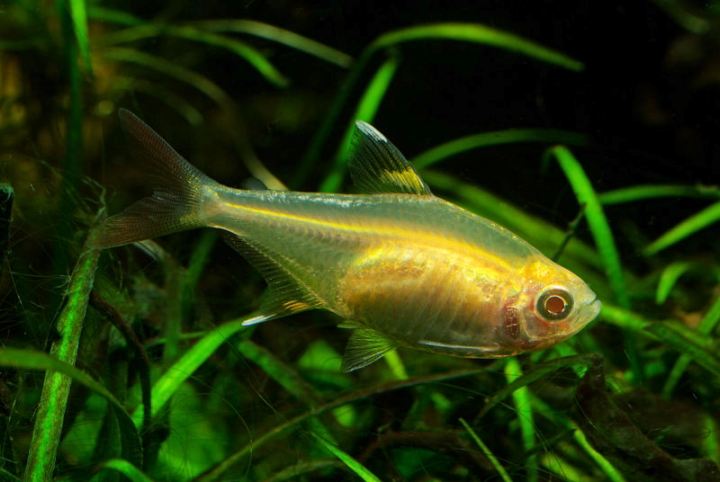
人工选育的“金色”型属于部分白化表现,基本饲养方式相同。旧文献中常出现 Pristella riddlei 这个旧名,检索时需注意。
图片
图片来自 SeriouslyFish,版权归各摄影者所有。
English
Overview
Pristella maxillaris, the X-ray tetra, is a peaceful, adaptable small schooling fish. Most specimens in the trade are commercially bred. Routine care is relatively straightforward; during breeding, the exceptionally small fry are more challenging than inducing the adults to spawn.
Distribution & habitat
Its native coastal range includes Venezuela, Guyana, Suriname, French Guiana, and northern Brazil. Clear streams and tributaries are occupied during the dry season. With the rains, fish enter flooded savanna and spawn among submerged vegetation. Seasonal flooding brings substantial changes in dissolved mineral content.
Aquarium setup
Provide a footprint of at least about 60 × 30 cm. Farmed fish adapt to various sensible layouts, but dense planting usually shows their colors better than a sparse aquarium. Sand, driftwood, roots, and leaf litter with subdued light offer another arrangement. Inspect and replace deteriorating leaves regularly.
The species tolerates a broad hardness range in routine care. Softer, more acidic conditions are more appropriate for breeding because they resemble the wet season. Commercial production locations should not be confused with the native range.
Diet & feeding
Wild fish mainly hunt small invertebrates. In captivity they are unfussy: combine flakes or fine granules with small live and frozen foods such as Daphnia and Artemia.
Behaviour & compatibility
Avoid much larger or very boisterous fishes that can outcompete this gentle species. Peaceful small schooling fishes, small catfishes, and suitable dwarf cichlids are possible companions. Keep at least six X-ray tetras, preferably ten or more, for better condition and more natural displays.
Sexual dimorphism
Mature females usually grow larger and are stockier than the slimmer males.
Breeding
Spawning itself is fairly easy, but supplying food small enough for the fry is crucial. Use a separate, very dim aquarium with fine plants, spawning mops, or protective mesh. Soft, acidic water and gentle sponge filtration are suitable; reverse-osmosis water can help prepare the conditions.
A group of around six fish per sex can spawn. Alternatively, condition males and females separately and transfer a gravid female with a well-conditioned male in the evening. Spawning usually follows the next morning. Pairs tend to be more productive; replace the pair if no eggs appear after a few days.
Remove adults after spawning because they eat eggs. An alternative in exceptionally dense planting is to leave them in place and siphon out fry promptly. Hatching takes roughly 24–36 hours, with free swimming three or four days later. Begin with infusoria-sized foods and progress to microworms and Artemia nauplii. Eggs and early fry are sensitive to light, so keep the rearing environment as dark as possible.
Notes
The selectively bred golden form is semi-albino and has essentially the same care requirements. Older literature often uses the former name Pristella riddlei.
来源
- https://www.seriouslyfish.com/species/pristella-maxillaris(抓取于 2026-10-10)
pristella-maxillaris · 文件: data/species/pristella-maxillaris.md · 状态: 草稿