Prionobrama filigera · Glass Bloodfin Tetra
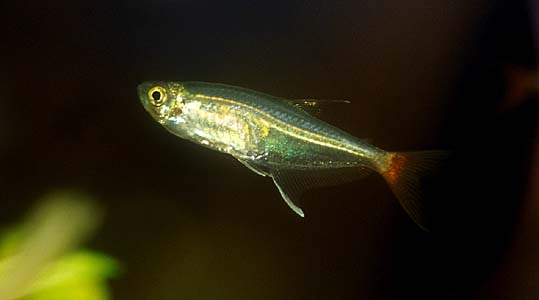
概要
| 字段 | 值 |
|---|---|
| 类别 | 鱼 |
| 学名 | Prionobrama filigera |
| 分类 | 脂鲤目 Characiformes › 脂鲤科 Characidae › Prionobrama |
| 水体 | 淡水 |
| 成体体长 | 6 cm |
| 饲养难度 | 中等 |
| 最小水体 | 68 L |
| 最小缸长 | 60 cm |
| 群居方式 | 群游 |
| 外部数据 | seriouslyfish prionobrama-filigera;fishbase 12396 |
| 原产地 | 厄瓜多尔、哥伦比亚、秘鲁、玻利维亚、巴西 |
| 游动层 | 上层 |
| 性情 | 温和 |
| 繁殖方式 | 产卵 |
水质参数
| 参数 | 耐受范围 | 最适范围 | 单位 |
|---|---|---|---|
| 水温 | 23–27 | — | °C |
| pH | 6–7.5 | — | — |
| 总硬度 | 0–30 | — | dGH |
概述
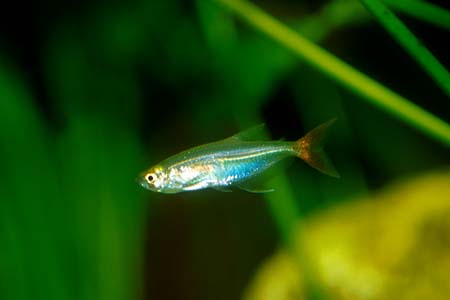
Prionobrama filigera 是身体较修长、尾鳍红色的脂鲤,主要活动于上层开阔水域。活泼但初入缸可能胆怯,成群、开放游动区和局部浮水遮蔽需要同时兼顾。
分布与栖息地
亚马孙水系的厄瓜多尔、哥伦比亚、秘鲁、玻利维亚和巴西均有记录。具体栖境尚不清楚,由形态与行为推测,可能偏向小溪、支流而非大型主河道。
饲养环境
保留较多开放游动空间,周边水草与局部浮水植物既利于观赏,也能安抚刚入缸或容易受惊的鱼群。沉木细枝与底部落叶可增加自然感。
对略酸至略碱水有一定适应性,但应在既定适宜范围内维持稳定。
食性与喂食
上翘嘴和体形提示野外可能主要捕食水面小型无脊椎动物,但尚不能当作完整已确认的食谱。缸中特别喜欢水蚤、红虫、剑水蚤等活饵和冷冻饵,多数也很积极接受干粮,多样投喂有利于显色和体况。
习性与混养
通常温和,雄鱼偶尔彼此争执,至少六至八条同种是较好的安排。可与体型接近的脂鲤、适合的鼠鱼、小型异型或相容慈鲷等共同饲养。
避免与更大、游速很快且同占上层的鱼混养,强烈空间与食物竞争会使它处于劣势。
雌雄区分
成熟雌鱼腹部更丰满,抱卵时明显。健康雄鱼在臀鳍白边旁有深色条纹,背鳍和臀鳍据称也会稍延长;白边本身两性都有。
繁殖
人工繁殖不算特别困难,若要多保留鱼苗,使用独立弱光繁殖缸,配置细叶植物或产卵拖把,也可用网隔使卵落下后不被亲鱼吃到。
繁殖水可取软酸条件,pH 6.0~7.0、GH 1~5,并将温度维持在适温上端。过滤并非必要,极轻缓的气动海绵过滤可以供氧,也可能滋生供鱼苗取食的微生物。
可以雌雄各约六条群体繁殖,也可以先分别调养雌雄,待雌鱼饱满、雄鱼显色后,傍晚挑一对入缸,通常次晨产卵。
见卵后立即移走亲鱼。卵约 14~36 小时孵化,受温度影响,再过三至四天自由游动。初期用微型开口饵,长大后转微虫或丰年虾无节幼体。
补充说明
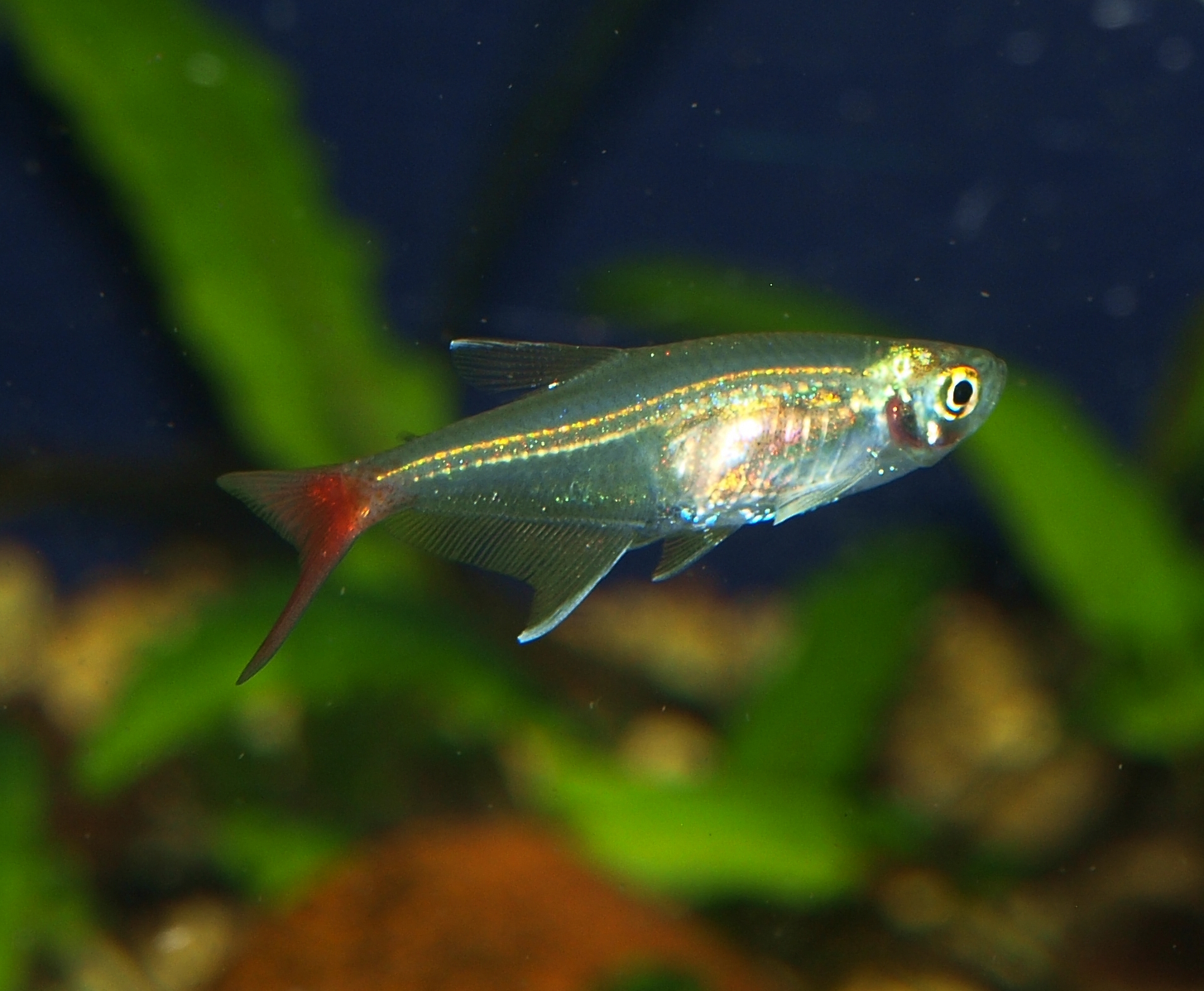
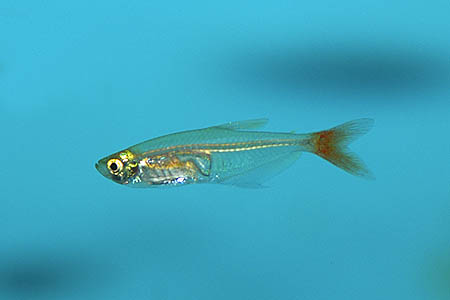
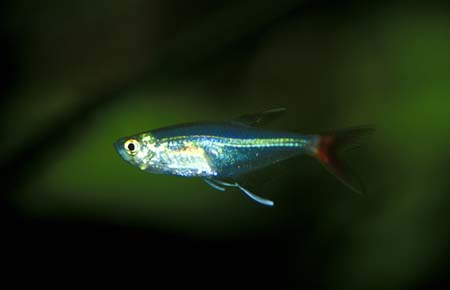
与 Aphyocharax anisitsi 相比,本种更修长,臀鳍和腹鳍没有红色。近缘的 Prionobrama paraguayensis 则缺少尾鳍红色,这些差别比笼统的 bloodfin 商品名更有用。
图片
图片来自 SeriouslyFish,版权归各摄影者所有。
English
Overview
The slender, red-tailed Prionobrama filigera is an active fish of open upper water. Newly introduced groups can be nervous, so combine swimming space with conspecific company and patches of floating shelter.
Distribution & habitat
Records span the Amazon drainage in Ecuador, Colombia, Peru, Bolivia, and Brazil. Specific habitat data are lacking. Its shape and behavior suggest smaller streams and tributaries rather than major channels, but that remains an inference.
Aquarium setup
Leave generous open water for swimming. Peripheral planting and floating patches provide an attractive setting and help calm skittish fish. Fine wood branches and leaves on the bottom add a natural appearance.
It adapts to mildly acidic or mildly alkaline conditions within its suitable range, with stability preferable to unnecessary adjustment.
Diet & feeding
An upturned mouth and body form suggest surface invertebrates as important natural prey, without establishing a complete diet. Captive fish especially enjoy live or frozen water fleas, bloodworms, and Cyclops, while most accept dry food eagerly. Vary the ration for good color and condition.
Behaviour & compatibility
Generally peaceful, it may show occasional male rivalry. Keep at least six to eight together. Similarly sized characins, suitable cory or small suckermouth catfishes, and compatible cichlids are possible companions.
Avoid larger, rapid swimmers occupying the same upper zone. Strong competition for food and space can leave this species at a disadvantage.
Sexual dimorphism
Mature females become fuller in the abdomen, particularly when gravid. Healthy males have a dark anal-fin stripe alongside the white edge found in both sexes. Slight dorsal and anal extensions are also reported in males.
Breeding
Captive breeding is relatively straightforward. For higher fry survival, prepare a separate dim aquarium with fine vegetation or spawning mops, or use mesh that protects fallen eggs from the adults.
Soft, acidic water around pH 6.0–7.0 and GH 1–5 can be used, with temperature toward the upper end of the suitable range. Filtration is optional; a very gentle sponge filter adds oxygenation and may provide microbial grazing for fry.
Spawning can involve roughly six fish of each sex, or a selected pair. For pairs, condition the sexes separately, then move a full female and strongly colored male in the evening. Spawning commonly follows the next morning.
Remove adults as soon as eggs are seen. Hatching takes approximately 14–36 hours depending on temperature, followed by free swimming three to four days later. Microscopic starter foods precede microworms or brine-shrimp nauplii.
Notes
Compared with Aphyocharax anisitsi, this fish is more elongated and lacks red in the pelvic and anal fins. The relative Prionobrama paraguayensis lacks the red tail, making these features more useful than the broad bloodfin trade label.
来源
- https://www.seriouslyfish.com/species/prionobrama-filigera(抓取于 2026-10-10)
prionobrama-filigera · 文件: data/species/prionobrama-filigera.md · 状态: 草稿