黑白魟 · Polka Dot Stingray
概要
| 字段 | 值 |
|---|---|
| 类别 | 鱼 |
| 学名 | Potamotrygon leopoldi |
| 别名 | P13/14、P62、Potamotrygon leopoldi |
| 分类 | 鲼目 Myliobatiformes › 江魟科 Potamotrygonidae › Potamotrygon |
| 水体 | 淡水 |
| 成体体长 | 70 cm |
| 饲养难度 | 中等 |
| 最小水体 | 1620 L |
| 最小缸长 | 240 cm |
| 特征 | 会跳缸: 是 |
| 外部数据 | seriouslyfish potamotrygon-leopoldi;fishbase 53766 |
| 原产地 | 巴西 |
| 繁殖方式 | 卵胎生 |
水质参数
| 参数 | 耐受范围 | 最适范围 | 单位 |
|---|---|---|---|
| 水温 | 20–29 | — | °C |
| pH | 6–7.5 | — | — |
| 总硬度 | 0–5 | — | dGH |
概述
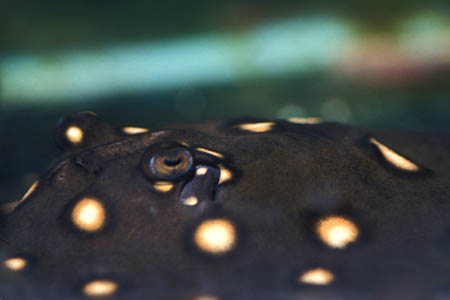
黑白魟(Potamotrygon leopoldi)以深色体盘和浅色圆斑闻名,大雌鱼体盘可达约 70 cm,雄鱼通常较小。漂亮花纹只是选鱼的一部分,足够底面积、成熟过滤、可靠进食和安全维护才决定能否长期饲养。
分布与栖息地
已知来自巴西中部 欣古 河流域及 弗雷斯科 河。它与同属鱼一样,可活动于河流浅滩、砂洲和缓流支流的砂泥底,也随雨季进入淹水森林,退水后留在湖池中。
饲养环境
成体或一对建议至少约 240 × 90 × 75 cm。造景应让位于大片开放底部;沉木和平滑石头须稳固,避免被鱼推动。弱光较适合,附着植物可尝试,但栽根水草容易被吃,其他植物也未必安全。
细河砂提供埋身退避处,尤其适合幼魟;裸底清洁方便,但少了这种选择。用大容量成熟底滤或合适的外置过滤处理高排泄量,每小时约四倍缸体积循环可作参考,出水造成水面扰动以保证供氧。加热器等设备应隔离,防止贴靠造成烫伤。
每周约换水 50%,持续清除废物。缸盖紧密防逃,进食时上浮探出水面的行为不能忽视。水质以偏软为宜,不能把个别耐较硬水的经历当作所有鱼都适应的保证。
食性与喂食
按淡水魟的饲养经验,每天至少两次供应多样动物性食物。幼鱼可用红虫、水丝蚓、丰年虾、磷虾,成鱼改用鱼肉、贝肉、整虾、鱿鱼及蚯蚓。部分鱼接受干粮,但不应牺牲食物多样性。
刚到的个体若瘦弱、不吃冻饵,先用活红虫或合适大小的蚯蚓帮助恢复,体况改善后逐渐转食。牛心、鸡肉等禽畜肉不适合,常规活饲料鱼也会增加病原与寄生虫风险。
习性与混养
小鱼可能被吞食,强势或守领域的伙伴也不合适。优先考虑体形足够大、平和、使用上层空间的对象,大型底部鱼会额外占用面积。
七彩神仙等较小鱼有夜间遭捕食的记录;一些大型异型会吸附体盘,造成损伤。不能把某个属的少数成功合养经历视为绝对安全。同属魟之间可能杂交,若重视纯种繁育,应保持种源独立。
雌雄区分
雄鱼腹鳍内侧有成对向后伸出的鳍脚,幼雄也能观察到较小的结构。
繁殖
本种有稳定的缸内繁殖记录。胎儿在母体内先用卵黄,随后从子宫分泌物获取营养,最后直接产出成形幼魟。配对需要相互接受,单纯凑齐雌雄不一定成功。
同属配对经验建议雌鱼大于雄鱼。雄鱼追逐并咬住雌鱼体盘以调整交配姿势,长时间无法成功时可能造成伤害,应备好分隔环境。交配为体内受精;缸养同属妊娠经验多为九至十二周,孕雌食量增加,应充分供食。
出生后宜分开育苗,避免其他鱼或成魟捕食;产后水浑浊时,转走幼鱼后进行较大换水。初生卵黄可支持至约一周,吸收后每天多次投喂优质活饵或冻饵,并通过混入活饵帮助转食。雌鱼连续两三胎后应与雄鱼隔开休养。幼魟多呈棕色斑驳,黑白对比随成长更明显。
补充说明
eclipse 型浅斑呈黑心环状;P14 是否为本种变异仍存在不确定性。黑帝王魟(Potamotrygon henlei)腹面常有斑点,但部分黑白魟也被报告有腹斑,不能仅据这一点断定杂交。
毒刺主要用于防御,落刺也可能有危险。不要抚摸或用鱼网捞,移动时使用结实容器或大鱼袋,被刺伤应及时就医。持续拒食、眼间凹陷、尾柄两侧突出或体盘边缘上卷,都是需要重视的异常。
图片
图片来自 SeriouslyFish,版权归各摄影者所有。
English
Overview
Potamotrygon leopoldi is known for pale spots over a dark disc. Large females can reach about 70 cm across, with males generally smaller. Pattern is only one consideration: ample floor space, mature filtration, dependable feeding, and safe maintenance determine long-term suitability.
Distribution & habitat
It is known from the Xingu basin and Rio Fresco in central Brazil. Like related rays, it occupies river shallows, sandbars, and slow tributaries over sand or mud, entering flooded forest seasonally and sometimes remaining in pools after water retreats.
Aquarium setup
Provide at least about 240 × 90 × 75 cm for an adult or pair. Prioritize open floor space. Wood and smooth stones must be secure enough not to shift. Subdued light is suitable. Attached plants can be tried, but rooted vegetation may be eaten and other plants are not necessarily safe.
Fine river sand offers a burial refuge, particularly for juveniles. A bare floor is easier to clean but removes this option. Use a large mature sump or suitable external filtration for the waste load. About four tank volumes per hour is a circulation reference, with surface movement for oxygenation. Protect heaters and other equipment from contact to prevent burns.
Change about 50% weekly and prevent waste accumulation. Secure the cover because feeding rays can emerge above the surface. Soft water is preferred; individual successes in harder water do not establish universal tolerance.
Diet & feeding
General freshwater-ray practice is at least two daily meals of varied animal foods. Juveniles accept bloodworms, Tubifex, brine shrimp, and krill; larger fish need fish flesh, shellfish, whole shrimp, squid, and earthworms. Some accept dry food, but dietary variety remains important.
Thin newcomers refusing frozen fare may first need live bloodworms or appropriately sized earthworms. Convert gradually after condition improves. Avoid beef heart, chicken, and other mammalian or bird meat. Routine feeder fish add parasite and pathogen risks.
Behaviour & compatibility
Small companions may be swallowed, while aggressive or territorial fish are also unsuitable. Prefer large, peaceful fishes using upper water. Large bottom dwellers require additional floor space.
Smaller fish, including discus, have been taken at night. Some large suckermouth catfish attach to discs and cause injury. A few successful combinations cannot guarantee safety for an entire genus. Related rays may hybridize, so preserve separate sources when maintaining pure breeding lines.
Sexual dimorphism
Males have paired claspers projecting backward along the inner pelvic-fin edges. Smaller versions are visible in juveniles.
Breeding
Captive reproduction is established. Developing young first use yolk, then obtain nourishment from uterine secretions before live birth. Mutual acceptance matters; owning one of each sex does not guarantee pairing.
Experience within the genus favors females larger than males. Males chase and bite the disc margin to position themselves for mating. Prolonged unsuccessful pursuit can injure females, so have separation facilities ready. Fertilization is internal. General captive gestation is often nine to twelve weeks, with increased feeding needs for the female.
Separate newborns to limit predation by companions or adults. If birth clouds the water, make a substantial change after moving pups. Yolk reserves may last up to about a week, followed by several daily meals of quality live or frozen food. Mixing live items can aid conversion. Give females a break from males after two or three litters. Juveniles are mottled brown before developing strong adult contrast.
Notes
The eclipse form has ring-shaped pale spots with dark centers. Whether P14 represents a variant remains uncertain. Potamotrygon henlei commonly has underside spots, but some P. leopoldi have reportedly shown them too; spots alone do not prove hybrid ancestry.
Defensive spines remain hazardous after shedding. Avoid petting or nets; transfer rays using a solid container or large fish bag. Seek medical care after a sting. Persistent refusal to eat, hollowing between the eyes, prominent tail-base structures, or curled disc edges indicate serious concerns.
来源
- https://www.seriouslyfish.com/species/potamotrygon-leopoldi(抓取于 2026-10-10)
potamotrygon-leopoldi · 文件: data/species/potamotrygon-leopoldi.md · 状态: 草稿