卡氏江魟 · Large Spot Stingray
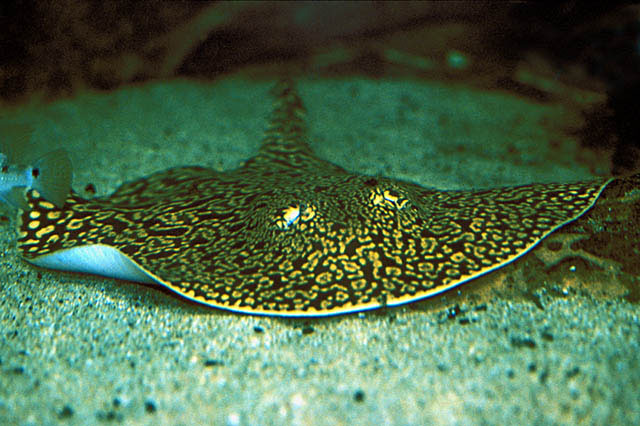
概要
| 字段 | 值 |
|---|---|
| 类别 | 鱼 |
| 学名 | Potamotrygon falkneri |
| 别名 | P53、Potamotrygon castexi |
| 分类 | 鲼目 Myliobatiformes › 江魟科 Potamotrygonidae › Potamotrygon |
| 水体 | 淡水 |
| 成体体长 | 51.8 cm |
| 饲养难度 | 中等 |
| 最小水体 | 972 L |
| 最小缸长 | 180 cm |
| 特征 | 会跳缸: 是 |
| 外部数据 | seriouslyfish potamotrygon-falkneri;fishbase 53763 |
| 原产地 | 巴西、巴拉圭、阿根廷 |
水质参数
| 参数 | 耐受范围 | 最适范围 | 单位 |
|---|---|---|---|
| 水温 | 23.9–28.9 | — | °C |
| pH | 6–7.5 | — | — |
| 总硬度 | 0–10 | — | dGH |
概述
卡氏江魟(Potamotrygon falkneri)是南美洲的大型淡水魟,也以 P53 编号流通。饲养难点不仅是足够底面积,还包括大量投饵后的水质管理和尾刺风险,购买前应把整套设施准备好。
分布与栖息地
原生于巴西、巴拉圭和阿根廷的巴拉那河与巴拉圭河流域。相关淡水魟常利用砂洲、河流浅滩及泥砂底缓流支流,雨季也会进入淹水森林,退水后可能留在湖塘。
饲养环境
至少参考 180 × 60 × 90 厘米,优先留出最大开放底部。大型沉木与圆石必须稳固,灯光柔和;细河砂可让鱼受惊时埋身,裸底虽易清洁却缺少这种遮蔽。扎根植物容易受损,附生植物也未必能保住。
大型生物过滤配规律维护,底滤可把加热设备放到主缸外,防止魟鱼停在其上烫伤;外滤也须规模充分。可参考每小时约四倍循环,出水扰动水面补充溶氧,每周换水可达一半。缸盖要严密,喂食上浮时可能冲出水面。
食性与喂食
可按淡水魟的动物性饵料方案提供多样小鱼肉、虾、贝肉、鱿鱼、蚯蚓等,幼鱼用更小的活冷冻饵。相关养护经验建议每天至少两餐。
新到鱼可能消瘦且拒冷冻饵,需要尽快让它进食,可先用适口活红虫或蚯蚓恢复,再逐步转非活饵。避免牛心、禽肉等陆生动物肉和常规活饵鱼,以减少营养失衡及病原带入。
习性与混养
选择足够大、温和、最好主要在上层活动的伙伴,强领地鱼可能让魟长期紧张。吸盘口鲶类有贴住盘体造成伤害的记录,不能只看它们平常吃藻就认定安全。不同江魟同养可能杂交,繁殖时应避免混种。
雌雄区分
雄性腹鳍内侧各有一条向后伸出的鳍脚,像指状附肢;幼雄也可见,但更小。
繁殖
本种可参考同属的体内受精、母体营养型胎生模式,但不能视为已有本种稳定人工繁殖流程。近亲幼体先利用卵黄,随后获得母体子宫分泌物营养;配对不一定成功,通常要选体况好、雌鱼比雄鱼大的组合。
求偶追逐和咬盘缘可能使雌鱼受伤,尝试前必须具备分隔能力。怀孕雌鱼需充足食物,出生幼魟宜另行照顾以防被伙伴吃掉,待卵黄吸收后少量多次喂适口活冷冻饵。连续繁殖后应让雌鱼休息,这些均属近亲繁殖管理参考。
补充说明
尾刺具倒钩并可造成严重疼痛与组织损伤,不能徒手把玩,也不要用网兜捞魟,应使用合适坚固容器或大鱼袋。脱落的刺一段时间内仍有风险,清底须留意;受刺伤应及时就医。购入前看它主动进食,眼间凹陷、尾根两侧骨样突出提示消瘦,盘缘持续向上卷是严重警讯。
图片
图片来自 SeriouslyFish,版权归各摄影者所有。
English
Overview
A large South American freshwater ray also traded as P53, Potamotrygon falkneri requires substantial floor space and a complete support system. Heavy feeding, waste management, and the venomous tail spine are central to care, not secondary considerations.
Distribution & habitat
It is native to the Paraná and Paraguay basins in Brazil, Paraguay, and Argentina. Genus-level habitat accounts include sandbanks, river shallows, muddy tributaries, flooded forest, and lakes or ponds left by receding floods.
Aquarium setup
Use at least the suggested 180 by 60 by 90 cm, preserving as much open floor as possible. Secure large decor and keep lighting restrained. Fine river sand allows burial; a bare floor simplifies cleaning but removes that refuge. Plants may be damaged even when attached to decor.
Large biological filtration and disciplined upkeep are essential. A sump keeps heaters out of reach and reduces contact burns; canisters must also be adequately sized. Suggested circulation is around four tank volumes per hour with surface agitation for oxygen. Weekly changes up to half the volume and a close-fitting cover address waste and surface feeding activity.
Diet & feeding
Freshwater-ray feeding guidance uses varied animal foods such as appropriate fish, shrimp, shellfish, squid, and earthworms, with smaller live or frozen items for juveniles. At least two daily meals are suggested for these active feeders.
Thin new imports may initially refuse frozen food. Establish feeding promptly with suitable live worms if needed, then gradually transition once condition improves. Avoid mammalian or avian meats and routine feeder fish.
Behaviour & compatibility
Choose peaceful companions beyond swallowing size, preferably using upper water. Aggressive territorial fish can undermine ray health. Suckermouth catfish may attach to and injure the disc, so algae-feeding habits do not establish safety. Different river-ray species may hybridize and should be separated when breeding is intended.
Sexual dimorphism
Males have a backward-projecting clasper on the inner side of each pelvic fin. These are smaller but still visible in young males.
Breeding
Trials can draw on the genus pattern of internal fertilization and maternal nourishment, without treating it as a proven captive method for this species. Related rays supplement yolk with uterine secretions. Pair compatibility is uncertain; a well-conditioned female larger than the male is preferable.
Courtship chasing and disc biting may cause injury, so separation facilities are essential. Related-ray practice includes increased food for pregnant females, separate care for newborns, and frequent small meals after yolk absorption. Rest periods between repeated litters protect the female.
Notes
The barbed tail spine can cause severe pain and tissue injury. Avoid handling or netting; use an appropriate solid container or large fish bag for transfer. Shed spines remain hazardous for a time, and stings require medical attention. Before purchase, check active feeding and body condition. Sunken head areas, prominent pelvic structures, or persistently curled disc margins are warning signs.
来源
- https://www.seriouslyfish.com/species/potamotrygon-falkneri(抓取于 2026-10-10)
potamotrygon-falkneri · 文件: data/species/potamotrygon-falkneri.md · 状态: 草稿