金恐龙 · Senegal Bichir
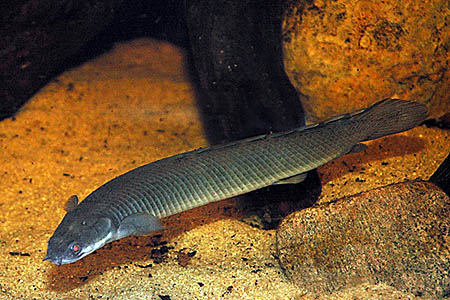
概要
| 字段 | 值 |
|---|---|
| 类别 | 鱼 |
| 学名 | Polypterus senegalus senegalus |
| 分类 | 多鳍鱼目 Polypteriformes › 多鳍鱼科 Polypteridae › Polypterus |
| 水体 | 淡水 |
| 成体体长 | 50 cm |
| 饲养难度 | 中等 |
| 最小水体 | 540 L |
| 最小缸长 | 150 cm |
| 特征 | 会跳缸: 是;夜行性: 是;吃小鱼: 是 |
| 外部数据 | seriouslyfish polypterus-senegalus-senegalus |
| 原产地 | 非洲广布,包括埃及、喀麦隆、埃塞俄比亚、肯尼亚、马里、科特迪瓦、坦桑尼亚、尼日利亚、塞内加尔 |
| 食性 | 肉食 |
| 性情 | 温和 |
| 繁殖方式 | 散卵 |
| 别名 | Polypterus senegalus senegalus |
水质参数
| 参数 | 耐受范围 | 最适范围 | 单位 |
|---|---|---|---|
| 水温 | 24–28 | — | °C |
| pH | 6.2–7.8 | — | — |
| 总硬度 | 5–20 | — | dGH |
概述
金恐龙(Polypterus senegalus senegalus)较活跃且相对温和,是初次接触恐龙鱼时常考虑的种类;寿命很长,人工饲养已有超过三十年的记录。
分布与栖息地
已记录分布包括非洲广布,包括埃及、喀麦隆、埃塞俄比亚、肯尼亚、马里、科特迪瓦、坦桑尼亚、尼日利亚、塞内加尔。通常见于浅而缓流的沼泽及淡水潟湖。
饲养环境
成鱼参考缸体为 150 × 60 × 60 cm,底面积比单纯增加水深更重要。采用柔软底砂,沉木和光滑石块围出躲藏处,水草可选用。缸盖要严密防逃,同时必须让鱼能够上浮呼吸空气,不能封死水面通道。
食性与喂食
是捕食性鱼,虾、白肉鱼、红虫和丰年虾等活饵或冷冻饵均可使用,有时也接受优质慈鲷颗粒。它偏夜行,视力较弱,主要靠嗅觉找食物,投喂时要确认食物确实送到鱼能发现的位置。
习性与混养
不能与能被吞下的鱼共养;对足够大的伙伴则相对温和。混养可从体形合适的其他恐龙鱼、倒游鲶、虎鱼、刀鱼、大型攀鲈或脂鲤中选择,仍须避免口径上的捕食风险。
雌雄区分
雄鱼臀鳍比雌鱼更厚实。
繁殖
已有水族箱繁殖记录,但细节稀少,不能理解为容易繁殖。野外在雨季繁殖,水温及水质变化可能有诱发作用。繁殖缸应宽敞,水偏软、微酸,并提供密集植物或产卵拖把。
它是散卵型,雄鱼用臀鳍与尾鳍承接雌鱼排出的卵,受精后分散到植物间。产卵后移走亲鱼,避免吃卵。卵约三至四天孵化,再过约三天鱼苗开始自由游动;可喂丰年虾无节幼体或微虫。幼苗据称不太主动移动,应特别留意是否吃到食物。
补充说明
幼鱼有外鳃,成长后会消失。新到的野生鱼可能带有病原或寄生虫,应留意初期状态。
图片
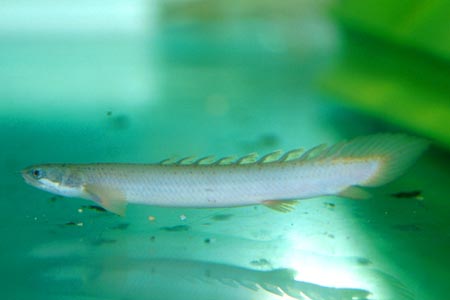
图片来自 SeriouslyFish,版权归各摄影者所有。
English
Overview
Polypterus senegalus senegalus: Relatively active and tolerant, it is often recommended to newcomers to bichirs. Aquarium individuals have lived for more than thirty years, requiring a long-term commitment.
Distribution & habitat
Recorded countries include Egypt, Cameroon, Ethiopia, Kenya, Mali, Ivory Coast, Tanzania, Nigeria, Senegal and others. Shallow, slow-moving swamps, marshes, and freshwater lagoons are typical.
Aquarium setup
Allow an adult approximately 150 × 60 × 60 cm. Floor area matters more than depth alone. Use a soft base, wood, and smooth stones to provide retreats, with plants optional. A close-fitting cover prevents escape while access to air at the water surface must remain unobstructed.
Diet & feeding
This predator accepts shrimp, white fish, bloodworms, and brine shrimp in live or frozen form. Some individuals also take quality cichlid pellets.It is nocturnal, with weak vision and a strong reliance on smell. Check that food reaches a place where the fish can locate it.
Behaviour & compatibility
Companions that fit in its mouth are unsafe, even though larger fishes are generally treated peacefully. Possible companions include suitably sized bichirs, upside-down catfish, tigerfish, knifefish, larger climbing perches, and characins.Assess eventual size rather than juvenile compatibility.
Sexual dimorphism
The male anal fin is thicker than the female’s.
Breeding
Aquarium reproduction has occurred, but detailed accounts are scarce and breeding should not be regarded as easy. Seasonal changes in temperature and water chemistry may help mimic the wild rainy-season trigger. A spacious breeding aquarium with soft, mildly acidic water and dense plants or mops is suggested.
Eggs are scattered. The male cups the female’s eggs with his anal and tail fins, fertilizes them, and distributes them among vegetation. Remove adults afterward to prevent egg losses. Hatching takes about three to four days, followed by roughly three more before free swimming. Offer Artemia nauplii or microworms, ensuring that the reportedly rather immobile fry actually reach food.
Notes
Young bichirs possess external gills that disappear with growth. Newly acquired wild fish may carry infections or parasites, so watch their condition carefully during acclimation.
来源
ID:polypterus-senegalus-senegalus · 文件: data/species/polypterus-senegalus-senegalus.md · 状态: 草稿