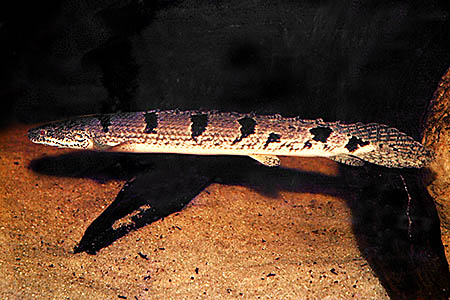
虎纹恐龙 · Armoured Bichir
概要
| 字段 | 值 |
|---|---|
| 类别 | 鱼 |
| 学名 | Polypterus delhezi |
| 别名 | 戴氏多鰭魚、戴氏多鳍鱼 |
| 分类 | 多鳍鱼目 Polypteriformes › 多鳍鱼科 Polypteridae › Polypterus |
| 水体 | 淡水 |
| 成体体长 | 35 cm |
| 饲养难度 | 入门 |
| 最小水体 | 205 L |
| 最小缸长 | 120 cm |
| 特征 | 会跳缸: 是;夜行性: 是;吃小鱼: 是 |
| 外部数据 | seriouslyfish polypterus-delhezi;fishbase 8116 |
| 原产地 | 刚果民主共和国 |
| 食性 | 肉食 |
| 性情 | 温和 |
| 繁殖方式 | 散卵 |
水质参数
| 参数 | 耐受范围 | 最适范围 | 单位 |
|---|---|---|---|
| 水温 | 24–30 | — | °C |
| pH | 6–8 | — | — |
| 总硬度 | 5–25 | — | dGH |
概述
虎纹恐龙(Polypterus delhezi)主要在夜间活动,视力较差,依赖嗅觉找到食物。它能呼吸空气,也擅长逃出鱼缸,饲养时必须同时满足可靠封盖与自由上浮换气。
分布与栖息地
分布于刚果民主共和国,见于湖泊、溪流和泛滥区,栖地常有丰富水生植物。
饲养环境
底面积至少约 120 × 45 cm,横向活动面积比额外水深更重要。细软底床、沉木与圆滑石块可组成躲藏处,水草不是必需。
缸盖要严密防逃,但不能阻碍鱼到水面接触空气;完全无法上浮换气时可能溺死。把躲藏处和上浮空间一起规划,比单纯追求深水更合适。
食性与喂食
属于肉食鱼,多数不立即接受干饲料,但部分可训练吃颗粒。适口的虾肉、蚯蚓、贝肉、红虫等活饵和冷冻饵较合适。
由于依靠嗅觉找食,混养时需要观察是否真正吃到,而不是只看投喂总量。
习性与混养
对吞不下的伙伴通常较温和,但能入口的小鱼都有被吃风险。可考虑大小适当、需求相容的大型鱼或其他多鳍鱼,不能仅以“性格温和”判断安全。
雌雄区分
雄鱼臀鳍明显比雌鱼厚,成熟个体更容易比较。
繁殖
已有缸内繁殖记录。自然繁殖与雨季有关,水温和水质变化可能促发求偶,但不代表有固定必成功的诱繁幅度。需较大的繁殖缸、软而微酸的水,以及密集水草或产卵拖把。
雄鱼用臀鳍和尾鳍形成托接结构,接住雌鱼排出的卵并受精,再散入植被。产卵后应移走成鱼,以免吃卵。卵约三至四天孵化,再过约三天鱼苗开始自由游动,可喂丰年虾无节幼体或微虫。鱼苗似乎不太主动移动,需确认食物送到可接触的位置。
补充说明
属于上颌等长或长于下颌的一类多鳍鱼。幼鱼外鳃会随成熟消失,不能据外鳃把它当成两栖动物。
新购鱼应特别留意最初几周的健康和寄生虫表现;来源不同,不能一概把商品鱼认作野生个体。
图片
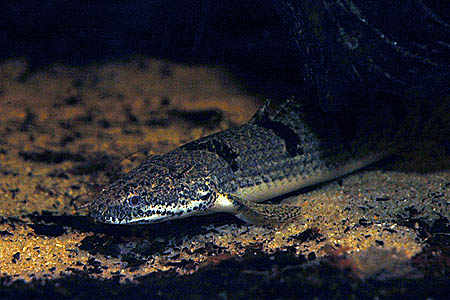
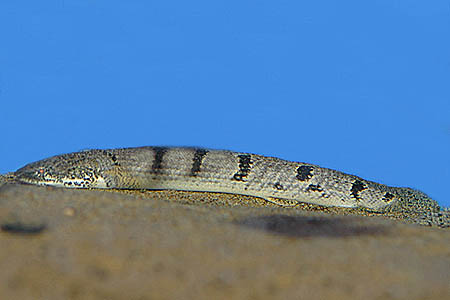
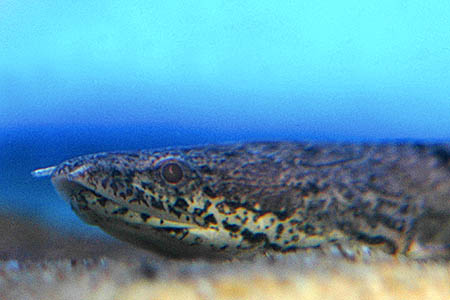
图片来自 SeriouslyFish,版权归各摄影者所有。
English
Overview
Polypterus delhezi is mainly active after dark and relies heavily on smell because its vision is poor. It breathes atmospheric air and escapes readily, so successful housing must combine secure containment with unrestricted access to the surface.
Distribution & habitat
It occurs in the Democratic Republic of Congo, using lakes, streams, and flooded areas that are often densely vegetated.
Aquarium setup
Provide a footprint around 120 × 45 cm. Usable floor area matters more than additional depth. Soft substrate, wood, and smooth stones create suitable retreats, while planting is optional.
Fit a secure cover without preventing the fish from reaching air. Denial of surface access can cause drowning. Design both shelter and an open upward route instead of relying on water depth alone.
Diet & feeding
This carnivore often refuses dry foods initially, though some individuals accept pellets. Suitable live or frozen options include prawn, earthworms, mussel, and bloodworms.
Since it locates meals largely by smell, observe actual intake in a shared aquarium rather than judging feeding success solely by the amount offered.
Behaviour & compatibility
It is relatively peaceful with companions too large to swallow, but small fishes remain prey. Appropriately sized compatible larger fishes or other bichirs may work. A peaceful disposition does not negate mouth-size limitations.
Sexual dimorphism
The male anal fin is substantially thicker than the female's, especially when comparing mature individuals.
Breeding
Aquarium reproduction has been achieved. Natural spawning follows the rainy season, and changes in temperature or water chemistry may stimulate courtship, but no fixed change guarantees success. Provide a spacious breeding setup with soft, slightly acidic water and dense plants or mops.
The male cups his anal and caudal fins to receive eggs from the female, fertilizes them, and scatters them into vegetation. Remove adults afterward because eggs may be eaten. Hatching takes approximately three to four days, followed by free swimming roughly three days later. Offer brine-shrimp nauplii or microworms. Fry appear relatively inactive, so check that food is actually within reach.
Notes
It belongs to the upper-jawed group, in which the upper jaw is at least as long as the lower. Juvenile external gills disappear during maturation and do not imply amphibian identity.
Watch newly acquired fish closely for health or parasite problems during the first few weeks. Provenance varies, so a trade specimen should not automatically be assumed to be wild-caught.
来源
- https://www.seriouslyfish.com/species/polypterus-delhezi(抓取于 2026-10-10)
polypterus-delhezi · 文件: data/species/polypterus-delhezi.md · 状态: 草稿