非洲多棘鲈 · African Leaf Fish
概要
| 字段 | 值 |
|---|---|
| 类别 | 鱼 |
| 学名 | Polycentropsis abbreviata |
| 别名 | 西非叶鲈、非洲多棘鱸、西非葉鱸 |
| 分类 | 叶鲈科 Polycentridae › Polycentropsis |
| 水体 | 淡水 |
| 成体体长 | 8 cm |
| 饲养难度 | 中等 |
| 最小水体 | 68 L |
| 最小缸长 | 60 cm |
| 特征 | 吃小鱼: 是 |
| 外部数据 | seriouslyfish polycentropsis-abbreviata;fishbase 9917 |
| 原产地 | 喀麦隆、贝宁、加蓬、尼日利亚 |
| 食性 | 肉食 |
| 繁殖方式 | 吐泡筑巢 |
水质参数
| 参数 | 耐受范围 | 最适范围 | 单位 |
|---|---|---|---|
| 水温 | 26–31 | — | °C |
| pH | 6–6.5 | — | — |
| 总硬度 | 1–10 | — | dGH |
概述
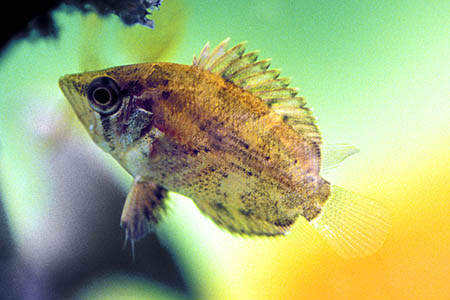
非洲多棘鲈(Polycentropsis abbreviata)会以枯叶般的体形和颜色掩护捕猎,能吞下体型接近自己的猎物。它敏感、容易受惊,经常只吃活饵,更适合已准备好稳定软水、酸性水和活食供应的饲养者。
分布与栖息地
分布于喀麦隆、贝宁、加蓬和尼日利亚。栖息于水塘、沼泽、小溪及缓流河段,尤其常见于岸边的水下植被中。
饲养环境
建议至少 60 × 38 × 30 cm、约 68 L。保持软水和酸性水,以浮水植物遮挡强光,密植大叶水草并用沉木提供躲藏处。水流尽量轻缓,注意避免水质逐渐恶化。
食性与喂食
属于肉食鱼,活红虫和小蚯蚓比较实用。部分个体可以训练接受非活饵,但食物仍需在水中移动才会触发摄食。虽然野外高度依赖鱼类,却不必在缸内专门喂活鱼,这一点不要与其他同样叫“叶鱼”的物种混为一谈。
习性与混养
优先专缸饲养,也可考虑中型异型鲶、铠甲鲶,或体型足够大而性情安静的攀鲈类及西非小型慈鲷。小鱼一定会被吃。同种之间不算特别好斗,在足够大的缸中可以安排小群体。
雌雄区分
雌雄不容易从外观判定。雌鱼腹缘较凸、雄鱼较直的说法尚未确认;产卵时雌鱼花纹会变浅。
繁殖
属于泡巢繁殖,人工成功并不常见。据称,密植尤其是水面的植物,并把水位降至约 10–15 cm,有助于诱发繁殖。选择一对亲鱼,用充足活饵调养,维持较暖、昏暗的环境。
雄鱼在水面植被间筑巢,正式产卵前可能搭建多个巢。繁殖过程较激烈,一次可把超过 100 粒卵放入泡巢。卵约 48–72 小时孵化,孵化后宜移走亲鱼,以免捕食鱼苗,并提供丰年虾无节幼体等小型活饵。鱼苗对水质恶化尤其敏感。
补充说明
它能随环境调整体色,以头朝下的姿态和透明鳍的细微摆动靠近猎物,仿佛落叶在漂动。攻击时口部迅速向前伸成管状,将猎物吸入。外形像叶片并不意味着它行动迟缓或没有捕食威胁。
图片
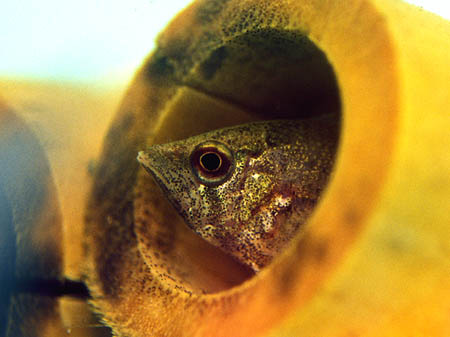
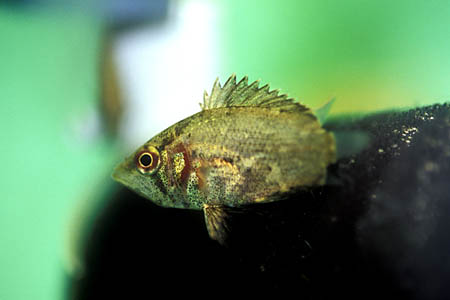
图片来自 SeriouslyFish,版权归各摄影者所有。
English
Overview
Leaf-like shape and changeable color conceal the hunting ability of Polycentropsis abbreviata. Prey approaching its own size can be engulfed. Stable soft acidic water, suitable food, and a quiet setting are necessary for this nervous fish, which is unsuitable for beginners.
Distribution & habitat
Native records include Cameroon, Benin, Gabon, and Nigeria. Pools, swamps, creeks, and sluggish rivers are occupied, especially where submerged vegetation lines the banks.
Aquarium setup
A starting enclosure of about 60 by 38 by 30 cm holds approximately 68 L. Supply soft acidic water, subdued illumination, and floating shade. Broad-leaved plants and wood retreats help reduce nervousness. Maintain little current and consistently good water quality.
Diet & feeding
Live bloodworms and small earthworms suit this carnivore. Some individuals can be trained to take dead alternatives, provided the food moves through the water. Despite strong natural fish predation, live feeder fish are not required in the aquarium. Feeding expectations should be based on this species rather than on another fish sharing the leaf-fish label.
Behaviour & compatibility
A species aquarium is preferred, though suitable medium-sized armored catfishes or calm fishes too large to swallow may coexist. Small fish are certain prey. Aggression toward conspecifics is relatively limited, allowing a small group in spacious housing.
Sexual dimorphism
Reliable external sexing is difficult. Reports of a convex female underside versus a straighter male profile remain unconfirmed. Females show lighter patterning during spawning.
Breeding
It builds bubble nests, although captive reproduction is uncommon. Dense planting, especially at the surface, and a water depth reduced to approximately 10–15 cm reportedly help initiate breeding. Condition a pair on plentiful live food and keep the setting warm and dim.
The male constructs nests within surface vegetation and may make several before spawning. The vigorous spawning sequence can place more than 100 eggs in a nest. Hatching follows in about 48–72 hours. Remove the adults afterward to reduce predation and provide small live foods such as newly hatched brine shrimp. Deteriorating water quality readily causes losses among the young.
Notes
Subtle movements of transparent fins carry the head-down fish toward prey while preserving the appearance of a drifting leaf. Its mouth then projects forward rapidly to suck in the target. Camouflage and long periods of stillness should not be confused with harmlessness.
来源
- https://www.seriouslyfish.com/species/polycentropsis-abbreviata(抓取于 2026-10-10)
polycentropsis-abbreviata · 文件: data/species/polycentropsis-abbreviata.md · 状态: 草稿