高钦南鳅 · Ornate Tiger Sand Loach
概要
| 字段 | 值 |
|---|---|
| 类别 | 鱼 |
| 学名 | Pogonoschistura kohchangensis |
| 别名 | 高欽南鰍、Nemacheilus kohchangensis、Noemacheilus deignani、Nemacheilus deignani、Schistura deignani、Schistura kohchangensis |
| 分类 | 鲤形目 Cypriniformes › 条鳅科 Nemacheilidae › Pogonoschistura |
| 水体 | 淡水 |
| 原产地 | 柬埔寨、泰国 |
| 成体体长 | 7.5 cm |
| 饲养难度 | 中等 |
| 最小水体 | 81 L |
| 最小缸长 | 90 cm |
| 群居方式 | 群游 |
| 水流偏好 | 高 |
| 外部数据 | seriouslyfish pogonoschistura-kohchangensis;fishbase 26843 |
水质参数
| 参数 | 耐受范围 | 最适范围 | 单位 |
|---|---|---|---|
| 水温 | 20–26 | — | °C |
| pH | 6–7.5 | — | — |
| 总硬度 | 2–12 | — | dGH |
概述
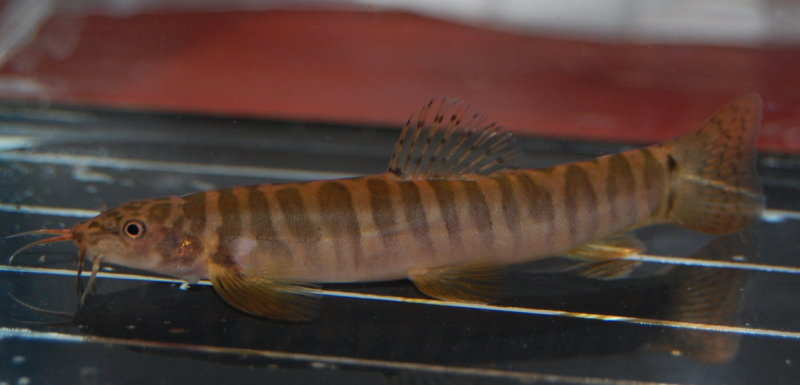
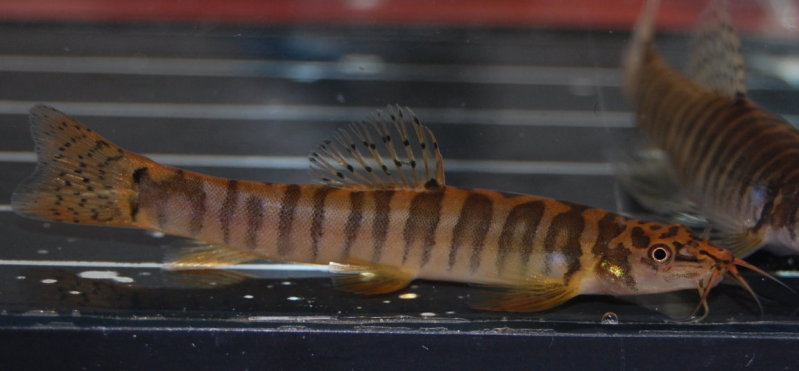
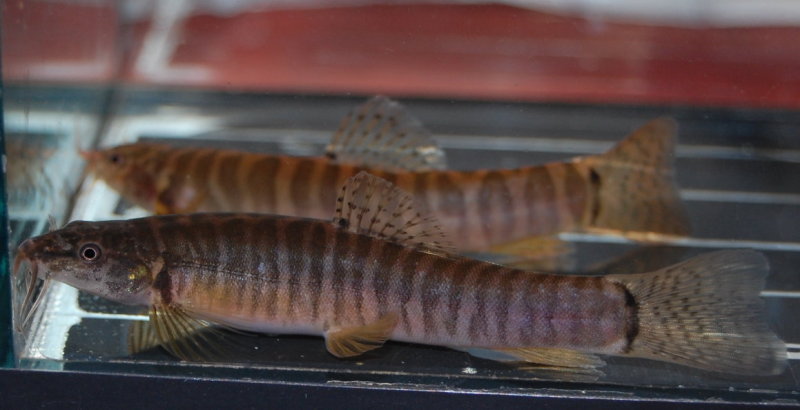
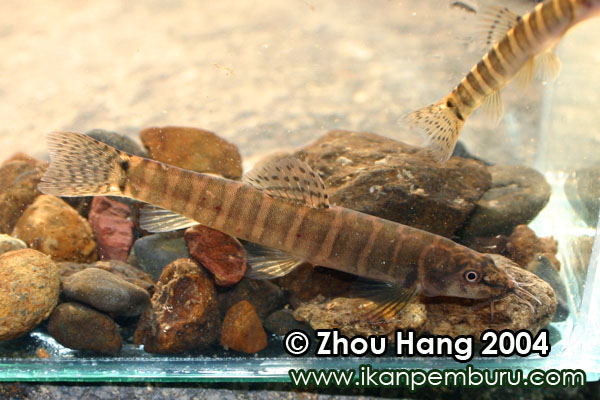
高钦南鳅(Pogonoschistura kohchangensis)来自东南亚溪流,体侧有多道常纵向分裂的深色横纹。它并非最凶猛的鳅,但对水质、溶氧和同伴的要求较专门,不适合随意加入普通混养缸。
分布与栖息地
见于泰国象岛及东南部春武里、罗勇、尖竹汶和达叻一带,也有柬埔寨西南豆蔻山脉北段记录。湄公河下游支流的分布仍属预期,不能视作已确认地点。
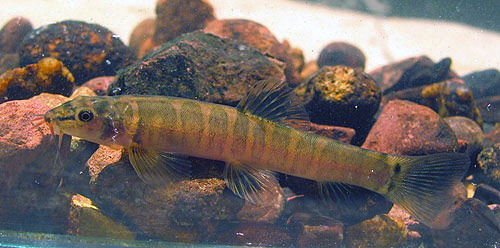
多栖息于浅、坡降较大的溪流,水流中等至较快,底部由砂砾、石块和巨石组成。部分地点旱季只剩孤立水潭,属于季节性变化,不应据此长期采用污浊静水饲养。
饲养环境
用不同大小的圆石、砂和细砾模拟河床,沉木枝条形成洞隙、阴影并打断视线。耐受的水榕、铁皇冠等可附着在硬景观上。无需制造激流般冲击,但必须有较高溶氧和适度水流。
它不耐有机污染积累,规律每周部分换水并保持过滤有效,是长期管理重点。布局越单调,同种之间越难避开对方。
食性与喂食
同类溪流鳅的食物通常以小昆虫、蠕虫、甲壳动物等为主,也摄入少量植物和有机碎屑。缸中可接受适口干饲料,但不应只靠干粮,每日搭配小型活饵或冷冻饵料更利于体况和颜色。
习性与混养
同样适应流水、在开阔水层活动的小型鲤科鱼较合适,可帮助胆怯的鳅增加活动。适宜的吸鳅和其他有相近需求的底栖鱼也可考虑。慢游、长鳍鱼易受水流与咬鳍影响,温顺底栖鱼也可能被追逐,不宜随意混养。
它不属于紧密群游鱼,但空间充足且岩石结构丰富时可以群养;同种争执仍会发生,小缸或缺少遮挡时可能升级。外形相近的其他鳅多数不宜加入,除非能提供很大的空间并密切观察。
雌雄区分
雄鱼眼下有瓣状结构,部分胸鳍鳍条增粗且上表面带细小结节。雌鱼通常更丰满,抱卵时更明显。
补充说明
体侧约十至十二道深褐横纹、横纹常纵向分裂,以及尾鳍上的不规则斑点列,可结合用于识别。水族繁殖尚无记录,不能借用其他溪流鳅的方法当作已验证经验。
图片
图片来自 SeriouslyFish,版权归各摄影者所有。
English
Overview
Pogonoschistura kohchangensis is a Southeast Asian stream loach with dark bars that are often split vertically. It is less aggressive than some related loaches, but its environmental and compatibility needs make it unsuitable for an indiscriminate community.
Distribution & habitat
Confirmed records concern Koh Chang and southeastern Thailand, plus the northern Cardamom Mountains in southwestern Cambodia. Occurrence in lower Mekong tributaries is expected rather than established.
It uses shallow, often steep streams with moderate to fast flow over gravel, rocks, and boulders. Some localities contract to isolated pools during dry periods. That seasonal persistence should not be read as a preference for chronically stagnant aquarium water.
Aquarium setup
Mix sand, fine gravel, and smooth stones of different sizes. Branches and rocks should create shaded gaps and interrupt sightlines. Hardy attached plants can be used. Extreme torrent conditions are unnecessary, but high oxygen availability and appreciable circulation are important.
Maintain effective filtration and regular weekly partial water changes. Organic waste accumulation is poorly tolerated. A complex layout also gives fish opportunities to avoid one another.
Diet & feeding
Comparable stream loaches eat mainly small animal prey with lesser plant material and organic detritus. Aquarium fish accept suitable dry foods, but these should not be the sole diet. Daily small live or frozen items support condition and color.
Behaviour & compatibility
Peaceful open-water cyprinids adapted to flowing water are useful companions and can encourage this retiring fish to emerge. Compatible hillstream loaches and other carefully chosen bottom dwellers are further options. Avoid slow or long-finned fishes, which may struggle with the flow or be nipped.
It is not strongly schooling, although a group can coexist among plentiful rocky structures. Disputes may become serious in small or bare aquariums. Similar-looking loaches are generally poor additions unless ample space and careful monitoring are available.
Sexual dimorphism
Males have a suborbital flap and thickened pectoral rays bearing small tubercles. Females are expected to be fuller-bodied, especially when carrying eggs.
Notes
Roughly ten to twelve dark body bars, often vertically divided, and irregular rows of tail spots are identification clues. Aquarium reproduction is undocumented, so methods for other stream loaches are not confirmed procedures for this fish.
来源
ID:pogonoschistura-kohchangensis · 文件: data/species/pogonoschistura-kohchangensis.md · 状态: 草稿