韦氏杂色脂鲤 · Black Darter Tetra
概要
| 字段 | 值 |
|---|---|
| 类别 | 鱼 |
| 学名 | Poecilocharax weitzmani |
| 别名 | 韋氏雜色脂鯉 |
| 分类 | 脂鲤目 Characiformes › 顶器脂鲤科 Crenuchidae › Poecilocharax |
| 水体 | 淡水 |
| 原产地 | 巴西、哥伦比亚、秘鲁、委内瑞拉 |
| 成体体长 | 5 cm |
| 饲养难度 | 中等 |
| 最小水体 | 41 L |
| 最小缸长 | 45 cm |
| 群居方式 | 群游 |
| 外部数据 | seriouslyfish poecilocharax-weitzmani;fishbase 12395 |
| 食性 | 肉食 |
| 领地性 | 是 |
| 繁殖方式 | 附着产卵 |
水质参数
| 参数 | 耐受范围 | 最适范围 | 单位 |
|---|---|---|---|
| 水温 | 21–28 | — | °C |
| pH | 3–6.5 | — | — |
| 总硬度 | 0–5 | — | dGH |
概述
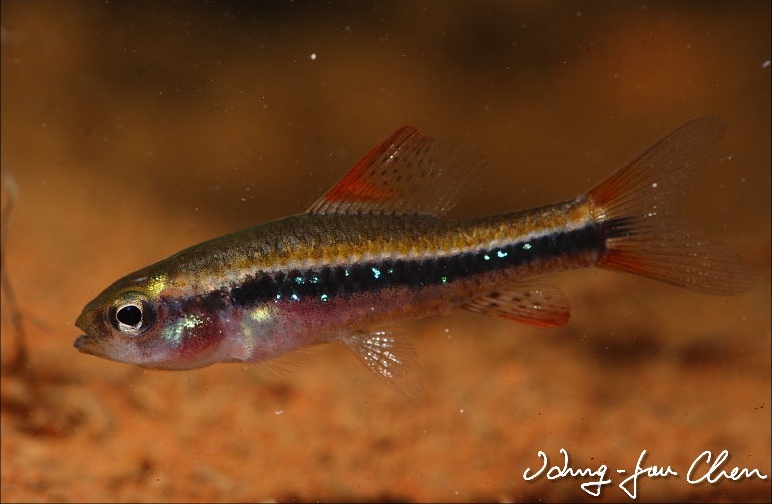
韦氏杂色脂鲤(Poecilocharax weitzmani)虽然体型小,却不是典型群游灯鱼。雄鱼之间领地争斗较强,且极不愿接受干粮,运输后也容易状态不佳,需要专门准备活饵和稳定软酸水环境。
分布与栖息地
记录来自巴西、哥伦比亚、秘鲁和委内瑞拉,包括内格罗河、奥里诺科河及索利蒙伊斯河上游,奥里诺科相关水系还包括伊尼里达河和卡西基亚雷水道。哥伦比亚、巴西群体一般颜色较浓,秘鲁群体可能代表未描述种,尚不能据此自行更换学名。
多见于缓流雨林小溪,泥或沙底上有大量落叶、根枝。林冠和岸边植物遮住直射光,水呈茶色、矿物含量低且缓冲能力弱。
饲养环境
一对或一雄多雌可用约 45 × 30 cm 底面积,多雄时建议每雄至少分配约 30 × 30 cm 的底部区域。弱势鱼若无处躲避,可能出现严重鳍伤。
使用柔软沙底,沉木根枝制造多个阴影区,干落叶增加遮蔽,也可放适口径塑料管作为藏身和产卵洞。灯光柔和,浮水植物减光,耐阴蕨类、莫丝或椒草可选用。过滤宜轻柔,气动过滤较合适,必须在成熟稳定的缸中引入。
食性与喂食
属于微型捕食鱼,天然可能吃水生昆虫幼体、甲壳动物和蠕虫,也可能吃鱼苗。具体猎物组合尚属推测。
干粮通常不被接受,进口初期多需每日提供活水蚤、丰年虾、白线虫、微虫或切碎红虫等以恢复体况。避免购买腹部明显凹陷的个体,这类鱼很难恢复。
习性与混养
抢食能力不强,应作为缸中的重点照顾对象。尽量避免其他底层、尤其有领地性的鱼;体型相近、温和且在上层活动的铅笔鱼、胸斧鱼或小型脂鲤较合适,适当的小型甲鲶也可考虑。
它不形成整齐鱼群,雄鱼间攻击性领地争执明显。一对可以维持,若希望观察多雄互动,必须给足空间与隐蔽;雌鱼多于雄鱼可减少持续骚扰。
雌雄区分
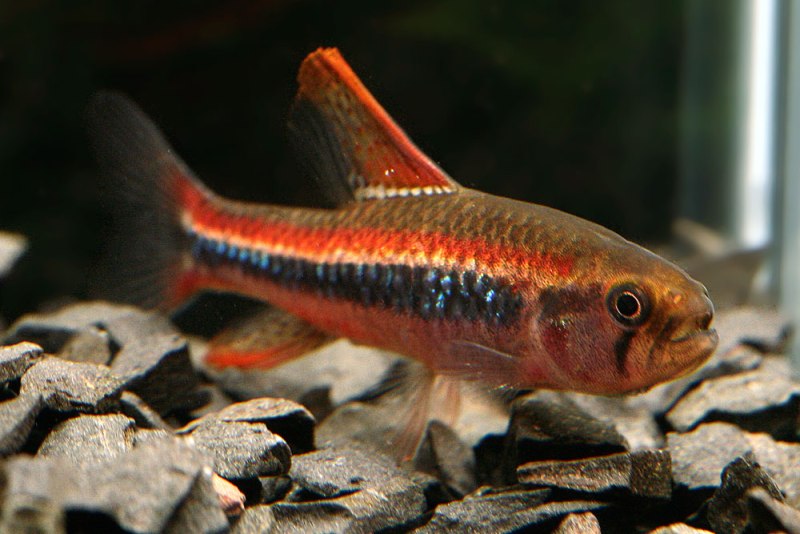
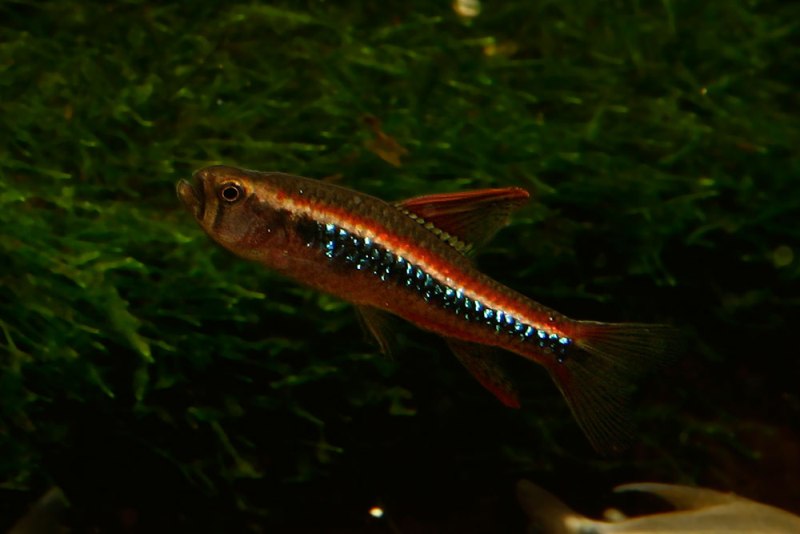
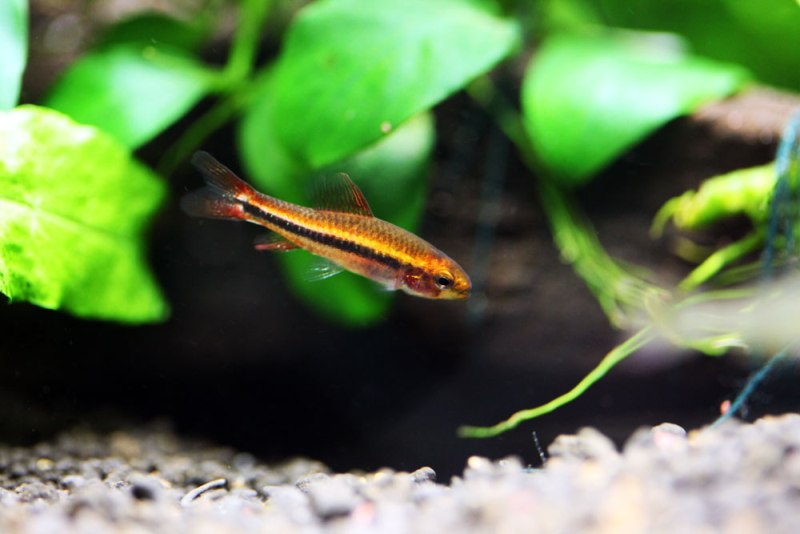
雄鱼更大、颜色浓艳,成熟后背鳍和臀鳍可明显延长,但并非所有雄鱼都会长出相同程度的长鳍,不能简单当作地位高低的标志。
繁殖
需洞穴或短塑料管,水酸碱度约 4.0~5.0,硬度及电导率很低,并用丰富小型活饵调理。雄鱼选含一个或多个洞穴的领域,颜色加深、腹鳍端部变白且显得较厚;雌鱼变暗,臀鳍鲜红,成熟后开始查看雄鱼领地和洞穴。
通常在洞顶产约 50~100 粒卵。雄鱼护卵、摆尾换水并清除未受精卵,约 4~5 天开始孵化,再过约两天幼鱼落到洞底。
雄鱼孵卵期间有时也与第二条雌鱼产卵,原卵通常不受损;若发生,应在第一批自由游动后转移,以免后批存活率降低。自由游动幼鱼能立即吃丰年虾无节幼体,此时雄鱼停止照护,应分开成鱼和幼鱼,并充分补喂常在护卵时停食的雄鱼。
补充说明
贸易中也称“Black Morpho”,常作为其他野生鱼批次中的少量混入个体出现。本属没有脂鳍。头骨上的特殊孔洞及邻近脂肪组织功能仍不明确,感知热辐射猎物的说法只是推测,不能作为已经证实的特殊能力。
图片
图片来自 SeriouslyFish,版权归各摄影者所有。
English
Overview
Small size does not make Poecilocharax weitzmani a conventional schooling tetra. Males defend territories vigorously, dry food is usually refused, and shipping can leave fish in poor condition. Reliable live food and stable soft acidic water should be prepared in advance.
Distribution & habitat
Records include Brazil, Colombia, Peru, and Venezuela, notably upper Negro, Orinoco, and Solimões drainages. The Inírida and Casiquiare are included among Orinoco-related sites. Brazilian and Colombian fish tend to be more intensely colored; Peruvian populations may represent an undescribed species, but that remains unresolved.
Slow rainforest streams commonly have mud or sand, abundant leaves, and submerged roots. Canopy and bank vegetation provide shade. The tea-colored water is mineral-poor and weakly buffered.
Aquarium setup
A pair or one male with several females can use roughly 45 × 30 cm of floor space. With multiple males, allow at least about 30 × 30 cm per male and ample retreats; trapped subordinates can suffer serious fin damage.
Use soft sand, roots, branches, and leaves to create several shaded areas. Suitable tubes provide retreats and spawning cavities. Dim light, floating cover, and tolerant ferns, mosses, or Cryptocoryne work well. Gentle air-driven filtration is adequate, but the aquarium must be mature and stable.
Diet & feeding
It is a micropredator, thought to take insect larvae, crustaceans, and worms, possibly with some fry. The exact wild prey mix remains tentative.
Dry foods are usually rejected. Daily live Daphnia, Artemia, grindal worms, microworms, or chopped bloodworms are commonly needed after import. Avoid severely hollow-bellied specimens, which seldom recover.
Behaviour & compatibility
It competes poorly and should receive priority in any community. Avoid other bottom dwellers, especially territorial ones. Similar-sized peaceful pencilfishes, hatchetfishes, and small characins using upper water are better candidates; appropriate small armored catfishes may also work.
It does not form schools. A pair is possible, while multiple-male groups require enough room and cover to accommodate vigorous rivalry. More females than males helps distribute attention.
Sexual dimorphism
Males are larger and more colorful, often developing extended dorsal and anal fins. Not every male develops equally long fins, and the difference does not appear to reflect dominance alone.
Breeding
Provide caves or short tubes, approximately pH 4.0–5.0, very low hardness and conductivity, and abundant small live foods. A male defends one or more caves, intensifies in color, and develops thicker-looking white pelvic-fin tips. Ripe females become dark with a vivid red anal fin and inspect male territories.
Approximately 50–100 eggs usually attach to the cave roof. The male guards them, circulates water with tail movements, and removes infertile eggs. Hatching begins after about four or five days; young drop to the cave floor around two days later.
A second female may spawn while an earlier clutch is incubating, normally without damaging it. Transfer the first brood once freely swimming to improve survival of the later one. Free-swimming fry immediately take Artemia nauplii, and paternal care ends then. Separate adults and fry and feed the male well, since he commonly fasts during care.
Notes
Also traded as Black Morpho, it often arrives in small numbers among other wild-caught fishes. Members of its genus lack an adipose fin. The function of unusual cranial openings and nearby fatty tissue remains unclear; thermal prey detection is a hypothesis rather than an established ability.
来源
- https://www.seriouslyfish.com/species/poecilocharax-weitzmani(抓取于 2026-10-10)
poecilocharax-weitzmani · 文件: data/species/poecilocharax-weitzmani.md · 状态: 草稿