Poecilia wingei · Endler's Livebearer
概要
| 字段 | 值 |
|---|---|
| 类别 | 鱼 |
| 学名 | Poecilia wingei |
| 分类 | 鳉形目 Cyprinodontiformes › 花鳉科 Poeciliidae › Poecilia |
| 水体 | 淡水 |
| 成体体长 | 2.5 cm |
| 饲养难度 | 入门 |
| 最小水体 | 41 L |
| 最小缸长 | 45 cm |
| 性情 | 温和 |
| 外部数据 | seriouslyfish poecilia-wingei;fishbase 63223 |
| 原产地 | 委内瑞拉东北部坎波马、布埃纳维斯塔潟湖一带 |
| 食性 | 杂食 |
| 繁殖方式 | 卵胎生 |
水质参数
| 参数 | 耐受范围 | 最适范围 | 单位 |
|---|---|---|---|
| 水温 | 24–30 | — | °C |
| pH | 7–8.5 | — | — |
| 总硬度 | 15–35 | — | dGH |
概述
Poecilia wingei 是体型小、活动旺盛且繁殖能力很强的卵胎生鱼,雄鱼色彩鲜艳。它与孔雀鱼(Poecilia reticulata)是不同物种,却能杂交并产生可育后代,想保留纯种时必须分开饲养。
分布与栖息地
分布于委内瑞拉东北部坎波马、布埃纳维斯塔潟湖至卡鲁帕诺一带的淡水。帕托斯潟湖早期为沙洲隔离海水形成的咸水湖,后来受径流影响转为淡水;重新发现鱼时水温高、硬度高且因藻类丰富而发绿。该地点曾因污染被认为已失去本种种群,但这不能等同于整个物种已在野外灭绝。
饲养环境
密植水草并搭配浮水植物,既提供遮蔽也能缓解追逐压力。它活动量大,不能因体型小就放进很狭窄的容器。能适应一定水流,同种专缸通常不必追求特别强的过滤。
长期应使用中等偏硬至较硬的水。即使能短期适应软水或酸性水,也不宜把这种耐受当作长期饲养目标。
食性与喂食
天然为杂食,摄食多种底栖小动物和碎屑。人工接受多数适口饵料,饮食中应包含一定植物性成分。
习性与混养
体形很小,不适合随意加入一般混养缸。可选择温和小型鼠鱼、小型彩虹鱼或温和脂鲤;专门繁殖时最好同种单养。雄鱼之间通常和平,雌鱼有时会守地盘,养多条雌鱼有助分散压力。孔雀鱼不可混入繁殖群。
雌雄区分
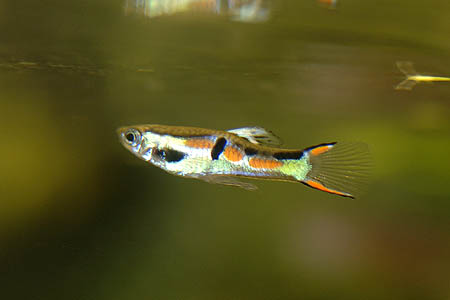
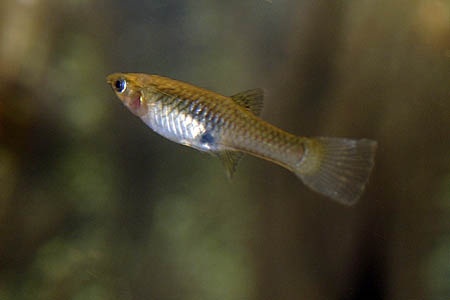
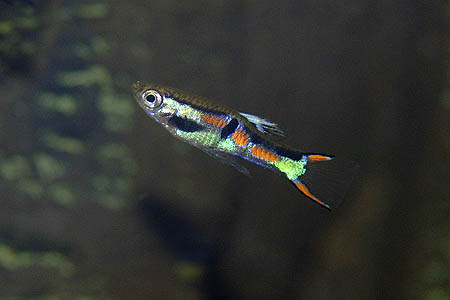
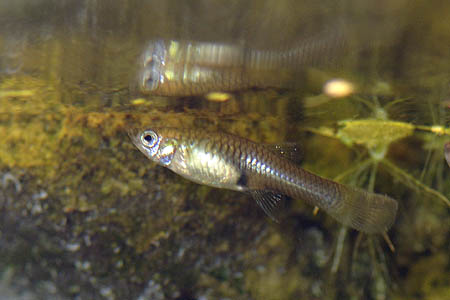
雄鱼明显更小,色彩远比雌鱼丰富。雌鱼腹部较圆,且常处于怀胎状态。
繁殖
繁殖很容易,连混养缸也可能持续添鱼;不想繁殖时可只养雄鱼。繁殖群中每条雄鱼配多条雌鱼,并以密植区减轻雄鱼不断展示与追逐造成的压力。
雌鱼可每隔 23–24 天产一窝,随年龄及体型不同,每窝约 5–25 尾。成鱼很少吃幼鱼,但将临产雌鱼移入独立育苗缸,生产后再送回主缸,更便于提高养成率。小型隔离网盒不适合长期育苗。
幼鱼出生即可吃丰年虾无节幼体或粉碎薄片,每天喂两至三次可快速生长。雄鱼约 3–5 周显出成鱼色彩,雌鱼约两个月便可能繁殖,因此应提前规划后续空间。
补充说明
不同野生类型曾有较丰富的外观变化,爱好者近亲繁殖使部分变异流失。保留种群来源和繁殖记录,有助区分不同品系及杂交鱼。
图片
图片来自 SeriouslyFish,版权归各摄影者所有。
English
Overview
Small, active, and highly prolific, Poecilia wingei has brightly colored males. It is distinct from the common guppy, Poecilia reticulata, but the two can produce fertile hybrids. Keep them separate when preserving a pure breeding line.
Distribution & habitat
Freshwater records extend around the Campoma and Buena Vista lagoons toward Carupano in northeastern Venezuela. Laguna de Patos began as a coastal lake isolated by a sandbar and later freshened through runoff. Rediscovered fish occupied warm, hard, algae-rich green water. Pollution led to concern that this local population had disappeared; this is not a claim of species-wide extinction.
Aquarium setup
Use dense planting and floating growth for shelter and relief from chasing. High activity means a tiny container is inappropriate despite the fish’s size. Some current is tolerated, and a dedicated colony generally does not require unusually powerful filtration.
Maintain moderately hard or harder water for long-term care. Possible survival under softer or acidic conditions should not be treated as the preferred maintenance regime.
Diet & feeding
Naturally omnivorous, it takes small benthic animals and detritus. Most suitably sized aquarium foods are accepted, but include some plant material in the diet.
Behaviour & compatibility
Its small size limits general-community suitability. Peaceful small cory catfish, tiny rainbowfishes, and gentle tetras are possibilities, while a species aquarium is preferable for breeding. Males usually coexist peacefully. Females may defend space, so several help spread social pressure. Exclude common guppies from the colony.
Sexual dimorphism
Males are markedly smaller and more colorful. Females are fuller-bodied and are frequently carrying young.
Breeding
Reproduction is easy enough that even mixed aquariums may quickly gain young. Keep males only if breeding is unwanted. Otherwise, provide several females per male and thick vegetation to relieve persistent courtship.
Broods can arrive every 23–24 days, typically numbering 5–25 according to maternal age and size. Adults rarely eat fry, but a separate nursery for a near-term female, returned after delivery, offers better control. Small breeding traps or net boxes are unsuitable as growing quarters.
Newborns accept Artemia nauplii or powdered flakes. Two or three daily meals promote rapid growth. Males can show adult color within 3–5 weeks, and females may reproduce at about two months, making advance space planning worthwhile.
Notes
Natural populations displayed considerable variation, some of which has been lost through inbreeding in captivity. Preserve provenance and breeding records to distinguish lines and identify possible hybrids.
来源
- https://www.seriouslyfish.com/species/poecilia-wingei(抓取于 2026-10-10)
poecilia-wingei · 文件: data/species/poecilia-wingei.md · 状态: 草稿