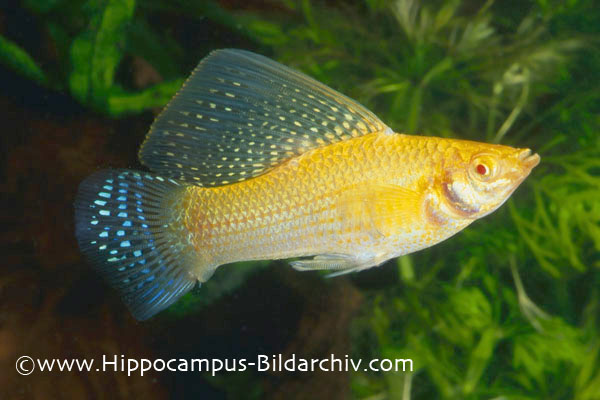
帆鳍花鮰 · Giant Sailfin Molly
概要
| 字段 | 值 |
|---|---|
| 类别 | 鱼 |
| 学名 | Poecilia velifera |
| 别名 | 摩利鱼、帆鳍胎生鮰鱼、帆鳍胎生鮰、帆鰭花鮰、摩利魚、帆鰭胎生鮰(台湾)、帆鰭胎生鮰魚(台湾)、Mollienesia velifera |
| 分类 | 鳉形目 Cyprinodontiformes › 花鳉科 Poeciliidae › Poecilia |
| 水体 | 淡水 |
| 成体体长 | 15 cm |
| 饲养难度 | 入门 |
| 最小水体 | 104 L |
| 最小缸长 | 91 cm |
| 性情 | 温和 |
| 外部数据 | seriouslyfish poecilia-velifera;fishbase 4773 |
| 原产地 | 墨西哥东南部 |
| 食性 | 杂食 |
| 繁殖方式 | 卵胎生 |
水质参数
| 参数 | 耐受范围 | 最适范围 | 单位 |
|---|---|---|---|
| 水温 | 22–28 | — | °C |
| pH | 7–8.5 | — | — |
| 总硬度 | 15–35 | — | dGH |
概述
帆鳍花鮰(Poecilia velifera)以雄鱼高大的帆状背鳍著称,对水质和空间的要求比许多近缘卵胎生鱼更严格。宽敞、不拥挤的环境及硬而不酸的水,有助于雄鱼充分发育背鳍。
分布与栖息地
原产墨西哥东南部;哥伦比亚、以色列、新加坡和中国台湾等地的种群为引入,不属于原生分布。
饲养环境
缸长至少约 91 cm,尽量提供更大空间,密植、浮水遮蔽与开放水域结合。空间不足或密度过高可能抑制雄鱼背鳍发育。
水需有中等以上硬度,避免酸性条件。软酸水中鱼容易衰弱,出现摇摆、夹鳍或霉菌问题。钙、镁等矿物是长期健康的关键,适当硬水淡水中不必加盐。它也能适应半咸水,但不能因此忽略稳定水质与同伴需求。
食性与喂食
天然杂食,摄食底栖小动物及碎屑。活饵、冷冻饵和干粮通常都能接受,另需焯软菠菜、黄瓜或植物性薄片等植物食物。
习性与混养
性情温和,混养对象必须同样适应硬水。可考虑合适的剑尾、月光等卵胎生鱼和部分温和鲶鱼、鲤科鱼或脂鲤。避免与其他摩利鱼同缸繁殖,以免杂交;半咸水系统则应另选适宜同伴。
雌雄区分
雄鱼略小,有交接器和明显延长、高大的背鳍。
繁殖
相较一些常见卵胎生鱼稍难,每雄配两条雌鱼可分散追逐。妊娠约 4~8 周,一胎多为 20~60 条,偶可达约 200 条。幼鱼较大,出生能吃丰年虾无节幼体、微虫和粉碎薄片。
成鱼及同伴可能吃苗,密植能提供保护;更可控的办法是将孕鱼单独安置,产后移回。野生型吞食后代较少,但家养品系不能据此保证安全。
补充说明
幼鱼与帆鳍摩利鱼(Poecilia latipinna)很相似,背鳍鳍条数是重要鉴别线索:本种通常 18~19 条,后者约 14 条。部分观赏品系含两者杂交血统。
白化、黑色、红色等品系均见于选育。气球型短圆体形可能带来鳔和消化问题,甚至缩短寿命,不能仅凭独特外形判断体质优良。
图片
图片来自 SeriouslyFish,版权归各摄影者所有。
English
Overview
Space and water quality strongly influence the impressive male dorsal fin of Poecilia velifera. It is more demanding than many related livebearers, requiring uncrowded quarters and hard, nonacidic water for good development.
Distribution & habitat
Southeastern Mexico is its native range. Populations in Colombia, Israel, Singapore, Taiwan, and other introduced locations are outside that original range.
Aquarium setup
Use a tank at least about 91 cm long, with additional space where possible. Combine dense plants and floating shade with open water. Restricted space or excessive stocking may prevent full male dorsal-fin development.
Moderately hard or harder water is essential. Soft, acidic conditions can weaken fish, sometimes producing shivering movements, clamped fins, or fungal problems. Calcium and magnesium underpin long-term health; appropriate hard freshwater does not require added salt. Brackish systems are also possible, with stability and companion requirements still important.
Diet & feeding
Small bottom-dwelling animals and detritus form part of its natural omnivorous diet. It accepts live, frozen, and prepared foods. Add plant foods such as softened spinach, cucumber, or vegetable flakes.
Behaviour & compatibility
Peaceful companions must share its tolerance of hard water. Suitable swordtails, platies, and some catfishes, cyprinids, or characins can be considered. Avoid other mollies when preventing hybridization. Brackish communities require a separate selection of compatible species.
Sexual dimorphism
The slightly smaller male has a gonopodium and a tall, elongated dorsal fin.
Breeding
Breeding is somewhat less straightforward than with many common livebearers. Keep two females per male to distribute courtship. Pregnancy lasts about four to eight weeks; 20–60 young is typical, although broods can approach 200. Newborns immediately accept Artemia nauplii, microworms, or crushed flakes.
Plants shelter young from adults and other fishes. For closer control, move a gravid female to a separate aquarium and return her after delivery. Wild-type fish are less prone to eating offspring, but this should not be generalized to domestic stock.
Notes
Young fish resemble Poecilia latipinna. Dorsal-fin ray counts are useful: usually 18–19 in this species versus about 14 in its relative. Some ornamental stocks have hybrid ancestry.
Selected forms include albino, black, and red fish. Balloon body shapes may bring digestive or swimming-bladder problems and reduce longevity, so unusual appearance should not be equated with good health.
来源
- https://www.seriouslyfish.com/species/poecilia-velifera(抓取于 2026-10-10)
poecilia-velifera · 文件: data/species/poecilia-velifera.md · 状态: 草稿