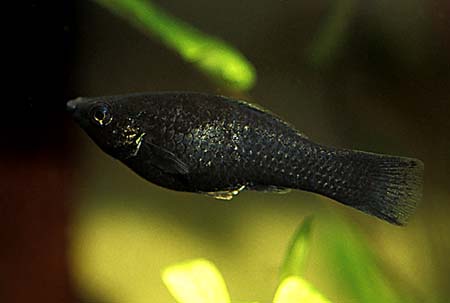
黑花鮰 · Short-finned Molly/Black Molly
概要
| 字段 | 值 |
|---|---|
| 类别 | 鱼 |
| 学名 | Poecilia sphenops |
| 别名 | 摩丽鱼、摩麗魚 |
| 分类 | 鳉形目 Cyprinodontiformes › 花鳉科 Poeciliidae › Poecilia |
| 水体 | 淡水 |
| 成体体长 | 8 cm |
| 饲养难度 | 入门 |
| 最小水体 | 81 L |
| 最小缸长 | 90 cm |
| 性情 | 温和 |
| 外部数据 | seriouslyfish poecilia-sphenops;fishbase 4680 |
| 原产地 | 委内瑞拉、哥伦比亚至墨西哥,及部分加勒比海岛屿 |
| 食性 | 杂食 |
| 繁殖方式 | 卵胎生 |
水质参数
| 参数 | 耐受范围 | 最适范围 | 单位 |
|---|---|---|---|
| 水温 | 21–28 | — | °C |
| pH | 7–8.5 | — | — |
| 总硬度 | 15–30 | — | dGH |
概述
黑花鮰(Poecilia sphenops)包括常见黑色摩利等多种观赏品系。它虽温和,养护仍有明确的水质要求:中等以上硬度和不偏酸的环境很重要,不能因为常被推荐给新手就忽略矿物硬度。
分布与栖息地
原生范围从委内瑞拉、哥伦比亚向北延至墨西哥,部分加勒比海岛屿有孤立种群。美国、日本、新加坡及东欧部分地区的种群为引入或逸生。贸易中大多是远东和东欧繁殖场的人工鱼,野生个体少见。
饲养环境
缸长至少约 90 cm,以植物缸为宜。软水或酸性水中容易逐渐衰弱,可能表现为摇摆、夹鳍或霉菌问题。维持钙、镁等硬度矿物比单纯加盐更关键,合适的硬水淡水环境不必依靠加盐维持。
它也能适应半咸水,环境选择应连同所有同伴一起考虑,而不是在不匹配的混养缸中随意调整盐度。
食性与喂食
天然杂食,摄食底栖小动物和碎屑。缸内通常不挑食,但食谱应有较多植物成分,可提供焯软菠菜或植物性薄片。
习性与混养
性情温和,但只适合与能接受同样硬水条件的鱼混养,例如合适的彩虹鱼、鲤科鱼和脂鲤。雄鱼会不断追逐雌鱼,每雄配数条雌鱼,并设置密集植物区,可减少压力。
雌雄区分
雄鱼较小、更鲜艳,臀鳍特化为交接器。
繁殖
水质合适时容易繁殖。妊娠约 8 周,每胎可达约 120 条。成鱼会捕食后代,可把孕鱼移至独立缸,生产后移回主缸。狭小繁殖盒或网盒不适合长期养苗。
新生幼鱼较大,能立即吃丰年虾无节幼体或粉碎薄片。
补充说明
黑色、金色、绿色、银色、斑点及琴尾等观赏类型中,一部分具有与帆鳍摩利鱼(Poecilia latipinna)杂交的背景,两者也能在缸中杂交,保种时应分开。
野生型原本强健,但部分量产品系因近交等原因体质变弱,常见黑色品系尤其需留意。气球型短圆体形可能引起鳔及消化问题,甚至缩短寿命。耐盐或耐环境变化不等于适合承担新缸水质不稳定的风险。
图片
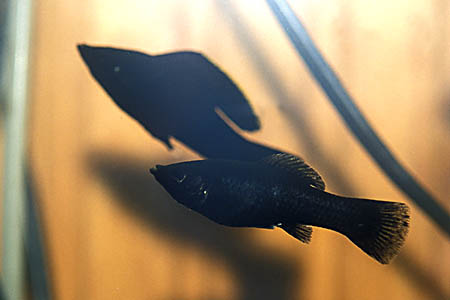
图片来自 SeriouslyFish,版权归各摄影者所有。
English
Overview
The familiar black molly is one of many ornamental forms associated with Poecilia sphenops. Its peaceful nature and frequent recommendation to beginners do not remove its need for mineral-rich, nonacidic water.
Distribution & habitat
The native range extends northward from Venezuela and Colombia to Mexico, with isolated Caribbean island populations. Introduced or feral fish occur elsewhere, including the United States, Japan, Singapore, and parts of eastern Europe. Far Eastern and Eastern European farms supply most aquarium stock.
Aquarium setup
A tank at least about 90 cm long, preferably planted, is appropriate. Soft or acidic conditions can cause progressive weakness, with shivering movements, clamped fins, or fungal problems among the possible signs. Calcium and magnesium availability matters more than simply adding salt; suitable hard freshwater does not require salt supplementation.
Brackish conditions are also tolerated. Choose a system that suits every occupant rather than changing salinity in an incompatible community.
Diet & feeding
The natural omnivorous diet includes small bottom-dwelling animals and detritus. Aquarium foods are readily accepted, but provide a substantial plant component, such as softened spinach or vegetable flakes.
Behaviour & compatibility
Companions must tolerate the same hard-water conditions. Appropriate rainbowfishes, small cyprinids, and characins are possible choices. Several females per male and dense planted retreats help reduce relentless courtship pressure.
Sexual dimorphism
Males are smaller, more colorful, and equipped with a gonopodium.
Breeding
Suitable water chemistry generally makes breeding easy. Pregnancy lasts around eight weeks and broods can reach approximately 120 young. Adults eat offspring, so use a separate maternity aquarium and return the female after delivery. Small net boxes and traps lack sufficient rearing space.
Newborns are large enough to take Artemia nauplii or finely crushed flakes immediately.
Notes
Black, gold, green, silver, spotted, and lyretail forms are among the ornamental selections. Some have hybrid ancestry involving Poecilia latipinna, and these fishes also interbreed in aquariums, so separate them when preserving stock.
Wild-type resilience has been reduced in some heavily inbred commercial lines, particularly common black forms. Balloon-shaped bodies may cause digestive and swimming-bladder problems and shorten life. Environmental tolerance should not be treated as a reason to expose fish to an unstable new aquarium.
来源
- https://www.seriouslyfish.com/species/poecilia-sphenops(抓取于 2026-10-10)
poecilia-sphenops · 文件: data/species/poecilia-sphenops.md · 状态: 草稿