玻璃蝌蚪鲶 · Banded Banjo Catfish
概要
| 字段 | 值 |
|---|---|
| 类别 | 鱼 |
| 学名 | Platystacus cotylephorus |
| 别名 | 玻璃蝌蚪鯰 |
| 分类 | 鲶形目 Siluriformes › 粗皮鲶科 Aspredinidae › Platystacus |
| 水体 | 淡水 |
| 成体体长 | 32 cm |
| 饲养难度 | 中等 |
| 最小水体 | 108 L |
| 最小缸长 | 120 cm |
| 特征 | 吃小鱼: 是;翻底砂: 是;夜行性: 是 |
| 外部数据 | seriouslyfish platystacus-cotylephorus;fishbase 12149 |
| 原产地 | 法属圭亚那、圭亚那、苏里南、委内瑞拉、巴西、特立尼达和多巴哥 |
| 繁殖方式 | 产卵 |
水质参数
| 参数 | 耐受范围 | 最适范围 | 单位 |
|---|---|---|---|
| 水温 | 22–25 | — | °C |
| pH | 6–8.2 | — | — |
| 总硬度 | 12–30 | — | dGH |
概述
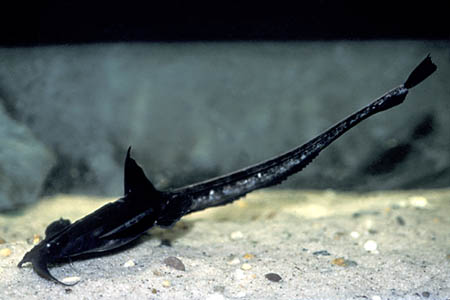
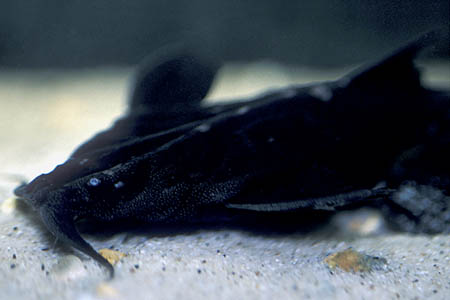
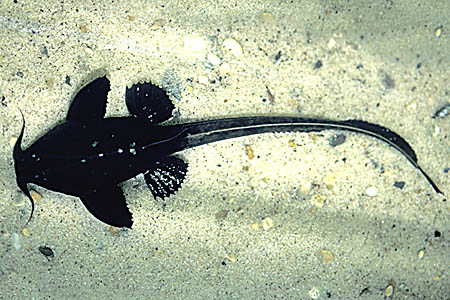
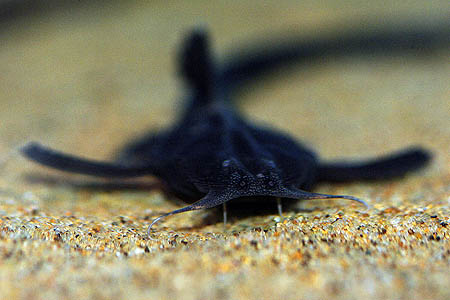
玻璃蝌蚪鲶(Platystacus cotylephorus)是一种近似枯叶的隐蔽型鲶鱼,白天常部分埋在底中,入夜才活动。雌鱼可用腹部肉质小柄携带卵直到孵化,这种体外携卵不能当成卵胎生。
分布与栖息地
分布于南美洲北部沿海的法属圭亚那、圭亚那、苏里南、委内瑞拉、巴西,以及特立尼达和多巴哥。常见河口和沿海淡水、咸淡水环境,尤其淤泥较多的红树林,往往埋在泥底。
饲养环境
可参考 120 × 30 × 30 厘米,采用细砂,给白天埋身留足位置。光线柔和,以沉木、枝条、圆石和无毒干落叶提供遮蔽。加盐并非必需,也能在咸淡水条件下饲养;水质以接近中性较合适,不宜过酸。
食性与喂食
接受活饵、冷冻饵和沉底干饲料,可用红虫、蚯蚓等。真正困难是它活动少、隐蔽,必须在熄灯后投喂并确认能吃到,而不是让活跃伙伴先拿走全部食物。
习性与混养
会吃小鱼,但对大到无法当食物的鱼较平和。伙伴除了体型合适,还要适应相同水质;淡水与咸淡水系统应分别选择相应的温和鱼。对同种很温和,单养或成群都可以,但它隐蔽的夜间生活并不适合所有展示型混养安排。
雌雄区分
雄鱼颜色更深、花纹更鲜明,成熟后胸鳍也更大。
繁殖
尚未在水族箱完成完整繁殖周期,但曾进口携卵雌鱼,随后成功养出仔鱼。可能在咸淡水产卵,也有说法认为繁殖周期的某一阶段会进入淡水,不能把这些当作确定的盐度切换步骤。
雌鱼繁殖季腹部形成许多肉质小柄,卵附着其上直到孵化。小柄可能为胚胎供应氧气或营养,这仍是推测,不应直接等同于哺乳动物脐带。
补充说明
伪装和少动是生活方式的一部分,受惊也未必立即游走。该科鱼有间歇蜕皮现象,具体原因未明,不能单凭外形怪异就判断异常。
图片
图片来自 SeriouslyFish,版权归各摄影者所有。
English
Overview
A secretive catfish with dead-leaf camouflage, Platystacus cotylephorus often remains partly buried by day and emerges after dark. Females can carry eggs on fleshy abdominal stalks until hatching; this is external egg care rather than live birth.
Distribution & habitat
The range includes French Guiana, Guyana, Suriname, Venezuela, Brazil, and Trinidad and Tobago. It uses fresh and brackish estuarine or coastal habitat, especially silty mangroves where it often buries in mud.
Aquarium setup
Suggested dimensions are 120 by 30 by 30 cm. Use sand for daytime burial, with subdued lighting and cover from wood, branches, smooth stones, and nontoxic dried leaves. Salt is optional rather than essential; both fresh and brackish arrangements are possible. Avoid strongly acidic water.
Diet & feeding
Live and frozen worms and sinking dry foods are accepted. Its low activity and concealment make access the main issue: feed after dark and ensure that more active companions do not intercept everything.
Behaviour & compatibility
Small fish are eaten, while companions beyond food size are generally left alone. Match tankmates to the chosen fresh or brackish conditions as well as to size. It tolerates its own species and can be kept singly or in groups, but its nocturnal, hidden lifestyle complicates ordinary community feeding.
Sexual dimorphism
Males are darker and more strongly patterned, developing enlarged pectoral fins at maturity.
Breeding
The full cycle has not been completed in aquaria, although imported egg-carrying females have yielded fry. Spawning may occur in brackish water, with some accounts suggesting a freshwater phase. These suggestions do not establish a salinity-change protocol.
Breeding females develop numerous fleshy stalks on the abdomen, holding eggs until hatching. A role in supplying oxygen or nutrients has been proposed but remains uncertain.
Notes
Camouflage and low activity are normal aspects of its behavior, and it may not immediately swim away when disturbed. Intermittent skin shedding is described for the family, with its function unresolved.
来源
- https://www.seriouslyfish.com/species/platystacus-cotylephorus(抓取于 2026-10-10)
platystacus-cotylephorus · 文件: data/species/platystacus-cotylephorus.md · 状态: 草稿