饰妆油鲶 · Ornate Pim
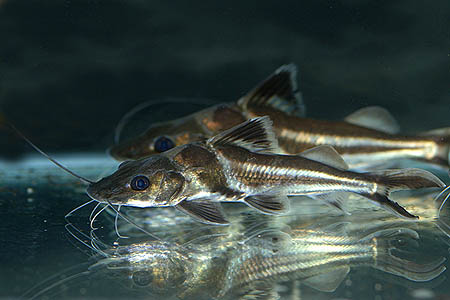
概要
| 字段 | 值 |
|---|---|
| 类别 | 鱼 |
| 学名 | Pimelodus ornatus |
| 别名 | 飾妝油鯰 |
| 分类 | 鲶形目 Siluriformes › 长须鲶科 Pimelodidae › Pimelodus |
| 水体 | 淡水 |
| 成体体长 | 28 cm |
| 饲养难度 | 困难 |
| 最小水体 | 540 L |
| 最小缸长 | 150 cm |
| 群居方式 | 群游 |
| 特征 | 吃小鱼: 是;无鳞/细鳞: 是 |
| 外部数据 | seriouslyfish pimelodus-ornatus;fishbase 13264 |
| 原产地 | 哥伦比亚、委内瑞拉、圭亚那、苏里南、法属圭亚那、厄瓜多尔、秘鲁、巴西、巴拉圭、阿根廷 |
| 食性 | 肉食 |
| 性情 | 温和 |
水质参数
| 参数 | 耐受范围 | 最适范围 | 单位 |
|---|---|---|---|
| 水温 | 24–25 | — | °C |
| pH | 6–7.2 | — | — |
| 总硬度 | 2–18 | — | dGH |
概述
饰妆油鲶(Pimelodus ornatus)是活跃群居的大型油鲶,弱光和同伴可使它更大胆。它会吃小鱼,强烈抢食和长须还可能打扰慢游伙伴,混养应同时考虑体形与活动方式。
分布与栖息地
南美洲分布广,从哥伦比亚、委内瑞拉及圭亚那地区,延至亚马孙、巴拉那等河系和巴拉圭、阿根廷。常在砂泥底浅流水中活动,也利用季节洪水后遗留的水潭和洪泛湖。
饲养环境
至少参考 150 × 60 × 60 厘米,宽敞游动区配少量安全躲藏处。细砂、根枝和圆石较适合,耐阴附生植物可增加遮蔽而少占底部。采用柔和照明、强效过滤和一定水流,每周部分换水;水质恶化可能引起须受损。
食性与喂食
天然主要吃水生无脊椎动物,人工可用红虫、水蚯蚓、小蚯蚓、碎贝肉和下沉饲料。新到鱼可先熄灯后喂,群体闻到食物会迅速兴奋。成鱼每隔几天一餐即可,容易贪食到腹部过度鼓胀,应控制分量。
习性与混养
对足够大的鱼较温和,但不能与可吞下的小鱼混养。强健活跃的伙伴更合适,慢游鱼在夜间和喂食时可能被打扰。小群通常比单尾更外向,单养往往白天隐藏。
雌雄区分
雌鱼成年后可能更粗壮,但仅凭体形仍难可靠分性。
繁殖
野外在雨季向上游长距离迁移繁殖,人工很难模拟整套水质和环境变化。
补充说明
购买时留意消瘦和缺氧后的虚弱状态。无鳞皮肤对部分常见药物敏感,应核对药物适用性;鳍部硬刺易缠网,刺伤可带来明显疼痛和肿胀,转移时优先用合适容器而非徒手抓鱼。
图片
图片来自 SeriouslyFish,版权归各摄影者所有。
用药风险
按有效成分禁忌与本物种特征自动判断;物种特征未知时不会命中,不代表安全。
English
Overview
An active group-living catfish, Pimelodus ornatus becomes more confident with companions and subdued light. Small fish are prey, while its feeding rushes and long barbels can disturb slower neighbors. Compatibility depends on activity as well as size.
Distribution & habitat
Its wide South American range includes northern countries, the Guianas, the Amazon, and Paraná-associated regions as far as Paraguay and Argentina. Shallow flowing sand or mud channels and floodplain pools are typical habitats.
Aquarium setup
Provide at least the suggested 150 by 60 by 60 cm with open swimming areas and secure retreats. Fine sand, wood, and rounded rocks suit the habitat, while attached shade-tolerant plants preserve floor space. Subdued light, effective filtration, circulation, and weekly partial changes help prevent barbel damage associated with poor water.
Diet & feeding
Aquatic invertebrates are the principal wild food. Small live or frozen prey, chopped shellfish, and sinking diets are accepted. New fish may feed more readily after dark. Groups can rush food rapidly, so portion control is important: adults need meals only every few days and can otherwise gorge excessively.
Behaviour & compatibility
It is generally peaceful toward fish too large to eat. Robust, active companions cope better than slow ones with night and feeding activity. A small group is usually more outgoing; isolated fish may hide throughout the day.
Sexual dimorphism
Adult females may be bulkier, but body shape is not a dependable sexing method.
Breeding
Wild breeding follows substantial upstream wet-season migration, with environmental changes difficult to recreate in an aquarium.
Notes
Check new imports for emaciation and weakness following oxygen stress. Scaleless skin can be sensitive to medications, so suitability must be checked. Rigid fin spines catch in nets and can cause painful punctures; use an appropriate container instead of handling the fish directly.
来源
- https://www.seriouslyfish.com/species/pimelodus-ornatus(抓取于 2026-10-10)
pimelodus-ornatus · 文件: data/species/pimelodus-ornatus.md · 状态: 草稿