刚果美人 · Congo Tetra
概要
| 字段 | 值 |
|---|---|
| 类别 | 鱼 |
| 学名 | Phenacogrammus interruptus |
| 别名 | 断线脂鲤、密齒小鮭脂鯉、斷線脂鯉、密齿小鲑脂鲤 |
| 分类 | 脂鲤目 Characiformes › 非洲脂鲤科 Alestidae › Phenacogrammus |
| 水体 | 淡水 |
| 成体体长 | 8 cm |
| 饲养难度 | 入门 |
| 最小水体 | 108 L |
| 最小缸长 | 120 cm |
| 性情 | 温和 |
| 外部数据 | seriouslyfish phenacogrammus-interruptus;fishbase 10660 |
| 原产地 | 刚果民主共和国刚果河部分水系 |
| 食性 | 杂食 |
| 繁殖方式 | 散卵 |
水质参数
| 参数 | 耐受范围 | 最适范围 | 单位 |
|---|---|---|---|
| 水温 | 23–28 | — | °C |
| pH | 6–7.5 | — | — |
| 总硬度 | 3–18 | — | dGH |
概述
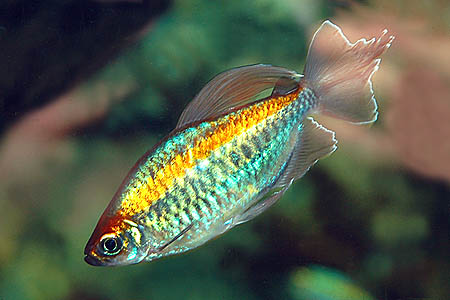
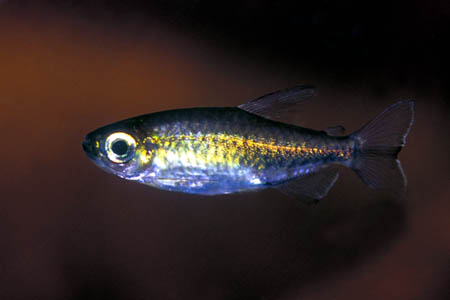
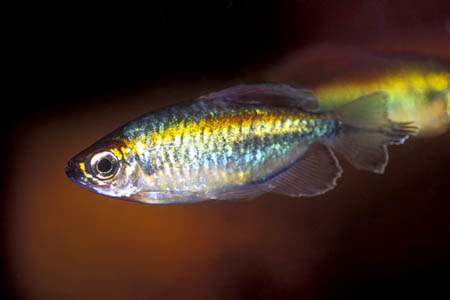
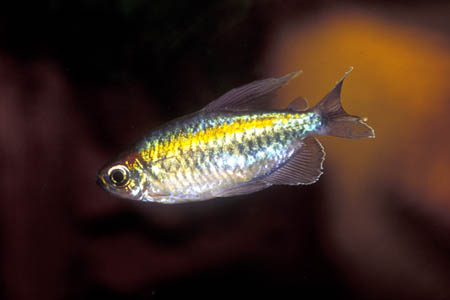
刚果美人(Phenacogrammus interruptus)幼鱼常灰暗不起眼,成熟后体色和雄鱼飘长的鳍条才逐渐显现。它性情温和但活跃,又容易受惊,成群、稳定水质和合适缸友是养出状态的关键。
分布与栖息地
野生种群为刚果民主共和国部分刚果河水系特有。贸易中多数来自远东及东欧商业繁殖,养殖产地不能当作野生原产地。
饲养环境
成年鱼至少考虑约 120 × 30 × 30 cm 的空间。沉木、浮水植物及水榕等可形成有遮蔽的布局,水草密集区域与开放泳道应兼顾。偏软、略酸至接近中性的水和良好循环较合适。
水质变差可能造成褪色,并妨碍雄鱼鳍条正常发育;外观状态不能只靠灯光或饵料解决。
食性与喂食
自然食物包括小蠕虫、昆虫、甲壳动物、藻类及其他浮游生物,属杂食。多数人工食物可接受,活饵和冷冻饵仍应占一定比例,有助于保持体色和状态。
习性与混养
适合体形和需求相容的温和脂鲤、虹银汉鱼、鲶鱼及慈鲷。不要与咬鳍鱼同养,以免雄鱼长鳍受损;过分强势的缸友也会令它紧张。它自身的体形和活跃程度则可能惊扰胆小的小鱼。
雌雄混合群体更能表现自然色彩和互动,数量过少容易受惊。
雌雄区分
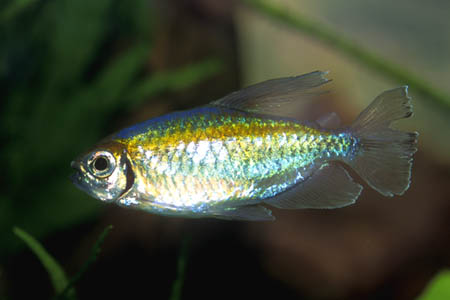
雄鱼更大、颜色更鲜艳,尾鳍带延长丝状鳍条,背鳍也显著拉长。
繁殖
人工繁殖有难度但可行,为散卵型。先用活饵和冷冻饵调养,选择色泽好的雄鱼及丰满雌鱼,进入偏暗、软水略酸、带植物和隔卵网的繁殖环境。
追逐后双方并列颤动产卵,常见约一百至两百枚,数日产卵累计可达约三百枚。最初一至两天可能有不少卵长霉,应及时移除。约六天孵化,卵黄约再经一天耗尽,先喂微型食物,再经过两至三天转丰年虾无节幼体或微虫。
补充说明
幼鱼灰暗不代表成熟后仍缺乏色彩。评估观赏状态时应结合成熟程度、群体安全感和水质,避免把正常幼体外观误判为品种问题。
图片
图片来自 SeriouslyFish,版权归各摄影者所有。
English
Overview
Often plain gray when young, Phenacogrammus interruptus develops stronger color with maturity, while males grow flowing fins. It is peaceful and active but easily alarmed. Conspecific company, stable water quality, and appropriate companions are central to good condition.
Distribution & habitat
Wild populations are confined to parts of the Congo drainage in the Democratic Republic of the Congo. Most aquarium stock is commercially produced in the Far East or Eastern Europe; farming locations are separate from native origin.
Aquarium setup
Adults need accommodation around 120 × 30 × 30 cm or larger. Wood, floating plants, and shade-tolerant planting can supply shelter without blocking swimming lanes. Relatively soft water on the mildly acidic side of neutral and good circulation are appropriate.
Poor water quality can reduce color and impair male fin development. Lighting and food cannot compensate for inadequate maintenance.
Diet & feeding
Natural omnivory includes small worms, insects, crustaceans, algae, and other plankton. Most prepared foods are accepted, with live and frozen foods contributing regularly to condition and coloration.
Behaviour & compatibility
Choose compatible peaceful tetras, rainbowfishes, catfishes, or cichlids. Fin nippers damage elaborate male fins, while boisterous companions can cause stress. Conversely, its own size and energetic swimming may intimidate small timid fishes.
A mixed-sex group gives the best social display. Too few companions increase nervousness.
Sexual dimorphism
Males become larger and more colorful, with extended tail filaments and a much longer dorsal fin.
Breeding
Spawning is possible but demanding. Condition fish with live and frozen foods, then select a colorful male and full female for a dim, soft, slightly acidic breeding setup with plants and egg-separating mesh.
After pursuit, the pair quivers alongside one another while scattering eggs. Around one to two hundred are common, with roughly three hundred possible across several days. Remove fungus-affected eggs during the first day or two. Hatching occurs after about six days, followed by around another day of yolk use. Offer microscopic foods first, progressing to brine-shrimp nauplii or microworms after two or three days.
Notes
Dull juvenile appearance does not predict adult coloration. Consider maturity, group security, and water quality when assessing condition rather than dismissing ordinary young fish as a poor ornamental form.
来源
- https://www.seriouslyfish.com/species/phenacogrammus-interruptus(抓取于 2026-10-10)
phenacogrammus-interruptus · 文件: data/species/phenacogrammus-interruptus.md · 状态: 草稿