尾斑吉拉德食蚊鱼 · Dusky Millions Fish
概要
| 字段 | 值 |
|---|---|
| 类别 | 鱼 |
| 学名 | Phalloceros caudimaculatus |
| 别名 | 尾点角茎鮰、尾斑吉拉德食蚊魚、尾點角莖鮰、Girardinus caudimaculatus |
| 分类 | 鳉形目 Cyprinodontiformes › 花鳉科 Poeciliidae › Phalloceros |
| 水体 | 淡水 |
| 原产地 | 阿根廷、巴西、巴拉圭、乌拉圭 |
| 成体体长 | 7 cm |
| 饲养难度 | 中等 |
| 群居方式 | 群游 |
| 外部数据 | seriouslyfish phalloceros-caudimaculatus;fishbase 4685 |
| 食性 | 杂食 |
| 繁殖方式 | 卵胎生 |
水质参数
| 参数 | 耐受范围 | 最适范围 | 单位 |
|---|---|---|---|
| 水温 | 16–22 | — | °C |
| pH | 7–8 | — | — |
| 总硬度 | 5–25 | — | dGH |
概述
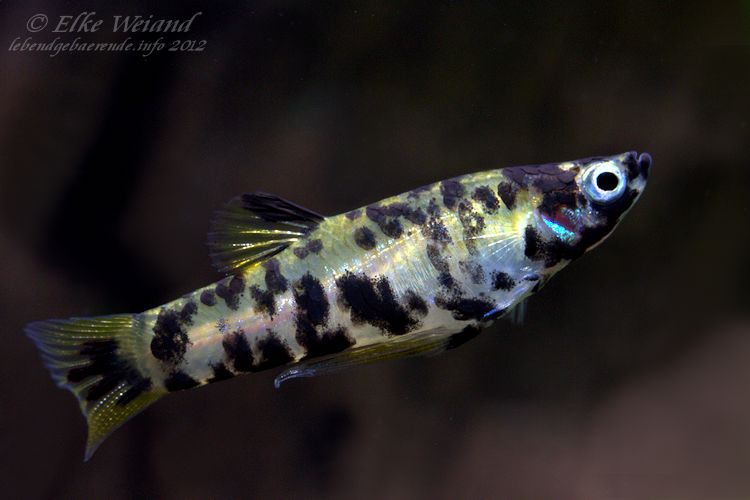
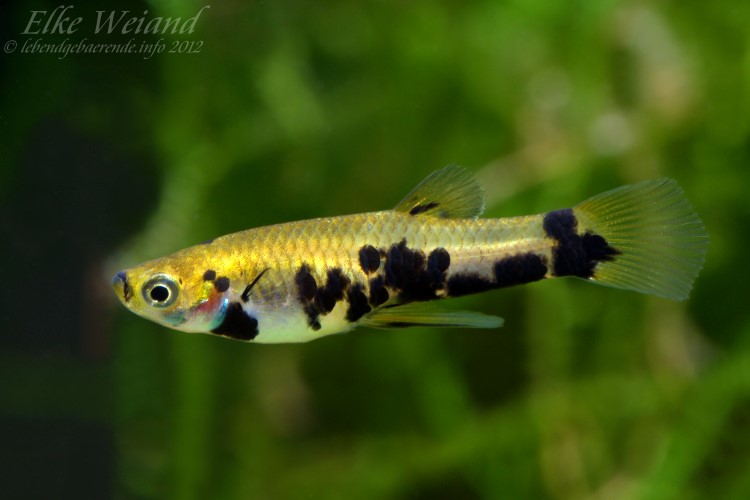
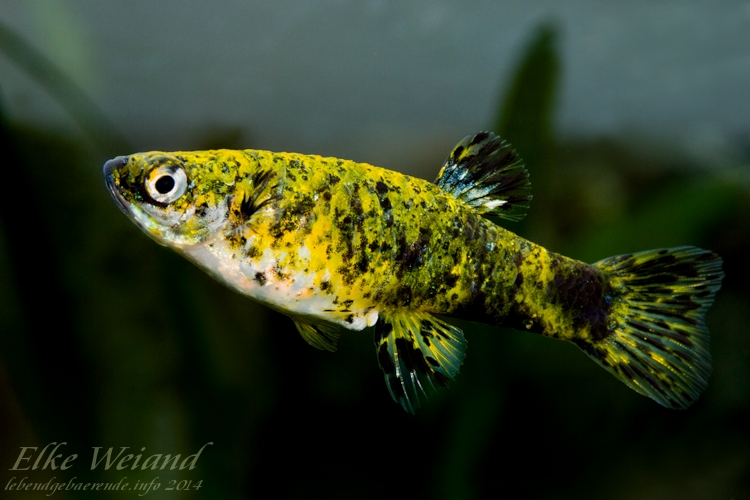
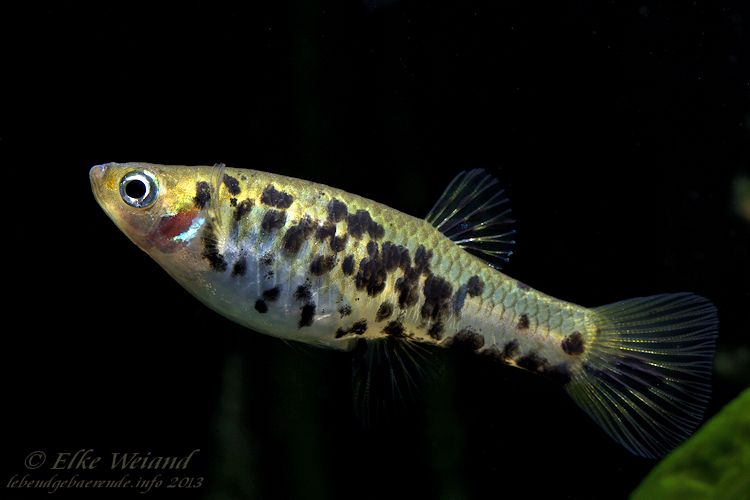
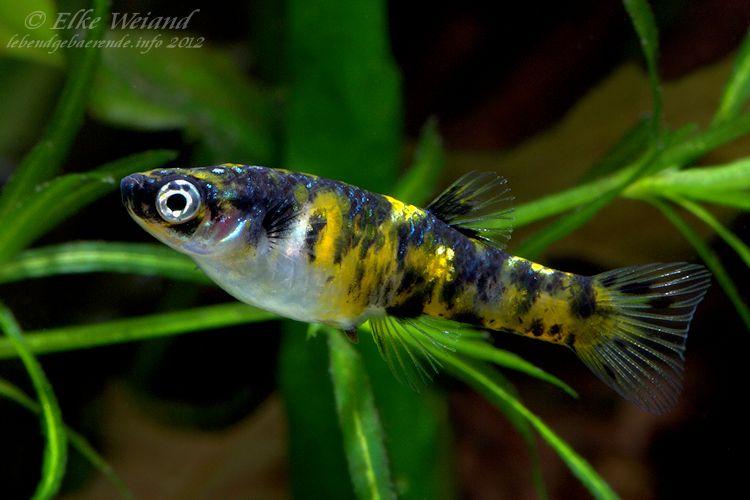
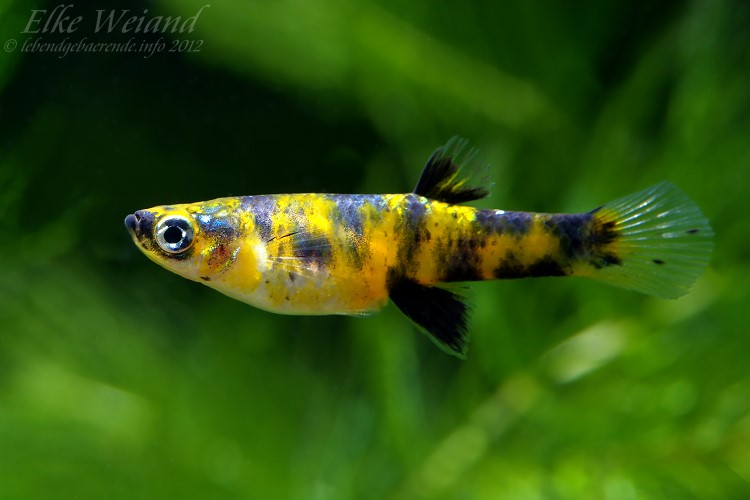
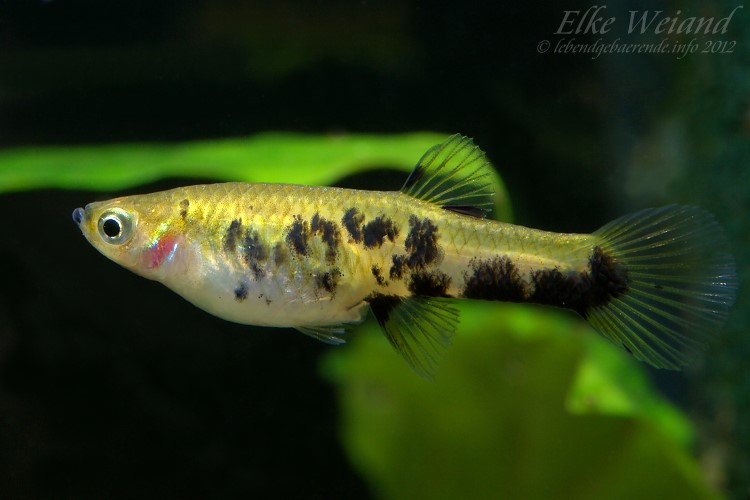
尾斑吉拉德食蚊鱼(Phalloceros caudimaculatus)适合较凉爽的密植单养缸,换水以少量、频繁为宜。它有斑点、金色及金色带斑等观赏类型,颜色变化很大,不能仅凭花色认定不同种。
分布与栖息地
传统分布记录包括巴西、巴拉圭、乌拉圭和阿根廷。2008 年分类修订后的狭义分布包括巴西南里奥格兰德州的帕托斯湖水系、乌拉圭河下游、特拉曼达伊河和曼皮图巴河,以及乌拉圭、阿根廷沿海水系。
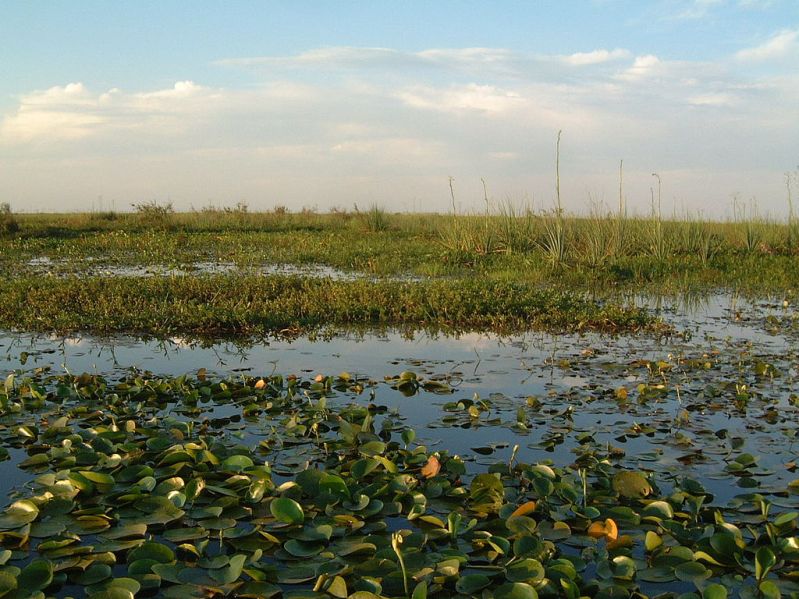
栖息于缓流河溪和池塘,往往水草繁密,部分种群生活于轻微半咸水。澳大利亚、新西兰、埃塞俄比亚和马拉维的野外种群属于引入。
饲养环境
三条可从约 50 L 的缸起步,过滤柔和并密植水草。它似乎对大量新换入的水较敏感,宜少量多次换水。适合相对凉爽的水温,耐低温的表现优于耐高温,不应把短时极限当作长期饲养目标。来自半咸水环境的种群对软水适应性较差。
食性与喂食
杂食,野外啄食藻类,并吃小昆虫、昆虫幼体和甲壳动物。缸内通常容易接受冷冻饵与干粮。
习性与混养
以同种专缸较理想。雄鱼会持续追逐雌鱼,因此雌鱼数量宜多于雄鱼,并提供草丛躲藏。
雌雄区分
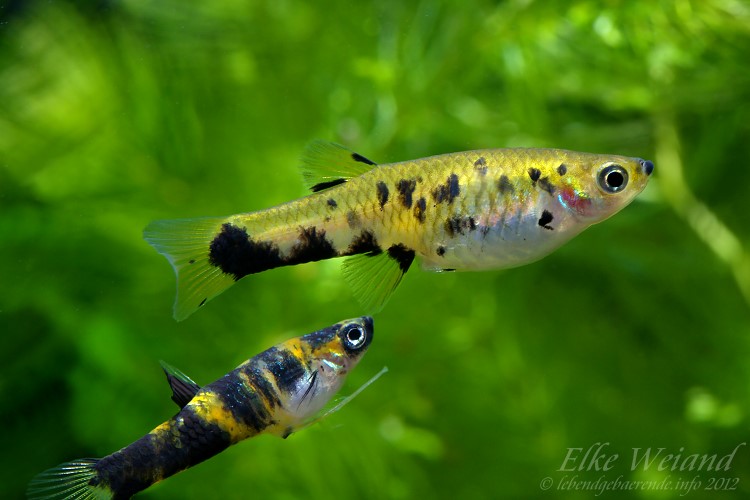
雄鱼远小于雌鱼,交接器明显。
繁殖
卵胎生,通常容易繁殖。妊娠约 4~6 周,随温度而变。成鱼喂养充分且草丛密集时,幼鱼通常可以留在原缸。新生鱼可立即吃微虫和刚孵化的丰年虾。
补充说明
常见观赏类型称为 reticulatus(斑点)、auratus(金色)及 reticulatus auratus(金色带斑),这些不是正式独立物种名。金色类型在自然条件下的存活似乎较差。
本属在 2008 年增述了 21 个物种,旧记录和旧商品名需要结合这一分类变化理解。本种体侧斑通常呈纵向椭圆形,没有明显眼斑边缘,但也可能缺失,细致鉴定不能只看斑点。
图片
图片来自 SeriouslyFish,版权归各摄影者所有。
English
Overview
Cooler water, dense planting, and small frequent water changes suit Phalloceros caudimaculatus. Spotted, golden, and spotted-golden ornamental forms occur, but their color names do not denote separate species.
Distribution & habitat
Traditional records list Brazil, Paraguay, Uruguay, and Argentina. A narrower range following the 2008 revision includes the Patos Lagoon system, lower Uruguay, Tramandaí, and Mampituba in southern Brazil, plus coastal drainages of Uruguay and Argentina.
Slow rivers, streams, and ponds, often rich in vegetation, provide habitat; some populations occupy slightly brackish water. Populations in Australia, New Zealand, Ethiopia, and Malawi are introduced.
Aquarium setup
Around 50 L can house a trio. Use gentle filtration and dense plants. Apparent sensitivity to newly replaced water favors modest, frequent changes. Cooler conditions are handled better than high temperatures, and brief survival extremes should not become maintenance targets. Fish originating from brackish localities are less tolerant of soft water.
Diet & feeding
Its omnivorous natural diet combines algae with small insects, insect larvae, and crustaceans. Frozen foods and preparations are readily accepted in captivity.
Behaviour & compatibility
A dedicated aquarium is preferable. Keep females more numerous than males, whose repeated pursuit can become burdensome, and provide planted escape areas.
Sexual dimorphism
Males are much smaller and have a prominent gonopodium.
Breeding
Livebearing reproduction is usually straightforward. Pregnancy takes about four to six weeks, depending on temperature. Well-fed adults in a densely planted aquarium generally allow young to survive alongside them. Newborns can immediately take microworms and newly hatched Artemia.
Notes
The ornamental labels reticulatus, auratus, and reticulatus auratus refer to spotted, golden, and spotted-golden forms rather than formally separate species. Golden forms apparently survive poorly under natural conditions.
The description of 21 additional species in 2008 changed the context for older records and trade names. A flank mark is generally vertically elongated and lacks an eye-like border, but it can be absent, so a spot alone is insufficient for detailed identification.
来源
- https://www.seriouslyfish.com/species/phalloceros-caudimaculatus(抓取于 2026-10-10)
phalloceros-caudimaculatus · 文件: data/species/phalloceros-caudimaculatus.md · 状态: 草稿