野岩丽鱼
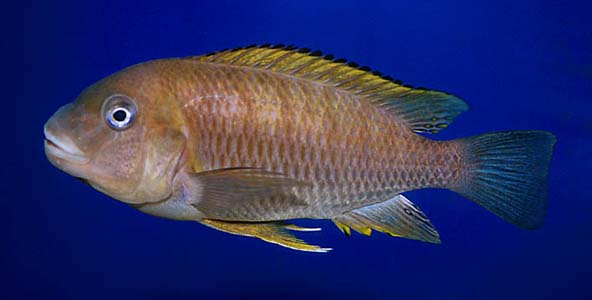
概要
| 字段 | 值 |
|---|---|
| 类别 | 鱼 |
| 学名 | Petrochromis famula |
| 别名 | 野岩麗魚 |
| 分类 | 慈鲷目 Cichliformes › 慈鲷科 Cichlidae › Petrochromis |
| 水体 | 淡水 |
| 成体体长 | 15 cm |
| 饲养难度 | 中等 |
| 最小水体 | 108 L |
| 最小缸长 | 120 cm |
| 群居方式 | 成对 |
| 外部数据 | seriouslyfish petrochromis-famula;fishbase 8802 |
| 原产地 | 坦噶尼喀湖北部 |
| 食性 | 草食 |
| 领地性 | 是 |
| 繁殖方式 | 口孵 |
水质参数
| 参数 | 耐受范围 | 最适范围 | 单位 |
|---|---|---|---|
| 水温 | 24–27 | — | °C |
| pH | 7.5–9 | — | — |
| 总硬度 | 8–25 | — | dGH |
概述
野岩丽鱼(Petrochromis famula)是坦湖刮藻慈鲷,口部适合从岩石表面刮取食物。它的主要管理难点在于同种间的强烈攻击,以及植物性食谱、过滤能力和群体密度之间的平衡。
分布与栖息地
坦噶尼喀湖特有,见于湖泊北部的浅水岩石区域。
饲养环境
用岩堆组成多处洞穴和藏身处,中间留出游动空间,细砂底较合适。鱼较能吃、排泄负担大,需要强健的生物过滤。即便有藏身处,弱势鱼也可能持续受追逐,应能及时分隔。
食性与喂食
野外几乎专吃单细胞藻类,用厚唇与刷状齿垫刮食岩面。人工食谱应高纤维、低蛋白,以螺旋藻薄片及烫软蔬菜等植物性食物为主,少量丰年虾、水蚤或红虫作补充。
习性与混养
攻击主要指向同种,温和或小型坦湖鱼不适合作伙伴。较高密度、配合强健伙伴有时能分散攻击,但不能脱离空间和过滤条件机械增加鱼数。雄鱼会建立领域,雌鱼也可能需要移走才能保证安全。
雌雄区分
雄鱼颜色较鲜艳,背鳍、臀鳍和腹鳍末端较尖。
繁殖
雌性口孵,人工繁殖可行但不容易,难点包括同种暴力。雄鱼占区展示,雌鱼在产卵点分批排卵并立即含入口中,再靠近臀鳍卵斑接受精液,使卵受精。完成后雌鱼离开,雄鱼不参与护幼。
一窝可达约六十粒,雌鱼含卵约四周,期间不吃。应减少干扰,必要时为含卵雌鱼安排独立空间。自然释出的鱼苗约 1 cm,已可吃与成鱼相近但尺寸更小的食物,干粮先压碎,分多次少量喂食。
补充说明
其刮食口器高度专门化,不能因为会接受动物性饵料,就把它当作以肉食为主的慈鲷。野外并不是特别爱聚群的鱼,人工密养用于管理攻击时尤其需要持续观察。
图片
图片来自 SeriouslyFish,版权归各摄影者所有。
English
Overview
Petrochromis famula is a specialized rock-grazing Tanganyikan cichlid. Managing it involves more than supplying algae-based food: aggression toward its own species and the demands of a heavily fed group require careful planning.
Distribution & habitat
Endemic to Lake Tanganyika, it occurs in the northern lake, usually over rocky bottoms in shallow water.
Aquarium setup
Build numerous rocky shelters with open swimming space between them. Sand is suitable for the base. These substantial, eager feeders impose a considerable waste load, making strong biological filtration essential. Retreats may still fail to protect subordinate fish, so be prepared to separate individuals.
Diet & feeding
Its natural food consists almost entirely of unicellular algae scraped from rocks. Thick lips and movable brushlike tooth pads form a specialized grazing surface. Use a high-fiber, low-protein diet dominated by vegetable foods, including spirulina flakes and softened greens. Small supplementary portions of brine shrimp, Daphnia, or bloodworms can add variety.
Behaviour & compatibility
Aggression falls mainly on conspecifics. Small or peaceful Tanganyikan fishes are poor companions. Denser stocking with robust fishes can sometimes spread aggression, but this approach depends on adequate space and filtration and never guarantees safety. Territorial males may persecute females severely enough to require separation.
Sexual dimorphism
Males are more colorful, with pointed dorsal, anal, and pelvic fins.
Breeding
Captive breeding is possible but challenging because of conspecific violence. A male claims an area and displays to females. During spawning the female releases eggs in batches and immediately gathers them. Approaching his anal-fin egg markings brings her into position to receive sperm. She then leaves his territory; he provides no brood care.
A brood may contain around 60 eggs. The female carries it for approximately four weeks while fasting. Minimize disturbance and provide separate accommodation when needed. Naturally released fry are about 1 cm long and accept suitably sized versions of adult foods; crush dry offerings and feed small portions several times daily.
Notes
The highly specialized grazing apparatus explains why acceptance of animal foods does not justify a meat-centered diet. Wild fish are not especially gregarious, so dense aquarium stocking used to manage aggression demands continued observation.
来源
- https://www.seriouslyfish.com/species/petrochromis-famula(抓取于 2026-10-10)
petrochromis-famula · 文件: data/species/petrochromis-famula.md · 状态: 草稿