红吻半线脂鲤 · Rummy-nose tetra
概要
| 字段 | 值 |
|---|---|
| 类别 | 鱼 |
| 学名 | Petitella rhodostoma |
| 别名 | 紅吻半線脂鯉、Hemigrammus rhodostomus |
| 分类 | 脂鲤目 Characiformes › 脂鲤科 Characidae › Petitella |
| 水体 | 淡水 |
| 成体体长 | 5 cm |
| 饲养难度 | 入门 |
| 群居方式 | 群游 |
| 性情 | 温和 |
| 外部数据 | seriouslyfish petitella-rhodostoma;fishbase 12370 |
| 原产地 | 委内瑞拉、巴西 |
| 食性 | 杂食 |
| 繁殖方式 | 产卵 |
水质参数
| 参数 | 耐受范围 | 最适范围 | 单位 |
|---|---|---|---|
| 水温 | 24–27 | — | °C |
| pH | 5.5–7 | — | — |
| 总硬度 | 2–15 | — | dGH |
概述
红吻半线脂鲤(Petitella rhodostoma)是红鼻类灯鱼中的一种,红色头部和黑白尾纹使它与两种近似鱼很容易混淆。它群游紧密、十分温和,需要足量同伴和稳定维护的水族环境。
分布与栖息地
分布于委内瑞拉和巴西的奥里诺科河及亚马孙河下游流域。生活在黑水河流和支流,分解有机物释放的物质使水呈褐色,天然水体通常酸性较强。
饲养环境
适合至少 10 条同养,缸长宜不少于约 90 cm。可用河沙、沉木、根状木材和落叶营造阴暗环境,任木叶使水轻度着色;要检查、定期替换叶片,避免过度腐败。也能适应维护良好的水草缸。
每周局部换水不可忽略。水质不佳或偏碱都会使颜色变淡,需结合水质及其他状态判断,而不是仅凭头色确认健康或身份。
食性与喂食
杂食,通常接受各种适口食物。由于嘴小,薄片和颗粒都应较细;再搭配小型活饵、冷冻饵,形成多样食谱,有助于维持颜色与体况。
习性与混养
难与大型、过分活跃的同伴竞争,宜选择温和小鱼及小型鲶鱼。至少饲养 10 条,条件允许时更多;数量不足不利于正常状态和紧密群游行为。
雌雄区分
成熟雌鱼身体明显比雄鱼圆润。
繁殖
为提高育苗数量,应另设很暗的繁殖缸,放入细叶植物、产卵拖把或隔网保护卵。采用偏软、偏酸的水,可借助反渗透水制备,使用轻柔的海绵过滤。
可用约 6 雄、6 雌群繁,或将雌雄分开育肥后选择状态好的一对。与常见的清晨产卵流程不同,本种在傍晚产卵。见卵后及时移出成鱼,防止吞卵。
卵约 24~36 小时孵化,之后 3~4 天鱼苗自由游动。起初喂纤毛虫等微小饵料,再逐渐添加微虫、丰年虾无节幼体。卵和幼苗怕光,早期尽量保持黑暗。
补充说明
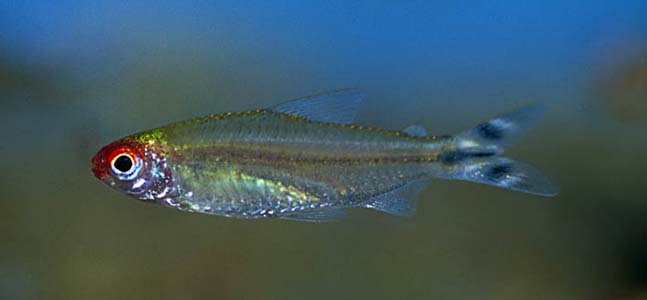
头部红色不向后延伸至肩部,尾柄后下方却有黑斑;尾部中央黑带向身体延伸的部分,比珀蒂鱼(Petitella georgiae)窄,而比布氏非洲裙鱼(Petitella bleheri)明显。应结合这些特征辨别三者,因为状况不佳时红色会褪淡。
商品“rummy-nose tetra”最常指向的未必是本种。旧文献常写作 Hemigrammus rhodostomus,还可见种加词拼作 rhodostomus 的组合,检索时需留意这些名称差异。
图片
图片来自 SeriouslyFish,版权归各摄影者所有。
English
Overview
Petitella rhodostoma is a rummy-nose tetra with a red head and a black-and-white tail. Two closely similar species are easily confused with it. Its gentle temperament and close schooling are best supported by a substantial group and consistently maintained water.
Distribution & habitat
It occurs in the Orinoco and lower Amazon basins of Venezuela and Brazil. Blackwater rivers and tributaries are typical habitats, with strongly acidic water tinted brown by substances released from decaying organic material.
Aquarium setup
Keep ten or more fish in an aquarium at least about 90 cm long. Sand, driftwood, roots, and leaf litter can provide a shaded, lightly tinted setting. Check and replace leaves regularly to avoid excessive decomposition. A carefully maintained planted aquarium is also suitable.
Weekly partial water changes are important. Poor conditions or alkaline water can cause fading, so head color should be considered alongside water quality and general condition rather than treated as a complete health or identification test.
Diet & feeding
This omnivore accepts a wide variety of appropriately sized foods. Its small mouth requires fine flakes or granules. Supplement prepared foods with small live and frozen items to maintain a varied diet and good color.
Behaviour & compatibility
Large or very boisterous companions can outcompete this peaceful tetra. Select gentle small fishes and suitable small catfishes. Maintain at least ten individuals, preferably more; inadequate numbers undermine both condition and natural schooling.
Sexual dimorphism
Mature females are distinctly rounder than males.
Breeding
Use a separate, very dim aquarium to raise larger numbers of fry. Fine plants, spawning mops, or mesh can protect the eggs. Soft, acidic water can be prepared with the help of reverse-osmosis water. Gentle sponge filtration is sufficient.
A group of approximately six fish of each sex can be used, or males and females can be conditioned separately before selecting a pair. This species spawns in the evening, an important difference from the familiar morning-spawning routine. Remove adults promptly when eggs appear because they will eat them.
Eggs hatch after about 24–36 hours, and fry become free-swimming three or four days later. Start with infusoria-sized foods before progressing to microworms and Artemia nauplii. Eggs and early fry are light-sensitive and should be kept as dark as possible.
Notes
Red does not extend onto the shoulder, but a dark spot is present on the lower rear caudal peduncle. The forward extension of the central tail band is narrower than in Petitella georgiae and more evident than in Petitella bleheri. Combine these features when identifying fish, since poor condition can obscure red coloration.
The fish most often sold as a rummy-nose tetra may belong to another species. Older literature uses Hemigrammus rhodostomus, and combinations retaining the epithet rhodostomus also occur, so searches may encounter different spellings.
来源
- https://www.seriouslyfish.com/species/petitella-rhodostoma(抓取于 2026-10-10)
petitella-rhodostoma · 文件: data/species/petitella-rhodostoma.md · 状态: 草稿