奇弹涂鱼 · Atlantic Mudskipper
概要
| 字段 | 值 |
|---|---|
| 类别 | 鱼 |
| 学名 | Periophthalmus barbarus |
| 别名 | 大西洋弹涂鱼、奇彈塗魚、大西洋彈塗魚 |
| 分类 | 虾虎鱼目 Gobiiformes › 虾虎鱼科 Gobiidae › Periophthalmus |
| 水体 | 淡水 |
| 成体体长 | 15 cm |
| 饲养难度 | 中等 |
| 群居方式 | 群游 |
| 领地性 | 是 |
| 特征 | 会跳缸: 是;翻底砂: 是 |
| 外部数据 | seriouslyfish periophthalmus-barbarus;fishbase 12803 |
| 原产地 | 非洲西海岸,毛里塔尼亚至安哥拉 |
| 食性 | 肉食 |
| 繁殖方式 | 附着产卵 |
水质参数
| 参数 | 耐受范围 | 最适范围 | 单位 |
|---|---|---|---|
| 水温 | 25–30 | — | °C |
| pH | 7–8.5 | — | — |
| 总硬度 | 10–25 | — | dGH |
概述
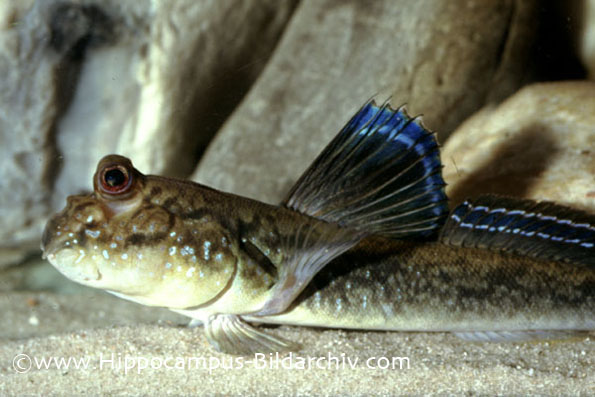
奇弹涂鱼(Periophthalmus barbarus)又称大西洋弹涂鱼,是高度适应水陆交界生活的虾虎鱼。它需要可爬出的陆地、温暖高湿空气和半咸水,不能长期放在只有深水的普通鱼缸中。雄鱼领域性很强,有限空间更适合单条。
分布与栖息地
分布于非洲西海岸,从毛里塔尼亚向南到安哥拉。印度、泰国和菲律宾的旧记录很可能是近似种误认。
主要生活在河口红树林边缘的泥滩,有些种群随潮汐活动:退潮后露面觅食,涨潮时返回水下洞穴。
饲养环境
需要较大的底面积。单条也宜有约 120 × 30 cm 的底面,更宽更好;多条尤其是多雄鱼需要显著扩大空间,并让每条都能占据自己的地盘。
用砂或合适泥质底床形成坡岸,也可布置半浸水沉木。缸内必须有陆地区域,空气应高湿且与水温接近。严密缸盖既保湿,也防止攀爬或跳出。使用高效过滤处理较多排泄物,半咸水参考比重约 1.005,避免酸性条件。
食性与喂食
野外主要吃蟹、昆虫及其他无脊椎动物。人工饲养可接受多种活饵和冷冻饵,以合适冷冻食物搭配规律活饵较实用。虽然可能吃干粮,但干料胀胃的风险使其不宜作为主要选择。
习性与混养
一般以单种缸更妥当。小鱼可能被吃,混养只适合大型、设计合理的水陆环境,并选择水质需求相近的伙伴。
雄鱼之间冲突可能造成重伤甚至死亡。空间有限时只养一条;足够大的缸可考虑至少五条分散压力,但每条仍须有自己的领地。背鳍反复张合是警告,若对方不退,可能升级为跃起扑咬。
雌雄区分
非繁殖期外观差异不明显,雌鱼生殖突通常更宽。繁殖雄鱼颜色更亮,平时也往往更具领域性,但不能仅靠攻击程度就绝对判定性别。
繁殖
野外雄鱼会在泥中挖深洞及产卵室,卵位于最深处,孵化后由雌鱼照顾幼体。这种复杂的洞穴与潮汐环境难以在普通水族箱中重现,不能把常见虾虎洞穴繁殖法直接视为可行方案。
补充说明
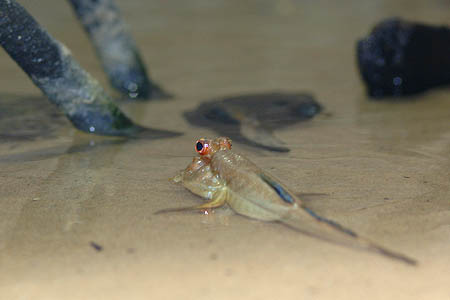
它能靠胸鳍支撑身体在陆上移动,也能用弯曲尾部弹跳。鳃腔保留的水和空气,以及皮肤、口咽等部位的呼吸适应,使其能较长时间离水,但保持身体湿润仍然关键。
图片
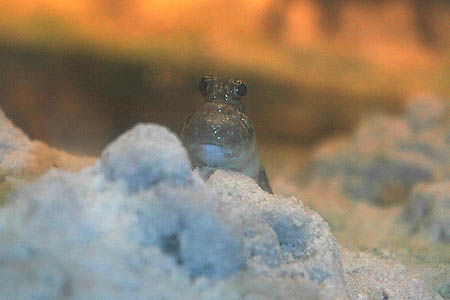
图片来自 SeriouslyFish,版权归各摄影者所有。
English
Overview
Atlantic mudskippers (Periophthalmus barbarus) are strongly amphibious gobies that need exposed land, warm humid air, and brackish water. A conventional deep-water aquarium is inappropriate. Males are intensely territorial, making a single fish the better option where space is limited.
Distribution & habitat
The species occurs along western Africa from Mauritania to Angola. Historical reports from India, Thailand, and the Philippines probably concern other mudskippers.
Typical habitats are mudflats around estuarine mangroves. In tidal areas, fish emerge to forage when the mud is exposed and retreat into submerged burrows as the water rises.
Aquarium setup
Prioritize floor space. Even one fish needs a footprint around 120 × 30 cm, with greater width preferable. Multiple fish, especially males, require considerably more room and separate usable territories.
Create a sloping bank of sand or suitable mud, or provide partly submerged wood. Exposed resting areas are essential. Keep the air very humid and close to water temperature. A secure lid retains humidity and prevents climbing or jumping escapes. Efficient filtration is needed for their substantial waste output. A brackish specific gravity around 1.005 is suggested; avoid acidic conditions.
Diet & feeding
Wild fish eat chiefly crabs, insects, and other invertebrates. In captivity they take diverse live and frozen foods; suitable frozen items with regular live supplements make a practical menu. Dry foods may be accepted, but are discouraged because swelling in the gut can cause problems.
Behaviour & compatibility
A dedicated setup is generally preferable. Small fishes may be eaten, and mixed housing requires a large, carefully designed enclosure with environmentally compatible companions.
Male disputes can cause severe injury or death. Keep one where room is limited. A sufficiently large enclosure may hold five or more to spread aggression, but each still needs territory. Repeated raising and lowering of the dorsal fin signals a warning; unresolved encounters may escalate to lunging and biting.
Sexual dimorphism
The sexes look similar outside breeding condition. Females have a broader genital papilla. Breeding males become more colorful and are generally more territorial, though behavior alone should not be treated as definitive.
Breeding
Wild males excavate deep shafts and chambers in mud. Eggs are placed in the deepest chamber, and females tend the young after hatching. The complex burrow and tidal environment is difficult to reproduce in an ordinary enclosure; standard goby cave methods cannot be assumed applicable.
Notes
Pectoral fins support movement on land, while a flexed tail provides propulsion for jumping. Retained water and air in the gill chamber, together with adapted skin and mouth surfaces, support time out of water. Remaining moist is still essential.
来源
- https://www.seriouslyfish.com/species/periophthalmus-barbarus(抓取于 2026-10-10)
periophthalmus-barbarus · 文件: data/species/periophthalmus-barbarus.md · 状态: 草稿