带纹矛耙丽鱼 · Striped Kribensis
概要
| 字段 | 值 |
|---|---|
| 类别 | 鱼 |
| 学名 | Pelvicachromis taeniatus |
| 别名 | 带突颌丽鱼、帶紋矛耙麗魚、帶突頜麗魚 |
| 分类 | 慈鲷目 Cichliformes › 慈鲷科 Cichlidae › Pelvicachromis |
| 水体 | 淡水 |
| 成体体长 | 8 cm |
| 饲养难度 | 入门 |
| 群居方式 | 成对 |
| 外部数据 | seriouslyfish pelvicachromis-taeniatus;fishbase 8799 |
| 原产地 | 尼日利亚、喀麦隆 |
| 领地性 | 是 |
| 特征 | 翻底砂: 是 |
| 繁殖方式 | 附着产卵 |
水质参数
| 参数 | 耐受范围 | 最适范围 | 单位 |
|---|---|---|---|
| 水温 | 22–26 | — | °C |
| pH | 5–7.5 | — | — |
| 总硬度 | 5–12 | — | dGH |
概述
带纹矛耙丽鱼(Pelvicachromis taeniatus)是西非森林水域的小型慈鲷,雄鱼也有鲜明色彩,不能仅靠谁更艳来判断性别。地方色型较多,繁殖时应保持各自谱系。
分布与栖息地
原产尼日利亚和喀麦隆,见于静水或缓流的森林溪流及河流,水生植被往往丰富。
饲养环境
布置多个洞穴、陶盆、树根及沉木作为藏身和产卵位置。水草能增加遮蔽,细砂或细砾适合挖掘。繁殖缸过滤宜温和,保护鱼苗不被吸入,并让鱼对有足够空间避开其他底栖鱼。
食性与喂食
通常接受多种食物,以活饵和冷冻饵料为主体,配合其他适口食物维持良好状态。
习性与混养
通常胆怯,不适合大型或活动猛烈的伙伴。可与温和小鱼混养,但繁殖时会守领域。多对或搭配其他慈鲷需要明显增加空间,不能把单对的环境要求直接套用于群养。
雌雄区分
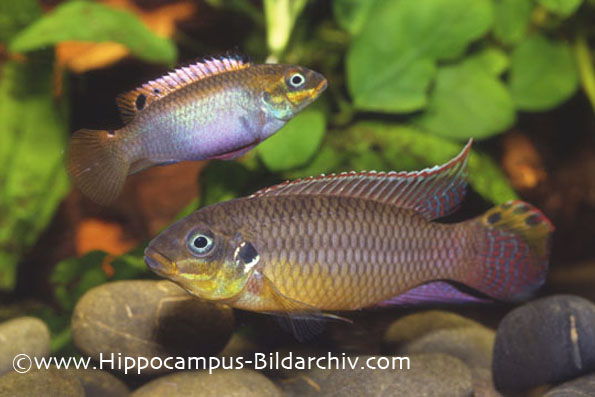
雄鱼较大,背鳍和臀鳍尖长;雌鱼更圆,繁殖时体侧泛粉红,腹部颜色加深。雄鱼体色同样鲜艳,鳞片边缘较明显,尾鳍较圆。
繁殖
从至少六条幼鱼中自然配对较合适,任意选一雄一雌可能不相容。可参考 23~25 °C、pH 6.0~7.0,提供多个洞,养好亲鱼;温和陪游鱼能帮助减轻胆怯,但其他底栖鱼可能吃卵苗。
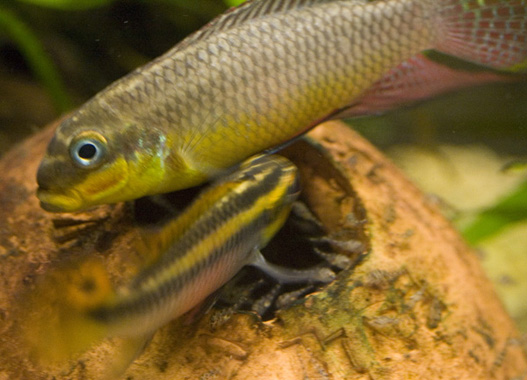
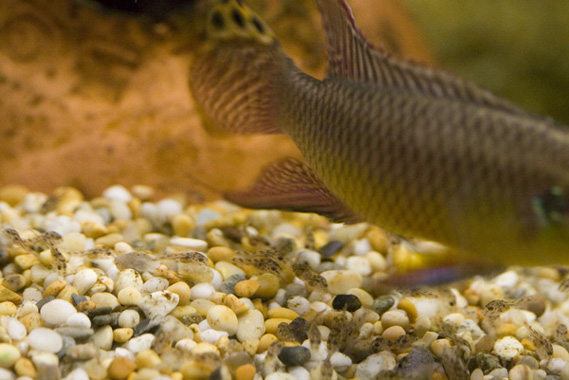
雌鱼常先展示加深的腹色,亲鱼选洞或在布景下挖洞,卵附在洞顶或洞壁。雌鱼照卵、雄鱼守边界;约两三天孵化,约七至八天自由游动。雌鱼带领鱼苗活动,雄鱼继续防守。
开口可喂丰年虾无节幼体和微虫,幼鱼也会啄食藻类与碎屑。亲鱼护幼时仍可能攻击配偶,应观察并准备分开。通常让幼鱼留到下一次繁殖迹象出现。
补充说明
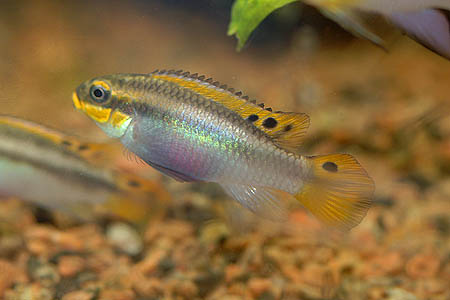
较突出的上唇常呈亮黄色,是区别近缘鱼的线索之一。Dehane、Moliwe、Lobe、Nigeria Red 等色型不应混繁;商品名应连同来源一起保存。
图片
图片来自 SeriouslyFish,版权归各摄影者所有。
English
Overview
Pelvicachromis taeniatus is a West African dwarf cichlid in which males can match females in brightness. Color intensity alone is therefore a poor guide to sex. Its numerous geographic forms should be maintained as separate breeding lines.
Distribution & habitat
Native to Nigeria and Cameroon, it occupies still and slow-flowing forest streams and rivers, often among abundant aquatic vegetation.
Aquarium setup
Provide several potential spawning shelters with caves, pots, roots, and driftwood. Plants add cover, while sand or fine gravel allows excavation. Use gentle filtration for breeding, with enough space to protect the brood from other bottom dwellers.
Diet & feeding
A range of foods is accepted. Live and frozen items should make up most of a varied diet, helping adults maintain breeding condition.
Behaviour & compatibility
Generally shy, it should not be housed with large or excessively active companions. Calm smaller fish can work, but a breeding pair will defend its territory. Additional pairs or other cichlids require considerably more room for separate areas.
Sexual dimorphism
Males grow larger and have pointed dorsal and anal fins. Females are rounder and develop pink flank coloring and a darker abdomen before spawning. Males are also colorful, with conspicuous scale edging and a relatively rounded tail.
Breeding
Allow at least six juveniles to form their own pairs. Simply combining a male and female can produce incompatible partners. Conditions around 23–25 °C and pH 6.0–7.0 are suitable. Offer multiple caves and varied conditioning foods. Calm dither fish can reduce timidity, whereas other bottom dwellers may take eggs or fry.
The female commonly initiates courtship with her intensified belly color. The pair chooses a cave or digs beneath decor, attaching eggs to its wall or roof. She attends the eggs while he guards the area. Hatching takes roughly two or three days, with free swimming around seven or eight days. The female guides the brood as the male patrols its borders.
Newly swimming fry can take brine shrimp nauplii and microworms, and also browse algae and detritus. Monitor the adults for partner aggression. Young generally remain with them until the next spawning approaches.
Notes
A prominent, often bright yellow upper lip is a useful identification feature. Keep forms such as Dehane, Moliwe, Lobe, and Nigeria Red separate rather than crossing their breeding lines.
来源
- https://www.seriouslyfish.com/species/pelvicachromis-taeniatus(抓取于 2026-10-10)
pelvicachromis-taeniatus · 文件: data/species/pelvicachromis-taeniatus.md · 状态: 草稿