亚晴斑矛耙丽鱼 · Ocellated Kribensis
概要
| 字段 | 值 |
|---|---|
| 类别 | 鱼 |
| 学名 | Pelvicachromis subocellatus |
| 别名 | 亞晴斑矛耙麗魚 |
| 分类 | 慈鲷目 Cichliformes › 慈鲷科 Cichlidae › Pelvicachromis |
| 水体 | 淡水 |
| 成体体长 | 8 cm |
| 饲养难度 | 入门 |
| 群居方式 | 成对 |
| 外部数据 | seriouslyfish pelvicachromis-subocellatus;fishbase 8798 |
| 原产地 | 尼日利亚、加蓬、刚果民主共和国 |
| 领地性 | 是 |
| 特征 | 翻底砂: 是 |
| 繁殖方式 | 附着产卵 |
水质参数
| 参数 | 耐受范围 | 最适范围 | 单位 |
|---|---|---|---|
| 水温 | 22–26 | — | °C |
| pH | 5.5–7.5 | — | — |
| 总硬度 | 5–20 | — | dGH |
概述
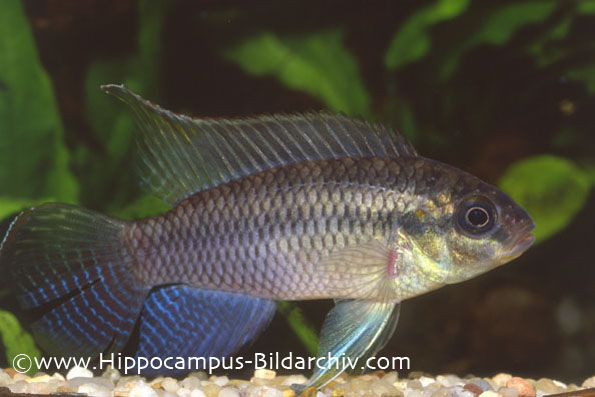
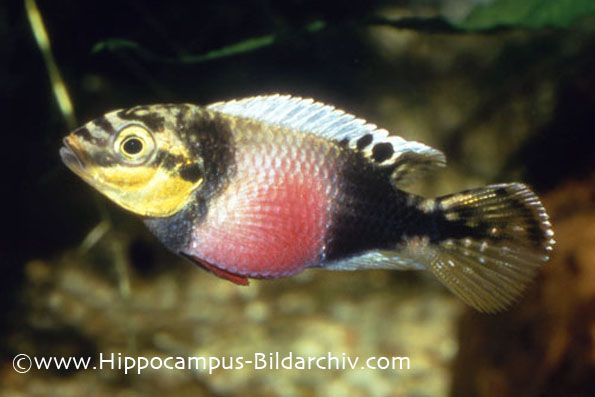
亚晴斑矛耙丽鱼(Pelvicachromis subocellatus)是体形较短高的西非小型慈鲷,性情通常胆怯。繁殖雌鱼体侧粉红并伴深色斑块,鱼对在护幼时会积极守卫领域。
分布与栖息地
原产尼日利亚、加蓬及刚果民主共和国,生活在沿海池塘和缓流溪水中,部分栖地为咸淡水。
饲养环境
提供许多洞穴、陶盆、树根与沉木。水草不是必需,但能增加遮蔽。底床用细砂或细砾,方便繁殖时挖掘。育苗时采用温和过滤,并保证鱼对有不受其他底栖鱼打扰的空间。
食性与喂食
多数食物都愿意接受,但活饵和冷冻饵料应占较大比例,以多样食谱维持良好状态。
习性与混养
温和的小型伙伴通常较适合,避免强势活跃的大鱼。通常成对饲养,多对或与其他慈鲷共养需要较大空间,让每对鱼各有领域。护卵护苗时攻击范围会扩大,其他底栖鱼也可能吃卵苗。
雌雄区分
雄鱼较大,背鳍和臀鳍末端较尖;雌鱼体形较圆,繁殖时体侧粉红加深,两边出现黑斑,背鳍反光明显。
繁殖
从六条或更多幼鱼中自然配对较稳妥,任意拼成的雌雄不一定相容。繁殖可参考 24~26 °C、pH 5.5~6.5,准备多个洞和温和过滤,温和陪游鱼可帮助减少胆怯。
雌鱼常通过展示粉红体侧主动求偶。亲鱼选择洞穴或自行挖洞,也会在附近挖浅坑。卵通常附着洞顶或洞壁,一窝可达约两百粒,由雌鱼照顾、雄鱼守外围。约两三天孵化,约七至八天自由游动,中间可能多次搬到其他坑或洞。
雌鱼带领鱼苗,雄鱼继续守边界。开口可用丰年虾无节幼体或微虫,幼鱼也会摄取藻类和碎屑。亲鱼可能转而攻击配偶,应持续观察;通常待下一次繁殖迹象出现才分出幼鱼。
补充说明
Matadi、Moanda 等地方型应分开繁殖,保持各自血统。较短高的体形,以及尾鳍上部较淡的斑点,可帮助区别近缘鱼。
图片
图片来自 SeriouslyFish,版权归各摄影者所有。
English
Overview
Pelvicachromis subocellatus is a relatively deep-bodied, short West African dwarf cichlid. Usually shy, it becomes territorial around a brood. A breeding female shows intense pink flanks bordered by dark markings.
Distribution & habitat
It occurs in Nigeria, Gabon, and the Democratic Republic of Congo, inhabiting coastal pools and slow streams. Some habitats contain brackish water.
Aquarium setup
Use numerous caves, pots, roots, and pieces of driftwood. Plants add cover but are optional. Sand or fine gravel lets the fish excavate breeding shelters and nearby pits. A breeding setup needs gentle filtration and space protected from other bottom dwellers.
Diet & feeding
Most offerings are accepted, but varied live and frozen foods should account for a substantial part of the diet.
Behaviour & compatibility
Choose calm, smaller companions and avoid large, vigorous fish. Keep a pair unless there is room for several distinct territories. Other cichlids likewise require generous space. Breeding changes the pair's defensive behavior, while bottom dwellers can threaten its eggs and young.
Sexual dimorphism
Males are larger, with pointed dorsal and anal fins. Females are rounder. In breeding condition a female's pink sides darken, black areas appear alongside them, and the dorsal fin becomes noticeably reflective.
Breeding
Raise six or more juveniles and let pairs form naturally. A male and female selected arbitrarily may be incompatible. Conditions around 24–26 °C and pH 5.5–6.5 can support breeding. Supply several caves and gentle filtration; calm dither fish can make the pair less timid.
Females commonly initiate courtship with flank displays. The pair uses or excavates a cave and may dig shallow pits nearby. Up to about 200 eggs attach to the cave wall or roof. The female attends them while the male guards the surrounding area. Hatching takes two or three days, with free swimming around seven or eight days. Before that stage, the young may be moved among caves and pits.
The female guides swimming fry as the male continues to defend the borders. Offer brine shrimp nauplii or microworms; the fry also browse algae and detritus. Watch for aggression between parents. Young generally remain with them until another spawning approaches.
Notes
Keep geographic forms such as Matadi and Moanda in separate breeding lines. A higher, shorter body and lighter spotting in the upper tail help distinguish this species from relatives.
来源
ID:pelvicachromis-subocellatus · 文件: data/species/pelvicachromis-subocellatus.md · 状态: 草稿