矮矛耙丽鱼 · Yellow Kribensis
概要
| 字段 | 值 |
|---|---|
| 类别 | 鱼 |
| 学名 | Pelvicachromis humilis |
| 别名 | 矮矛耙麗魚 |
| 分类 | 慈鲷目 Cichliformes › 慈鲷科 Cichlidae › Pelvicachromis |
| 水体 | 淡水 |
| 成体体长 | 12.5 cm |
| 饲养难度 | 中等 |
| 外部数据 | seriouslyfish pelvicachromis-humilis;fishbase 8796 |
| 原产地 | 塞拉利昂、利比里亚、几内亚 |
| 领地性 | 是 |
| 特征 | 翻底砂: 是 |
| 繁殖方式 | 附着产卵 |
水质参数
| 参数 | 耐受范围 | 最适范围 | 单位 |
|---|---|---|---|
| 水温 | 24–27 | — | °C |
| pH | 5–7 | — | — |
| 总硬度 | 5–12 | — | dGH |
概述
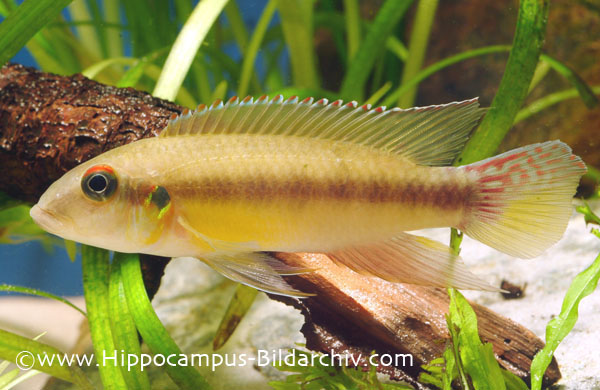
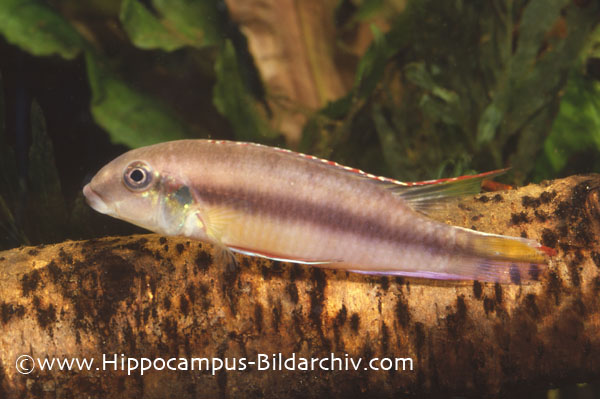
矮矛耙丽鱼(Pelvicachromis humilis)体形修长、吻部较长,在近缘鱼中体型较大。它对同种有明显攻击性,繁殖配对也需要观察,不能把任意一雄一雌直接视为稳定鱼对。
分布与栖息地
原产塞拉利昂、利比里亚及几内亚,生活在水流较缓而含氧丰富的河流及支流。
饲养环境
用陶盆洞、树根和沉木提供许多藏身处及产卵位置。细砂或细砾便于繁殖挖坑,水草可增加遮蔽。应有雄鱼进不去、雌鱼能够躲入的小洞;繁殖缸采用温和过滤,避免鱼苗被吸入。
食性与喂食
以活饵、冷冻饵料为主要部分,也接受干粮。加入烫菠菜或螺旋藻薄片等植物成分,保持食谱多样。
习性与混养
虽比不少近缘种强健,也不宜与特别大型或猛烈活跃的鱼共养。与其他软水慈鲷混养必须有足够空间划分区域;同种通常只留一对,多对需要非常大的缸。繁殖时其他底栖鱼可能捕食卵与苗,温和陪游鱼则可分散亲鱼注意。
雌雄区分
雄鱼更大,背鳍和臀鳍较尖;雌鱼身体更圆。
繁殖
可从至少六条幼鱼开始自然配对,直接拼凑的雌雄可能互相攻击甚至致死。繁殖可参考 24~26 °C、pH 5.5~6.5。求偶可能持续较久,期间雄鱼会追迫雌鱼,藏身处不能缺少。
亲鱼选择洞穴,或在布景下自行挖洞,卵一般附在洞顶或洞壁。雌鱼照卵,雄鱼守外侧;约两三天孵化,约七至八天鱼苗自由游动,双亲带领鱼群。亲鱼把落单鱼苗含入口中再吐回队伍,是搬运而非口孵。
开口可用丰年虾无节幼体和微虫,幼鱼也会啄食藻类和碎屑。亲鱼在护幼阶段仍可能攻击配偶,需持续观察。通常让鱼苗留到下一次繁殖迹象出现,再考虑分开。
补充说明
几内亚型、利比里亚红型等地方形态存在差异,部分分类归属曾经调整。体形和长吻有助于区别近缘种,但不要仅凭商品色型名判断种类。
图片
图片来自 SeriouslyFish,版权归各摄影者所有。
English
Overview
Pelvicachromis humilis has an elongated body and relatively long snout, with a larger build than many close relatives. Aggression toward its own species makes partner compatibility an important concern: buying one male and one female does not guarantee a pair.
Distribution & habitat
Native to Sierra Leone, Liberia, and Guinea, it inhabits slow-flowing rivers and tributaries with plentiful dissolved oxygen.
Aquarium setup
Provide many retreats with clay-pot caves, roots, and driftwood. Sand or fine gravel allows breeding fish to excavate, while plants add optional cover. Include narrow shelters accessible to the female alone. Gentle filtration is useful for breeding because fry can be drawn into stronger filter intakes.
Diet & feeding
Live and frozen foods should make up a substantial share of a varied diet. Dry foods are also accepted. Include vegetable material such as softened spinach or spirulina flakes.
Behaviour & compatibility
Although comparatively robust, it should not share space with excessively large or vigorous fish. Other soft-water cichlids require enough room for separate territories. Normally keep only one pair; additional conspecifics need a very large aquarium. Other bottom dwellers can threaten eggs and fry, whereas calm dither fish may reduce brood loss by distracted parents.
Sexual dimorphism
Males are larger and develop pointed dorsal and anal fins. Females have a rounder body profile.
Breeding
Raise at least six juveniles and allow partners to select each other. An incompatible imposed pairing can result in serious injury or death. Breeding conditions may be around 24–26 °C and pH 5.5–6.5. Courtship can be prolonged, with persistent male pursuit making female-only shelters valuable.
A pair uses an existing cave or excavates beneath decor. Eggs usually adhere to the roof or wall. The female attends them while the male guards outside. Hatching takes about two or three days, and fry become free-swimming around seven or eight days. Both parents guide the group, sometimes carrying stray fry in their mouths and returning them to the brood.
Brine shrimp nauplii and microworms are suitable first foods; fry also browse algae and detritus. Watch the adults because partner aggression can emerge during brood care. Young are generally left with the parents until signs of another spawning appear.
Notes
Several geographic forms differ in appearance, and some related forms have undergone taxonomic reassessment. The elongated outline and longer snout are useful identifying features, but a commercial color-form label alone does not establish identity.
来源
- https://www.seriouslyfish.com/species/pelvicachromis-humilis(抓取于 2026-10-10)
pelvicachromis-humilis · 文件: data/species/pelvicachromis-humilis.md · 状态: 草稿