Parosphromenus tweediei
概要
| 字段 | 值 |
|---|---|
| 类别 | 鱼 |
| 学名 | Parosphromenus tweediei |
| 分类 | 攀鲈目 Anabantiformes › 丝足鲈科 Osphronemidae › Parosphromenus |
| 水体 | 淡水 |
| 原产地 | 马来西亚 |
| 成体体长 | 3.5 cm |
| 饲养难度 | 中等 |
| 最小水体 | 16 L |
| 最小缸长 | 40 cm |
| 群居方式 | 成对 |
| 外部数据 | seriouslyfish parosphromenus-tweediei;fishbase 62573 |
| 食性 | 肉食 |
| 繁殖方式 | 附着产卵 |
| 领地性 | 是 |
水质参数
| 参数 | 耐受范围 | 最适范围 | 单位 |
|---|---|---|---|
| 水温 | 22–28 | — | °C |
| pH | 3–6.5 | — | — |
| 总硬度 | 1–4 | — | dGH |
概述
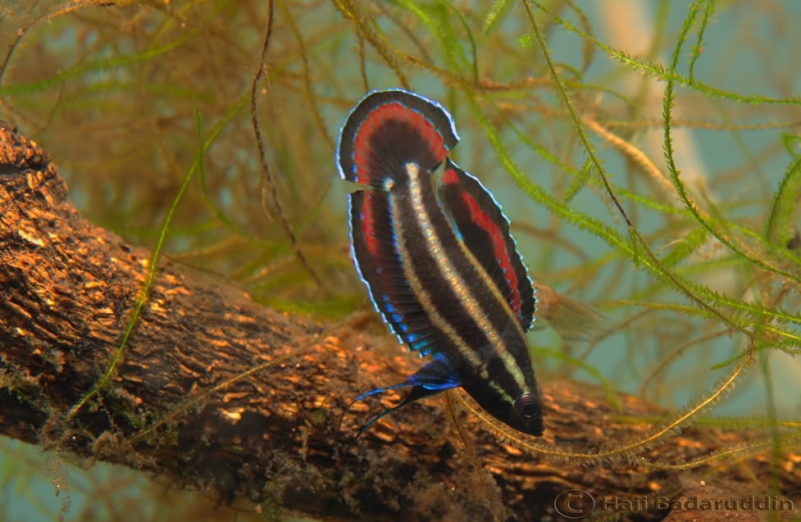
Parosphromenus tweediei 是柔佛西部的黑水小型迷鳃鱼,雄鱼单鳍上鲜红宽带紧邻黑色近外缘带。它在早期水族记录中常被误称为 Parosphromenus deissneri,阅读旧名或购鱼时须结合种源,而不是直接合并身份。
分布与栖息地
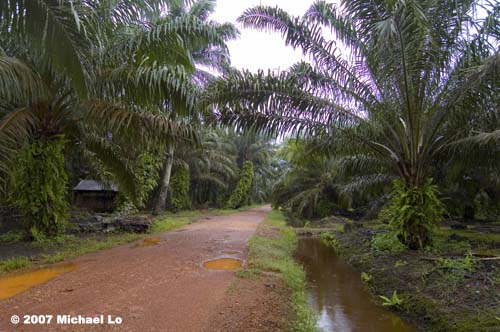
记录集中于马来西亚半岛柔佛西部,模式地位于笨珍一带。更北部马六甲及 Ayer Hitam 等旧分布点曾有局部消失的记录,森林清除与土地改造使原生境大幅减少。
它依赖泥炭沼泽森林和黑水溪流,林冠遮阴、矿物含量极低、水色深且偏强酸。模式地曾是一条部分退化的茶色溪流,pH 约 4.0。残存沟渠也不能被视为普遍耐受环境的证明。
饲养环境
一对约需 40 × 20 cm 底面积。用根枝沉木、干叶、陶罐或短管构成阴影与洞穴,裸底可方便繁殖维护。耐阴水草和浮水植物适合弱光,落叶微生物也能补充仔鱼食物。
水应极软且偏酸,碳酸盐硬度近乎零,可能要用反渗透水等软水来源。只使用成熟缸,轻柔海绵过滤即可,每周约 5–10% 小换水。不要长期不换后突然大换水,无过滤也仅适用于少量成对、控食和维护严格的环境。
食性与喂食
本种主要摄食微小水生无脊椎动物,需要多样小型活饵,例如丰年虾无节幼体、水蚤、裸腹溞、蚊幼虫和微虫。干粮通常被拒绝,冻饵偶尔接受也不宜成为全部菜单。
习性与混养
单种成对有利于清楚记录种源并保留自然育成幼鱼;混性群可以维持,但有其他成年鱼时仔鱼通常较难存活。不同同属鱼不可因雌鱼长得像就混放,误认与杂交都可能发生。若有伙伴,必须很小、极平和并适应同样水质。
雌雄区分
雄鱼单鳍近外缘黑带内为鲜红宽带,外有细白至蓝色边;红黑之间有时还出现细蓝线,部分红带也可变蓝,尤其背鳍和臀鳍。腹鳍偏黑、近基部带绿虹彩,丝端黑色。
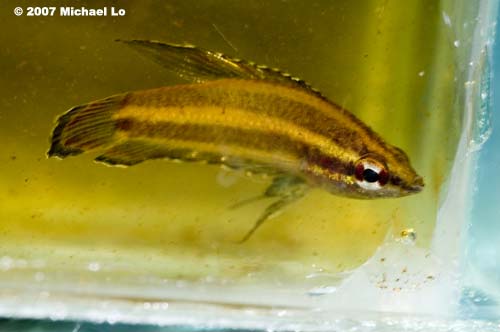
雌鱼缺少这些鲜艳鳍带,临产时淡黄;两性会随情绪变色,求偶时可有斜过眼深纹。
繁殖
雄鱼头朝下展示,以小洞建立领域,形成短暂配对。拥抱产卵后把卵贴于洞顶,泡沫可少量存在,也可没有。经验不足时可能掉卵或吞卵。
产后雌鱼守周边,雄鱼照顾卵及后代。约 24–36 小时孵化,再经 4–6 天开始活动,随后 3–5 天完全自由游动并离巢,照顾结束。先用草履虫或轮虫,随后转丰年虾无节幼体。成熟复杂布置可原缸留仔,简单缸宜另处育成。
补充说明
单鳍红黑蓝的完整排列和产地比“红色丽丽”之类宽泛标签更可靠。旧书中的 Parosphromenus deissneri 常涵盖误认鱼,不能一律对应到本种或真实的同名种。
图片
图片来自 SeriouslyFish,版权归各摄影者所有。
English
Overview
Parosphromenus tweediei is a black-water gourami from western Johor. Male fins show a broad vivid red band inside a black near-edge band. Older aquarium records often misidentify it as Parosphromenus deissneri, so names need to be interpreted with provenance.
Distribution & habitat
Records center on western Johor, Peninsular Malaysia, with the type locality in the Pontian area. Local losses have been reported at former sites in Melaka and Ayer Hitam. Forest clearance and land conversion have greatly reduced habitat.
Peat forests and connected streams provide shade, very low mineral content, and dark acidic water. The type locality was a partly degraded tea-colored stream around pH 4.0. Persistence in remnant channels does not imply broad tolerance.
Aquarium setup
Allow about 40 × 20 cm for a pair. Roots, wood, leaves, pots, and pipes create shade and caves. A bare bottom simplifies breeding maintenance. Shade-tolerant plants and floating cover suit dim light; leaf microorganisms supplement fry food.
Maintain extremely soft acidic water with negligible carbonate hardness, potentially using reverse osmosis. Only use a mature aquarium. Gentle sponge filtration and weekly changes of about 5–10% avoid long neglect followed by large changes. Filterless pairs require controlled feeding and rigorous upkeep.
Diet & feeding
It chiefly eats tiny aquatic invertebrates and needs varied small live foods, including brine shrimp nauplii, Daphnia, Moina, mosquito larvae, and microworms. Dry food is usually refused, and occasional frozen-food acceptance should not make it the entire menu.
Behaviour & compatibility
A species pair preserves identity and favors natural fry survival. Mixed-sex groups can be maintained, but extra adults generally reduce offspring survival. Do not mix similar females from related species because misidentification and hybridization are possible. Any companions must be tiny, calm, and suited to the same conditions.
Sexual dimorphism
Male fins carry broad red bands inside black near-edge bands, with fine pale outer margins. A narrow blue line sometimes separates red and black, and parts of the red band may themselves turn blue, especially in the dorsal and anal fins. Pelvic fins are dark with basal green iridescence and black filament tips.
Females lack bright bands and pale to yellow near spawning. Both sexes change color with mood and may show an oblique eye mark during courtship.
Breeding
Males display head-down and defend a small cave. Temporary pairs attach eggs overhead after spawning embraces, sometimes adding a few bubbles. Inexperienced fish may drop or eat eggs.
The female guards outside while the male tends the brood. Hatching occurs after about 24–36 hours, mobility four to six days later, and full departure another three to five days afterward, ending care. Start with Paramecium or rotifers, then brine shrimp nauplii. Mature complex aquariums may retain young naturally; simpler ones favor separate rearing.
Notes
The complete red-black-blue pattern and locality are more useful than broad color labels. Historical deissneri accounts include misidentified fish and cannot all be assigned automatically to this species or to true Parosphromenus deissneri.
来源
- https://www.seriouslyfish.com/species/parosphromenus-tweediei(抓取于 2026-10-10)
parosphromenus-tweediei · 文件: data/species/parosphromenus-tweediei.md · 状态: 草稿