饰尾副斗鱼
概要
| 字段 | 值 |
|---|---|
| 类别 | 鱼 |
| 学名 | Parosphromenus ornaticauda |
| 别名 | 飾尾副鬥魚 |
| 分类 | 攀鲈目 Anabantiformes › 丝足鲈科 Osphronemidae › Parosphromenus |
| 水体 | 淡水 |
| 原产地 | 印度尼西亚 |
| 成体体长 | 3 cm |
| 饲养难度 | 中等 |
| 最小水体 | 41 L |
| 最小缸长 | 45 cm |
| 群居方式 | 成对 |
| 外部数据 | seriouslyfish parosphromenus-ornaticauda;fishbase 15912 |
| 食性 | 肉食 |
| 繁殖方式 | 附着产卵 |
水质参数
| 参数 | 耐受范围 | 最适范围 | 单位 |
|---|---|---|---|
| 水温 | 22–28 | — | °C |
| pH | 3–6.5 | — | — |
| 总硬度 | 1–4 | — | dGH |
概述
饰尾副斗鱼(Parosphromenus ornaticauda)虽仅约 3 厘米,却因雄鱼大范围急速求偶而比许多同属鱼需要更多底面积。它并不好养,运输后尤其容易出问题,稳定黑水环境和微小活饵十分关键。
分布与栖息地
见于印度尼西亚西加里曼丹安戎岸附近卡普阿斯河水系,以及较南方吉打邦附近帕万河水系。泥炭沼泽林和黑水溪流光线弱、矿化度极低,部分栖地遭污染或排干。
饲养环境
一对参考至少 45 × 30 厘米底面积。沉木、叶堆和小洞穴兼顾隐蔽与求偶活动空间,浮水植物减光。使用成熟的极软酸水系统、弱水流与轻柔过滤,每周换约 5%~10%。反渗透水有助调配低硬度,天然泥炭并非必要。
食性与喂食
微型动物性活饵是主食,供应丰年虾无节幼体、小水蚤、裸腹溞及微虫等。偶尔接受冷冻饵不能代替多样活饵,大部分干粮会被拒绝。
习性与混养
优先成对专养,不同副斗鱼分开以免混淆雌鱼和杂交。若增加伙伴,应极小且温和;同种多余成鱼也会降低幼鱼留缸存活机会。
雌雄区分
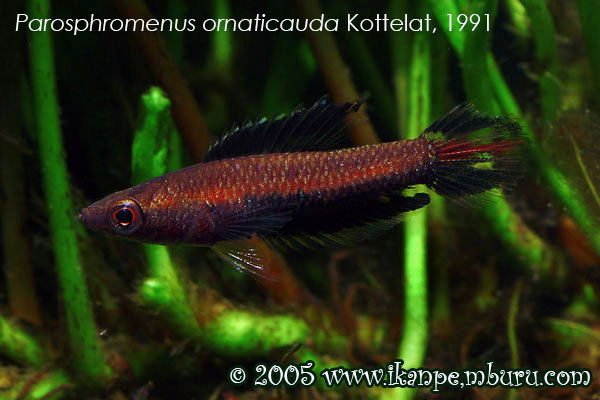
雄鱼尾鳍下半黑色并有少量透明斑和蓝白边,上部有橙红带;背鳍与臀鳍黑色区域很大。雌鱼一般纹样较淡,体下半并非整片暗色,但繁殖期可能变得更像雄鱼。
繁殖
雄鱼头朝上展鳍,并绕雌鱼快速穿梭,把对方引入洞穴。卵附洞顶,泡巢可有可无,常见一窝仅十至二十粒;雄鱼可能多次搬卵。雄鱼护卵,雌鱼守外围,约 24~36 小时孵化,四至六天后活动,再三至五天完全离巢。初期喂草履虫、轮虫等,继而转丰年虾幼体;遮蔽不足宜单独育苗。
图片
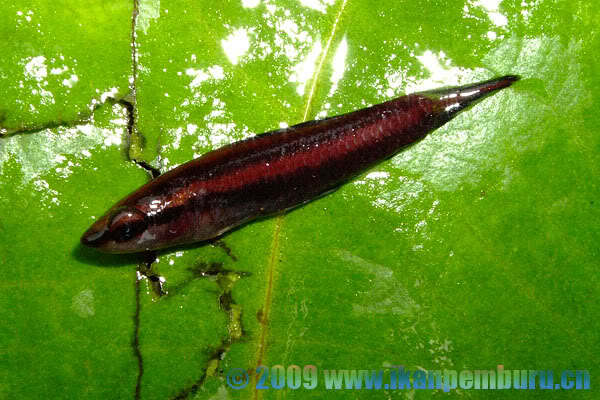
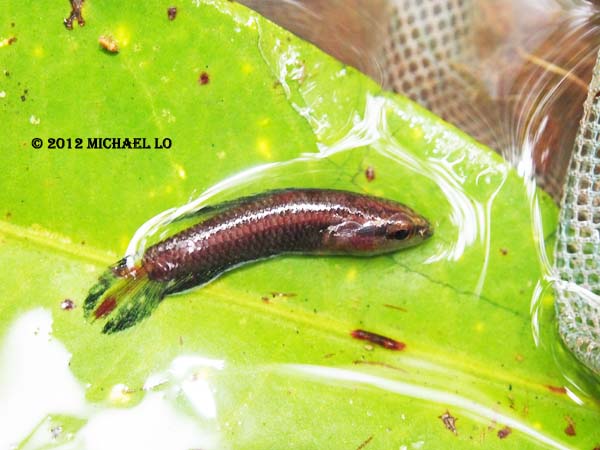
图片来自 SeriouslyFish,版权归各摄影者所有。
English
Overview
Despite its roughly 3 cm size, Parosphromenus ornaticauda needs more courtship space than many relatives. Males dart widely around females. This demanding blackwater fish can be vulnerable after import, making careful stabilization and reliable tiny live foods especially valuable.
Distribution & habitat
Records include the Kapuas drainage around Anjungan and the Pawan system near Ketapang in West Kalimantan, Indonesian Borneo. Its shaded peat-swamp and blackwater-stream habitats have very low mineral content, and some have been polluted, cleared, or drained.
Aquarium setup
Provide at least a 45 by 30 cm footprint for a pair. Combine cavities, wood, and leaf cover with enough room for fast displays. Floating plants reduce light. Establish very soft acidic water before introduction, maintain gentle filtration, and replace about 5–10% weekly. Reverse-osmosis water can help achieve suitable hardness without natural peat.
Diet & feeding
Use a varied supply of tiny live invertebrates, including nauplii, small water fleas, and microworms. Occasional acceptance of frozen foods does not replace that foundation; most dry products are rejected.
Behaviour & compatibility
Prefer a dedicated pair and avoid mixing liquorice gourami species. Females can be difficult to distinguish, and hybridization is possible. Any companions must be tiny and quiet; additional adults also reduce fry survival.
Sexual dimorphism
Male tails combine a dark lower portion, pale spots and edging, and an orange-red upper band. The dorsal and anal fins contain extensive black. Females are generally less strongly marked, with stripes rather than an entirely dark lower body, although breeding females can resemble males more closely.
Breeding
Males display head-up and make rapid circuits around the female before leading her into a cavity. Eggs attach to the roof, sometimes with bubbles. Broods commonly contain only ten to twenty eggs, which the male may relocate repeatedly. He tends the brood while the female guards outside. Hatching takes 24–36 hours, mobility another four to six days, and departure a further three to five days. Begin with microscopic prey before nauplii, using separate rearing if cover is sparse.
来源
- https://www.seriouslyfish.com/species/parosphromenus-ornaticauda(抓取于 2026-10-10)
parosphromenus-ornaticauda · 文件: data/species/parosphromenus-ornaticauda.md · 状态: 草稿