林氏副斗鱼
概要
| 字段 | 值 |
|---|---|
| 类别 | 鱼 |
| 学名 | Parosphromenus linkei |
| 别名 | 林氏副鬥魚 |
| 分类 | 攀鲈目 Anabantiformes › 丝足鲈科 Osphronemidae › Parosphromenus |
| 水体 | 淡水 |
| 原产地 | 印度尼西亚 |
| 成体体长 | 3.5 cm |
| 饲养难度 | 中等 |
| 最小水体 | 16 L |
| 最小缸长 | 40 cm |
| 群居方式 | 成对 |
| 外部数据 | seriouslyfish parosphromenus-linkei;fishbase 15911 |
| 食性 | 肉食 |
| 繁殖方式 | 附着产卵 |
水质参数
| 参数 | 耐受范围 | 最适范围 | 单位 |
|---|---|---|---|
| 水温 | 22–28 | — | °C |
| pH | 3–6.5 | — | — |
| 总硬度 | 1–4 | — | dGH |
概述
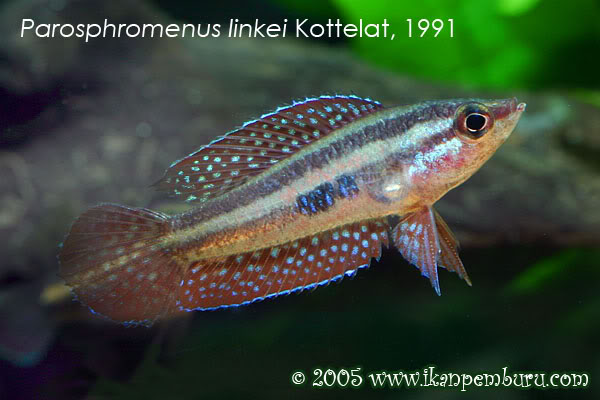
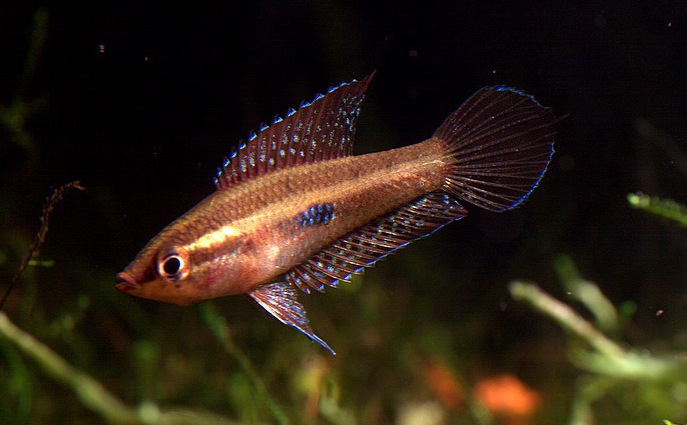
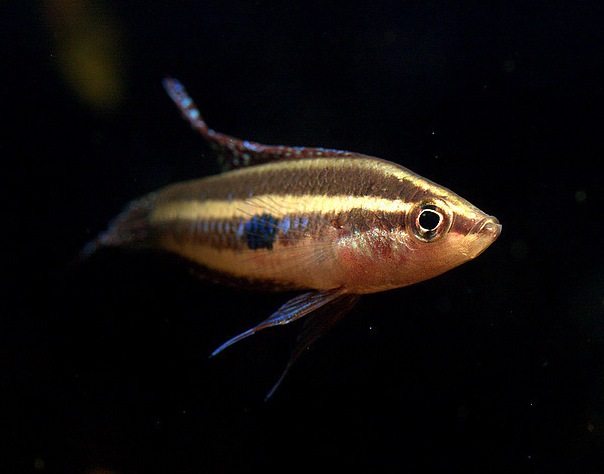
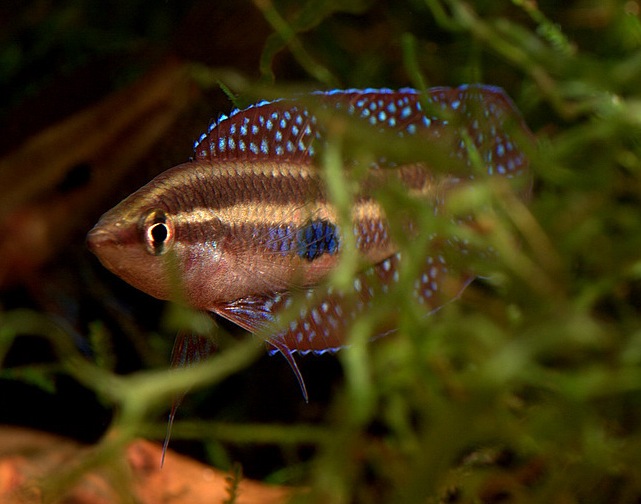
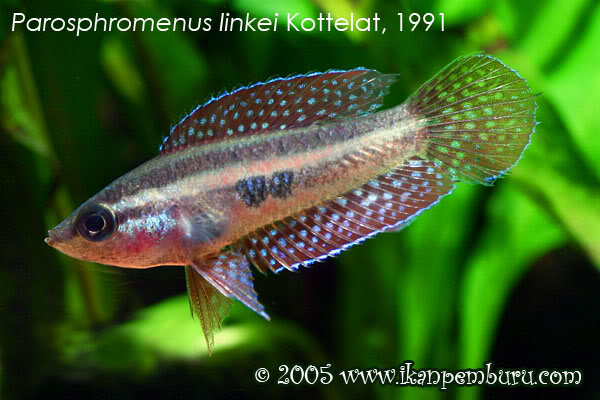
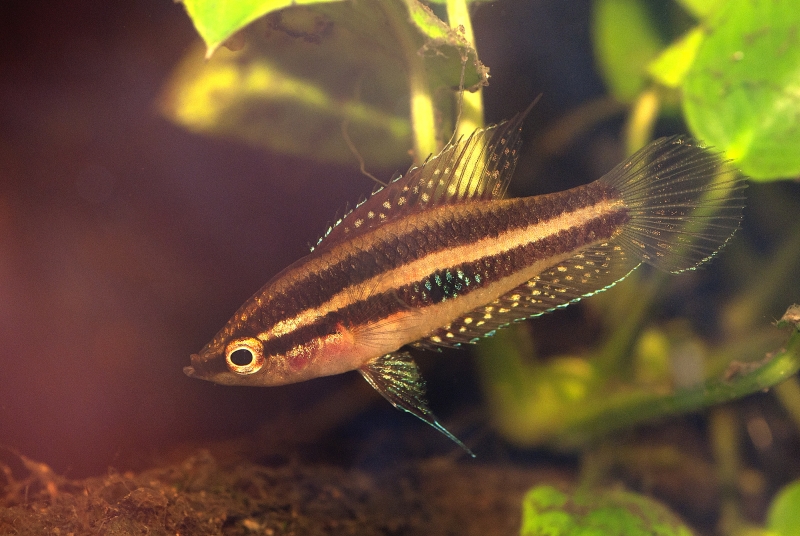
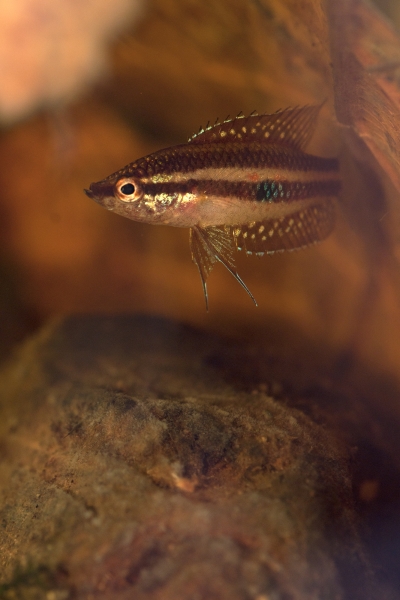
林氏副斗鱼(Parosphromenus linkei)体侧暗带中有一至三个醒目黑斑,雄鱼尾鳍呈矛状并有中央丝状延长。它常被认为比多数副斗鱼略容易,但仍是需要精细软酸水管理的黑水鱼。
分布与栖息地
原生印度尼西亚中加里曼丹,已知包括苏卡马拉与庞卡兰布翁附近,完整范围未明。所谓瑟鲁延红色型的地点与归属仍需谨慎。泥炭沼泽和黑水溪流受农业清理影响,有些种群只残留在池塘或沟渠。
饲养环境
一对可从 40 × 20 厘米底面积安排,用沉木、叶堆、花盆或小管营造暗处和产卵洞。弱光、浮水遮阴与轻柔海绵过滤适合;要求成熟而稳定的低硬度酸水,可用反渗透水获得低矿化度。每周少量换约 5%~10%,避免大换水和有机废物积累。
食性与喂食
取食微小动物,提供小水蚤、丰年虾无节幼体、孑孓和微虫等多种活饵。大多不接受干粮,冷冻食物也只能视接受情况作补充。
习性与混养
繁殖以一对专缸较合适,其他成鱼常影响幼鱼自然存活。不要混放不同副斗鱼,也应把不同产地或色型分开维持,避免可能不同谱系混杂。
雌雄区分
雄鱼通常更大,腹、背、臀、尾鳍延长更明显。两性颜色可随情绪迅速加深。
繁殖
雄鱼头朝下展鳍,把雌鱼引入小洞穴。卵分批产出并附洞顶,有些雄鱼筑泡巢,也有完全不筑或筑得较大的个体。产后雄鱼照顾卵,雌鱼防卫外围。约 24~36 小时孵化,再四至六天仔鱼开始活动,接着还需三至五天才完全离巢;早期雄鱼会拾回游散幼鱼。先用微小开口饵,再转丰年虾幼体;遮蔽不够时另缸育苗。
补充说明
银灰、褐色及带红色小点的不同形态均有记录,颜色差异不应简单视为同缸混繁的理由。
图片
图片来自 SeriouslyFish,版权归各摄影者所有。
English
Overview
One to three prominent flank blotches and a pointed, filament-tipped male tail help identify Parosphromenus linkei. It is often considered somewhat easier than other liquorice gouramis, but still requires careful blackwater husbandry rather than ordinary community conditions.
Distribution & habitat
Known records center on Sukamara and Pangkalan Bun in Central Kalimantan, Indonesian Borneo. The full range is unresolved, including the relationship of a reddish form traded under a Seruyan locality name. Clearance has reduced peat swamps and blackwater streams, with some populations persisting in remnant pools or channels.
Aquarium setup
Start with at least a 40 by 20 cm footprint for a pair. Wood, leaves, and small pots or tubes provide dark retreats and nesting cavities. Keep lighting subdued and sponge filtration gentle. Establish stable, very soft acidic water before introduction, using reverse-osmosis water if needed. Small weekly changes of about 5–10% help avoid abrupt shifts while controlling waste.
Diet & feeding
Tiny invertebrates form the diet. Offer varied small live foods such as water fleas, nauplii, mosquito larvae, and microworms. Prepared dry diets are usually refused; frozen food is an inconsistent supplement.
Behaviour & compatibility
A dedicated pair is preferable when raising fry, because additional adults usually lower survival. Separate different liquorice gourami species, and maintain locality or color forms independently where they may represent distinct lineages.
Sexual dimorphism
Males tend to be larger and develop longer pelvic, dorsal, anal, and caudal fins. Both sexes can intensify their colors rapidly.
Breeding
Head-down displays draw the female into the male’s cave. Successive egg batches attach to its ceiling. Bubble nests vary from absent to unusually large. The male tends eggs while the female protects the surrounding area. Hatching takes 24–36 hours, mobility follows four to six days later, and complete departure takes another three to five days. Until then, wandering young may be retrieved. Use microscopic first foods followed by nauplii, and rear separately when shelter is limited.
Notes
Silverish, brownish, and red-spotted forms have been recorded; superficial similarity does not justify combining their breeding stocks.
来源
- https://www.seriouslyfish.com/species/parosphromenus-linkei(抓取于 2026-10-10)
parosphromenus-linkei · 文件: data/species/parosphromenus-linkei.md · 状态: 草稿